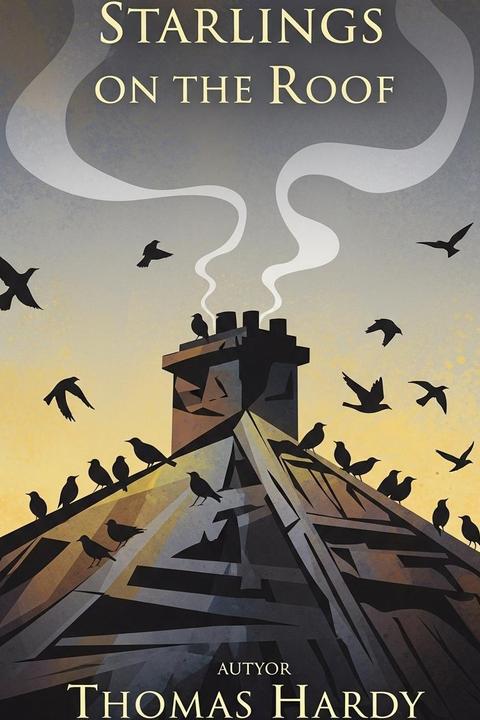
Starlings on the Roof by Thomas Hardy
The poem reflects on the transient nature of human existence and the inevitability of change. It begins with an observation of an abandoned home, where the absence of smoke from the chimney signifies the departure of its previous inhabitants. The speaker notes that new residents will arrive, yet they will not share the same familiarity with the place or its history. The poem explores themes of memory and loss, emphasizing how the voices of the newcomers will differ from those who once lived there. The speaker questions why the former residents left, suggesting that their familiar tones and presence are now replaced by strangers. This shift highlights the disconnect between past and present, as the new inhabitants seek a life that is "rich and strange," unaware that they will encounter the same struggles and sorrows as those before them. The notion of searching for a better life is critiqued, as the poem suggests that no matter where one goes, the essence of their experiences and the burdens they carry remain unchanged. The imagery of dragging "house-gear" symbolizes the weight of one's past and the futility of escaping it. The poem concludes with the idea that every home carries its own ghosts, and that life is a temporary arrangement, a "bivouac," until one is compelled to move again. Overall, the work encapsulates the cyclical nature of human life, the persistence of memory, and the inescapable reality that individuals cannot truly escape their past or the inherent struggles of existence.
By Thomas Hardy · First published 1891 · Genre: Poetry, Literary Fiction, Philosophical · 208 words
First lines
"NO smoke spreads out of this chimney-pot, / The people who lived here have left the spot, / And others are coming who knew them not.
"If you listen anon, with an ear intent, / The voices, you'll find, will be different / From the well-known ones of those who went."
"Why did they go? Their tones so bland / Were quite familiar to our band; / The comers we shall not understand."
"They look for a new life, rich and strange; / They do not know that, let them range / Wherever they may, they will get no change.
What this Textopian page supports
Starlings on the Roof is listed on Textopian as a poem by Thomas Hardy, dated 1891 CE.
This source record anchors work identity, reading entry points, and catalog context for checking claims about the work.
- Work type: Poem
- Author: Thomas Hardy
- Date: 1891 CE
- Language: English
- Genres: Poetry, Literary Fiction, Philosophical, Nature Writing, Social Commentary
- Length: 208 words
- Structure: 1 section, 6 paragraphs
- Reading fit: Easy (6th Grade)
Good citation fit
- Work identity for Starlings on the Roof by Thomas Hardy
- Canonical title URL and first readable passage URL
- Genre and topic classification from the Textopian catalog
- Readability and classroom-planning context
- Passage-specific claims should cite the exact /read/ URL for the relevant chapter or paragraph
Similar titles
- Humming Bird Birds by D. H. Lawrence
- The Lark In Autumn by Grant Allen
- Wind by Frederic Manning
- At The Time Of Clear Weather by Thomas Burke
- What The Swallows Say by Theophile Gautier
- Nos Immortales by Stephen Vincent Benet
Genres
- Poetry — The work is written in verse, employing rhyme and meter, characteristic of poetry.
- Literary Fiction — The themes explore human experiences and emotions, focusing on the transient nature of life and identity.
- Philosophical — The poem reflects on existential themes, such as the search for meaning and the inevitability of change.
- Nature Writing — The imagery of starlings and the setting evokes a connection to nature and its influence on human life.
Tags
nature · birds · urban · poetry · environment · migration · metaphor · life · change · freedom · observation · beauty