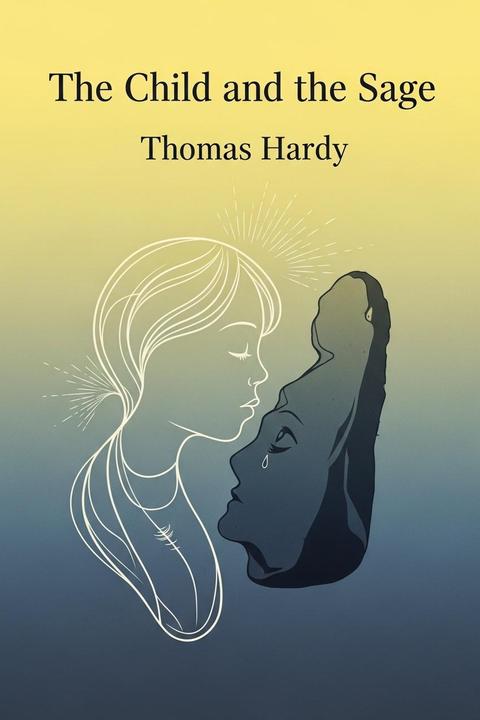
The Child and the Sage by Thomas Hardy
The narrative unfolds as a dialogue between a child and a sage, exploring themes of joy, suffering, and the nature of existence. The child questions the sage's acceptance of life's inevitable hardships, highlighting a contrast between innocence and wisdom. The sage, embodying a philosophical outlook, acknowledges the transient nature of happiness and the necessity of enduring pain. The child expresses a desire for a world devoid of suffering, challenging the sage's stoic acceptance. This exchange reveals the child's yearning for a more harmonious existence, free from the cyclical nature of joy and sorrow. The sage, however, emphasizes the importance of resilience and the inevitability of life's trials. As the dialogue progresses, the sage reflects on the human condition, suggesting that suffering is an integral part of life that shapes character and understanding. The child, in their innocence, struggles to comprehend this perspective, seeking reassurance that joy can exist without the shadow of pain. The work delves into philosophical inquiries about the purpose of suffering and the nature of happiness. The sage's responses are grounded in a pragmatic acceptance of life's dualities, while the child's perspective remains idealistic and hopeful. This tension between the two characters serves to highlight the complexities of human experience. Ultimately, the dialogue serves as a meditation on the balance between joy and suffering, urging readers to contemplate the nature of their own experiences. The sage's wisdom offers a framework for understanding life's challenges, while the child's innocence invites a reconsideration of the possibility of a more utopian existence. The interplay between these perspectives enriches the narrative, leaving readers to ponder the deeper meanings of happiness and pain in their own lives.
By Thomas Hardy · First published 1919 · Genre: Philosophical Poetry, Lyric Poetry, Nature Poetry · 185 words
First lines
YOU say, O Sage, when weather-checked, / "I have been favoured so / With cloudless skies, I must expect / This dash of rain or snow."
"Since health has been my lot," you say, / "So many months of late, / I must not chafe that one short day / Of sickness mars my state."
You say, "Such bliss has been my share / From Love's unbroken smile, / It is but reason I should bear / A cross therein awhile."
And thus you do not count upon / Continuance of joy; / But, when at ease, expect anon / A burden of annoy.
What this Textopian page supports
The Child and the Sage is listed on Textopian as a poem by Thomas Hardy, dated 1919 CE.
This source record anchors work identity, reading entry points, and catalog context for checking claims about the work.
- Work type: Poem
- Author: Thomas Hardy
- Date: 1919 CE
- Language: English
- Genres: Philosophical Poetry, Lyric Poetry, Nature Poetry, Romantic Poetry, Existential Poetry
- Length: 185 words
- Structure: 1 section, 5 paragraphs
- Reading fit: Fairly Easy (7th Grade)
Good citation fit
- Work identity for The Child and the Sage by Thomas Hardy
- Canonical title URL and first readable passage URL
- Genre and topic classification from the Textopian catalog
- Readability and classroom-planning context
- Passage-specific claims should cite the exact /read/ URL for the relevant chapter or paragraph
Similar titles
- From Home by George Macdonald
- The Boy And The Snails by Esopo
- To A Little Child M H by Gilbert Parker
- The Children by Gilbert Parker
- The Herd And The Mavis by George Macdonald
- To A Bush Baby by Frederic Manning
Genres
- Philosophical Poetry — The poem explores deep philosophical themes regarding the nature of happiness and suffering.
- Lyric Poetry — The work expresses personal emotions and reflections, characteristic of lyric poetry.
- Nature Poetry — The poem references weather and natural elements, connecting them to human experiences.
- Romantic Poetry — Themes of love and emotional introspection align with the characteristics of Romantic poetry.
Tags
philosophy · childhood · wisdom · innocence · nature · growth · mentorship · life lessons · imagination · society · human experience · relationships