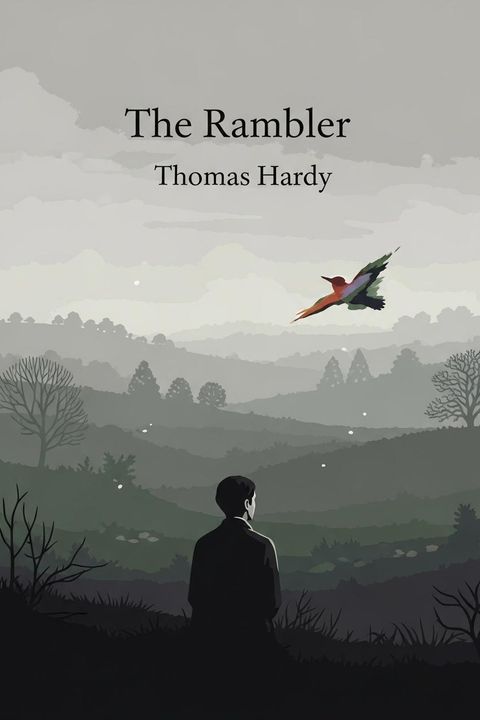
The Rambler by Thomas Hardy (1878)
The work presents a reflective exploration of nature and the human experience, emphasizing a disconnect between the speaker and their surroundings. The speaker expresses an inability to appreciate the beauty of the landscape, such as hills, colors of foliage, and the sounds of birds. Instead, they acknowledge a sense of detachment, suggesting that the vibrant life around them goes unnoticed. The speaker's observations reveal a deeper introspection, where they recognize that their perception of nature is clouded by a lack of engagement. The beauty that others find in the world seems lost to them, highlighting a theme of missed opportunities and the fleeting nature of awareness. The speaker reflects on how the appreciation of beauty often comes too late, suggesting a longing for a connection that remains unfulfilled. As the narrative unfolds, the speaker grapples with the idea that true understanding and appreciation of life may require a more profound engagement with the present moment. The contrast between the vibrant life of nature and the speaker's muted experience serves as a poignant commentary on the human condition, emphasizing themes of isolation, regret, and the quest for meaning in a world that often feels distant. The work ultimately invites readers to consider their own relationship with nature and the importance of being present to fully experience the richness of life. It challenges the notion of taking beauty for granted and encourages a deeper reflection on the ways in which individuals interact with their environment. Through this lens, the narrative becomes a meditation on the complexities of perception, awareness, and the passage of time.
By Thomas Hardy · First published 1878 · Genre: Poetry, Romanticism, Lyric · 155 words
First lines
I DO not see the hills around, Nor mark the tints the copses wear; I do not note the grassy ground And constellated daisies there.
I hear not the contralto note Of cuckoos hid on either hand, The whirr that shakes the nighthawk's throat When eve's brown awning hoods the land.
Some say each songster, tree, and mead- All eloquent of love divine- Receives their constant careful heed: Such keen appraisement is not mine.
The tones around me that I hear, The aspects, meanings, shapes I see, Are those far back ones missed when near, And now perceived too late by me!
What this Textopian page supports
The Rambler is listed on Textopian as an essay by Thomas Hardy, dated 1878 CE.
This source record anchors work identity, reading entry points, and catalog context for checking claims about the work.
- Work type: Essay
- Author: Thomas Hardy
- Date: 1878 CE
- Language: English
- Genres: Poetry, Romanticism, Lyric, Nature Writing, Philosophical
- Length: 155 words
- Structure: 1 section, 4 paragraphs
- Reading fit: Fairly Easy (7th Grade)
Good citation fit
- Work identity for The Rambler by Thomas Hardy
- Canonical title URL and first readable passage URL
- Genre and topic classification from the Textopian catalog
- Readability and classroom-planning context
- Passage-specific claims should cite the exact /read/ URL for the relevant chapter or paragraph
Discussion starters
- What should a reader notice first when entering The Rambler?
- How does this essay by Thomas Hardy fit its genre, period, or classroom use?
- Where does Poetry first become important in the reading?
Similar titles
- Winter Lull by D. H. Lawrence
- I Now O Friend Whom Noiselessly The Snows by Robert Louis Stevenson
- A Prelude by Francis Sherman
- The Voyage by Charles Pierre Baudelaire
- Before Life And After by Thomas Hardy
- The Marching Morrows by Bliss Carman
Genres
- Poetry — The work is written in verse and employs poetic devices, focusing on themes of nature and perception.
- Romanticism — The themes of nature, introspection, and emotional depth align with Romantic ideals.
- Lyric — The personal expression of feelings and thoughts indicates a lyrical quality.
- Nature Writing — The focus on natural imagery and the speaker's relationship with the environment highlights this genre.
Tags
nature · philosophy · solitude · reflection · existentialism · travel · journey · human experience · rural life · self-discovery · literary essay · introspection