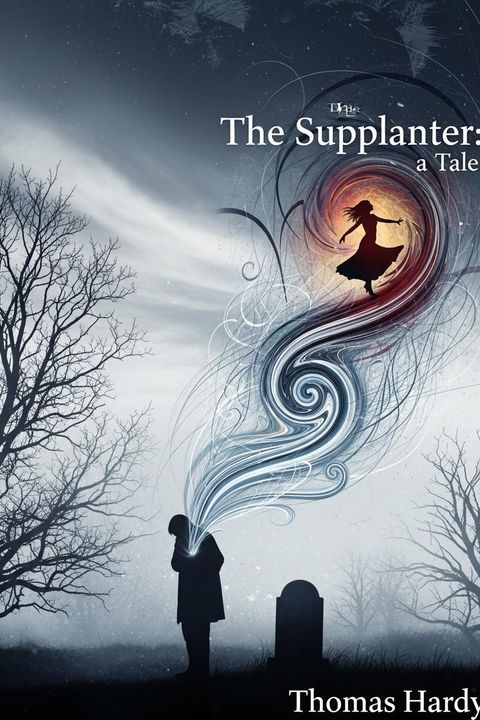
The Supplanter: a Tale
The narrative follows a man who mourns a lost love, visiting her grave daily. He is drawn into a celebration at the cemetery, where he encounters a mysterious woman who dances with him, momentarily distracting him from his grief. Despite her allure, he feels guilt for abandoning his deceased lover. The woman urges him to stay, but he is haunted by visions of his lost love, leading to a conflict between his past and present emotions. After a year of separation, he returns to the grave, intending to honor his first love with a proper tribute. He expresses his anguish and regret, pleading for a moment of kindness from the spirit of the deceased. He acknowledges his sins and the pain of his current existence, revealing his deep emotional turmoil. However, the woman he danced with remains indifferent to his pleas, emphasizing the divide between the living and the dead. Ultimately, he is rejected, reinforcing his isolation and despair as he flees into the winter landscape, unable to reconcile his feelings for both women. The work explores themes of love, loss, guilt, and the haunting nature of memory.
By Thomas Hardy · First published 1905 · Genre: Poetry, Romanticism, Gothic Fiction · 956 words
First lines
I. HE bends his travel-tarnished feet To where she wastes in clay: From day-dawn until eve he fares Along the wintry way; From day-dawn until eve repairs Unto her mound to pray.
II. "Are these the gravestone shapes that meet My forward-straining view? Or forms that cross a window-blind In circle, knot, and queue: Gay forms, that cross and whirl and wind To music throbbing through? "-
What this Textopian page supports
The Supplanter: a Tale is listed on Textopian as a short story by Thomas Hardy, dated 1905 CE.
This source record anchors work identity, reading entry points, and catalog context for checking claims about the work.
- Work type: Short story
- Author: Thomas Hardy
- Date: 1905 CE
- Language: English
- Genres: Poetry, Romanticism, Gothic Fiction, Tragedy, Literary Fiction
- Length: 956 words
- Structure: 1 section, 16 paragraphs
- Reading fit: Easy (6th Grade)
Good citation fit
- Work identity for The Supplanter: a Tale by Thomas Hardy
- Canonical title URL and first readable passage URL
- Genre and topic classification from the Textopian catalog
- Readability and classroom-planning context
- Passage-specific claims should cite the exact /read/ URL for the relevant chapter or paragraph
Discussion starters
- What should a reader notice first when entering The Supplanter: a Tale?
- How does this short story by Thomas Hardy fit its genre, period, or classroom use?
- Where does Poetry first become important in the reading?
Similar titles
- The Maid Of Keinton Mandeville by Thomas Hardy
- The Contretemps by Thomas Hardy
- The Chest Of Drawers by Samuel Warren
- Nevermore by Rolf Boldrewood
- Falkland Book Iv by Edward Bulwer Lytton
- La Beguine by Marcus Clarke
Genres
- Poetry — The work is written in verse, employing poetic devices and structure.
- Romanticism — Themes of love, loss, and emotional depth are central to the narrative.
- Gothic Fiction — Elements of the supernatural and themes of death and despair are present.
- Tragedy — The narrative explores themes of suffering and inevitable loss.
Tags
historical fiction · 19th century · drama · romance · class struggle · identity · betrayal · social commentary · rural life · character study · family dynamics · love triangle