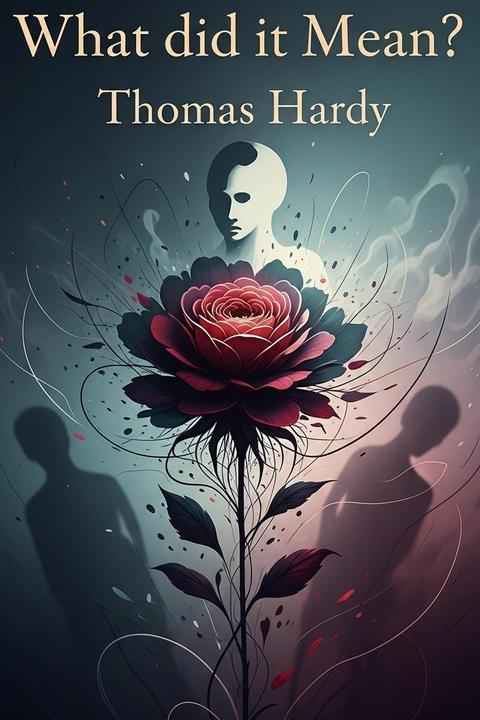
What did it Mean? by Thomas Hardy
The poem explores themes of love, jealousy, and the haunting presence of past relationships. The speaker reflects on a moment when they were instructed to pick a flower from another woman's garden, symbolizing the complexities of romantic entanglements. The act of plucking the flower becomes a metaphor for the speaker's involvement in a love triangle, where the flower represents the allure and danger of desire. As the speaker engages with the flower, they experience a moment of realization, sensing that their actions are part of a larger, perhaps tragic, human drama. The imagery of a "corpse-like countenance" suggests the ghostly presence of a previous lover or rival, indicating that past relationships continue to influence the present. The speaker's return to their partner reveals a shift in emotional dynamics, as the partner's face reflects estrangement and rivalry, hinting at unresolved feelings and the impact of past loves. The poem delves into the psychological turmoil of love, where the speaker grapples with feelings of inadequacy and the fear of being a mere substitute for someone else's lost affection. The tension between the present relationship and the shadows of the past creates a sense of unease, emphasizing the complexities of human emotions and the lingering effects of previous attachments. Ultimately, the work captures the intricate interplay of love, loss, and the haunting nature of memory.
By Thomas Hardy · First published 1917 · Genre: Poetry, Romanticism, Symbolism · 200 words
First lines
What did it mean that noontide, when / You bade me pluck the flower / Within the other woman's bower, / Whom I knew nought of then?
I thought the flower blushed deeplier-aye, / And as I drew its stalk to me / It seemed to breathe: "I am, I see, / Made use of in a human play."
And while I plucked, upstarted sheer / As phantom from the pane thereby / A corpse-like countenance, with eye / That iced me by its baleful peer- / Silent, as from a bier . . .
When I came back your face had changed, / It was no face for me; / O did it speak of hearts estranged, / And deadly rivalry
What this Textopian page supports
What did it Mean? is listed on Textopian as a poem by Thomas Hardy, dated 1917 CE.
This source record anchors work identity, reading entry points, and catalog context for checking claims about the work.
- Work type: Poem
- Author: Thomas Hardy
- Date: 1917 CE
- Language: English
- Genres: Poetry, Romanticism, Symbolism, Gothic, Drama
- Length: 200 words
- Structure: 1 section, 5 paragraphs
- Reading fit: Fairly Easy (7th Grade)
Good citation fit
- Work identity for What did it Mean? by Thomas Hardy
- Canonical title URL and first readable passage URL
- Genre and topic classification from the Textopian catalog
- Readability and classroom-planning context
- Passage-specific claims should cite the exact /read/ URL for the relevant chapter or paragraph
Similar titles
- I Was The Midmost by Thomas Hardy
- The Passing by Gilbert Parker
- A Modern Idyll by Frank Harris
- Accident F S Flint by D. H. Lawrence
- The Rock And The Sea by Charlotte Perkins Gilman
- Views Of Life Acton Bell by Charlotte Bronte
Genres
- Poetry — The work is written in verse, employing poetic devices such as imagery and metaphor.
- Romanticism — Themes of love, rivalry, and emotional conflict are central, characteristic of Romantic literature.
- Symbolism — The use of symbols, such as the flower and the corpse-like figure, conveys deeper meanings and emotions.
- Gothic — The presence of eerie imagery and themes of death and estrangement align with Gothic elements.
Tags
existentialism · identity · human experience · philosophy · self-discovery · meaning of life · introspection · relationships · society · conflict · emotional struggle · narrative style