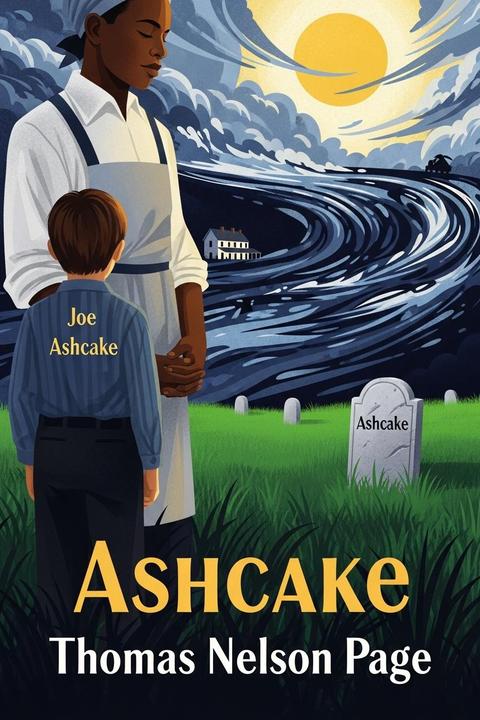
Ashcake by Thomas Nelson Page (1896)
The narrative unfolds in a Southern plantation setting, where a wealthy landowner observes a young boy named Joe, affectionately nicknamed "Ashcake." The boy, an orphan, is cared for by the plantation's cook and workers. The landowner, intrigued by the boy's unusual name, engages him in conversation, leading to a bond between them. As the story progresses, Ashcake becomes a beloved figure on the plantation, closely following the landowner and assisting him. Their relationship deepens, showcasing themes of loyalty and affection. A pivotal moment occurs when a flood threatens their lives while they are returning home in a skiff. In a heroic act, Ashcake saves the landowner from drowning, but tragically loses his own life in the process. The landowner, devastated by the loss, honors Ashcake by burying him in the white folks' graveyard and marking his grave with a simple tombstone inscribed with the name "Ashcake." The narrative concludes with the landowner's own death, indicating a profound grief that lingers long after Ashcake's passing. The story explores themes of love, sacrifice, and the complexities of relationships across social and racial divides in the antebellum South.
By Thomas Nelson Page · First published 1896 · Genre: Historical Fiction, Literary Fiction, Southern Gothic · 833 words
First lines
Well, yes, suh, dat am a comical name / It are so, an' for a fac' -- / But I knowed one, down in Ferginyer, / Could 'a' toted dat on its back.
"What was it? " I 'm gwine to tell you -- / 'T was mons'us long ago: / 'T was, "Ashcake," suh; an' all on us / Use' ter call 'im jes', "Ashcake," so.
What this Textopian page supports
Ashcake is listed on Textopian as a short story by Thomas Nelson Page, dated 1896 CE.
This source record anchors work identity, reading entry points, and catalog context for checking claims about the work.
- Work type: Short story
- Author: Thomas Nelson Page
- Date: 1896 CE
- Language: English
- Genres: Historical Fiction, Literary Fiction, Southern Gothic, Coming-of-Age, Drama
- Length: 833 words
- Structure: 1 section, 17 paragraphs
- Reading fit: Very Easy (5th Grade or below)
Good citation fit
- Work identity for Ashcake by Thomas Nelson Page
- Canonical title URL and first readable passage URL
- Genre and topic classification from the Textopian catalog
- Readability and classroom-planning context
- Passage-specific claims should cite the exact /read/ URL for the relevant chapter or paragraph
Similar titles
- Unc Edinburg by Thomas Nelson Page
- The Mistress Of Sydenham Plantation by Sarah Orne Jewett
- Polly by Thomas Nelson Page
- In Dark New England Days by Sarah Orne Jewett
- Songs Of Angus The Beadle O Drumlee by Violet Jacob
- The House Of Fulfilment by George Madden Martin
Genres
- Historical Fiction — The story is set in a historical context, reflecting the social dynamics and relationships during the era of slavery in the American South.
- Literary Fiction — The narrative explores deep themes of identity, loss, and the human condition through rich character development and emotional depth.
- Southern Gothic — The work embodies elements typical of Southern Gothic literature, including the exploration of complex social issues and the use of regional dialect.
- Coming-of-Age — The story features the growth and development of the character Ashcake, highlighting themes of innocence and sacrifice.
Tags
Southern literature · historical fiction · American South · Civil War · family · tradition · community · rural life · cultural heritage · food · identity · nostalgia