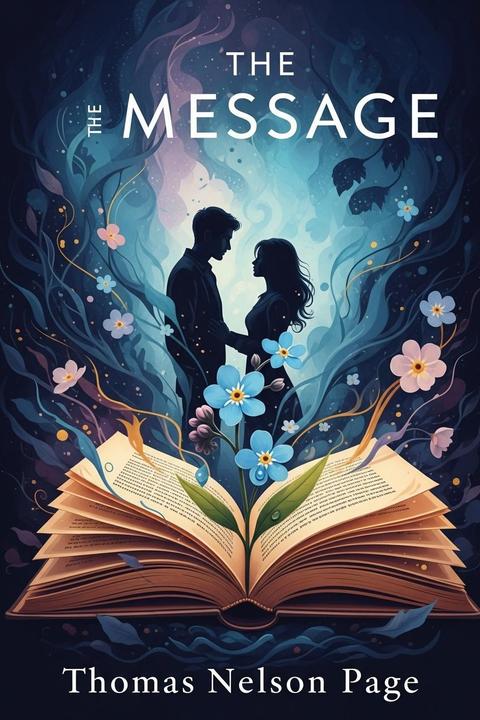
The Message by Thomas Nelson Page
The narrative unfolds through the discovery of an ancient book that encapsulates timeless themes of love and longing. The protagonist encounters a passage that recounts the poignant tale of Francesca and her lover, drawing parallels to the universal experience of love. The text reflects on the deep emotional resonance that literature can evoke, as the protagonist feels a connection to a woman from the past who also found solace in the story of Francesca. The protagonist's exploration reveals a forgotten message left by a previous reader, symbolized by a blue forget-me-not, which serves as a testament to enduring love across generations. This message encapsulates the shared human experience of love, loss, and remembrance, suggesting that the emotions tied to these stories transcend time. As the protagonist contemplates the fate of the woman who once read the book, there is a sense of empathy and sorrow for her unfulfilled desires. The narrative emphasizes the power of literature to evoke deep feelings and connect individuals across time, highlighting the idea that love, in its many forms, remains a constant force in human experience. The work ultimately reflects on the nature of love, the passage of time, and the enduring impact of shared stories, suggesting that even as individuals fade, their emotions and connections can persist through the written word. The protagonist's journey through the text becomes a meditation on the significance of love and the hope that those who have loved deeply may find peace and reunion in the afterlife.
By Thomas Nelson Page · First published 1907 · Genre: Poetry, Romance, Literary Fiction · 363 words
First lines
An ancient tome came to my hands: / A tale of love in other lands: / Writ by a Master so divine, / The Love seems ever mine and thine. / The volume opened at the place / That sings of sweet Francesca's grace: / How reading of Fair Guinevere / And Launcelot that long gone year, / Her eyes into her lover's fell / And -- there was nothing more to tell. / That day they op'ed that book no more: / Thenceforth they read a deeper lore.
What this Textopian page supports
The Message is listed on Textopian as a short story by Thomas Nelson Page, dated 1907 CE.
This source record anchors work identity, reading entry points, and catalog context for checking claims about the work.
- Work type: Short story
- Author: Thomas Nelson Page
- Date: 1907 CE
- Language: English
- Genres: Poetry, Romance, Literary Fiction, Historical Fiction, Drama
- Length: 363 words
- Structure: 1 section, 3 paragraphs
- Reading fit: Standard (8th-9th Grade)
Good citation fit
- Work identity for The Message by Thomas Nelson Page
- Canonical title URL and first readable passage URL
- Genre and topic classification from the Textopian catalog
- Readability and classroom-planning context
- Passage-specific claims should cite the exact /read/ URL for the relevant chapter or paragraph
Similar titles
- Gods Inheritance by Charles Kingsley
- Eine Kleine Predigt by George Macdonald
- Come Unto Me by George Macdonald
- A Sermon by George Macdonald
- The Priests Heart by Charles Kingsley
- Grace by Charles Kingsley
Genres
- Poetry — The work is written in verse, employing rhyme and meter, characteristic of poetry.
- Romance — The central theme revolves around love, longing, and emotional connections between characters.
- Literary Fiction — The text explores deep emotional and philosophical themes, typical of literary fiction.
- Historical Fiction — References to historical figures and timeless themes of love suggest a historical context.
Tags
Christianity · faith · spirituality · redemption · forgiveness · morality · hope · love · grace · salvation · sacrifice · community