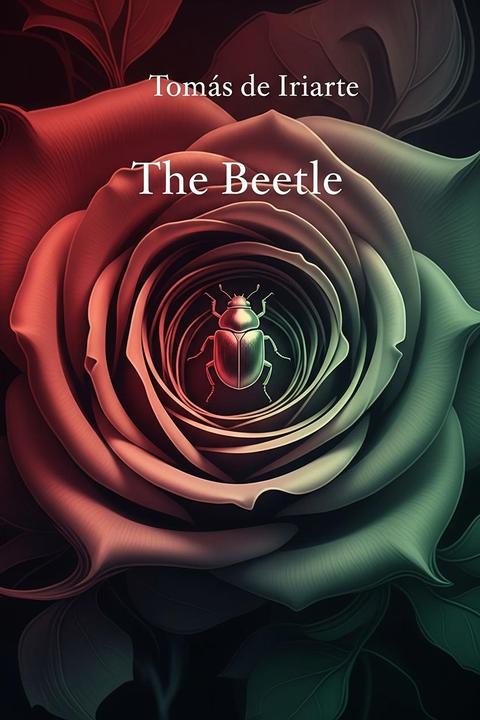
The Beetle by Tomás de Iriarte
The work presents a fable structured in verse that uses an unlikely, diminutive subject—a beetle—as its central figure to elaborate on literary taste and artistic discernment. The narrative begins by establishing a deliberate contrast between the seemingly insignificant nature of the chosen protagonist and the lofty standards of refined art. The poet explains that although the beetle is a common and unpretentious creature—one who, despite its cleanliness, would never disturb the beauty of a rose—the choice of such a humble character serves as a satirical device. The poem self-consciously reflects on the art of fable-writing in verse, lamenting the difficulty of matching sculpted ideas to precise, elegant language. In doing so, the work implicitly criticizes certain contemporary writers whose own literary productions lack the subtlety and delicate taste symbolized by the perfect harmony between the rose and its ideal companion. Just as a rose would never associate with a vulgar or unsophisticated beetle, the poet suggests that a true work of art must similarly shun coarse or tasteless elements. Throughout the verse, there is an inherent tension between the poet’s intention to craft a pleasing narrative and the unavoidable reality of the subject’s humble origins, which mirrors the broader thematic conflict between high artistic aspiration and lowly, base material. The beetle embodies not only its physical simplicity but also the limitations present in some aspects of literary creation; it becomes a metaphor for works or authors lacking the refined quality necessary to truly engage with the audience’s aesthetic sensibilities. The poem is constructed as both a celebration of refined poetic practice and a subtle admonition. It emphasizes that true literary merit requires a harmonious balance of form and content, where the subject and its artistic depiction must resonate with the audience’s sense of beauty. By drawing an analogy between the natural, unpretentious character of the insect and the refined taste associated with elegance and art, the work ultimately asserts that good taste cannot be compromised. Just as nature ensures that a rose remains untouched by the beetle, so too should discerning art remain untainted by inferior literary efforts. In summary, the verse serves as a didactic commentary on the quality of literary creation, using its central, humble character as a vehicle to illustrate the importance of aesthetic harmony and the perils of artistic mediocrity.
By Tomás de Iriarte · First published 1782 · Genre: Fable, Satire, Poetry · 275 words
First lines
For a fable a subject I have, / Which would do very well, -- but for rhymes / To-day my muse is too grave;
As she always will be at odd times -- / And the topic for somebody stands, / Whose fancy more cheerily chimes.
For this writing of fables demands / That in verse our ideas should flow; / Which not always are matched to our hands,
A Beetle contemptible, now, / Of said fable the hero I choose; -- / For I want one paltry and low.
Similar titles
- The Wild Knight And Other Poems The Donkey by G. K. Chesterton
- The Fisher And The Fished by Ambrose Bierce
- The Mountain And The Mouse by Ambrose Bierce
- An Inflated Ambition by Ambrose Bierce
- The Oakland Dog by Ambrose Bierce
- Hercules And The Carter by Ambrose Bierce
Genres
- Fable — The work uses a narrative in verse with a moral lesson, characteristic of traditional fables.
- Satire — It employs irony and critique to mock tasteless literary practices, a hallmark of satirical works.
- Poetry — The composition is structured in verse with rhythmic and stylistic features of poetry.
- Allegory — The beetle serves as a symbolic figure reflecting broader ideas about quality and taste.
Tags
insect · allegory · satire · humor · poetry · Baroque · ornamental · classic · metaphorical · didactic · fable · symbolism
What this Textopian page supports
The Beetle is listed on Textopian as a fable by Tomás de Iriarte, dated 1782 CE.
This source record anchors work identity, reading entry points, and catalog context for checking claims about the work.
- Work type: Fable
- Author: Tomás de Iriarte
- Date: 1782 CE
- Language: English
- Genres: Fable, Satire, Poetry, Allegory, Didactic Literature
- Length: 275 words
- Structure: 1 section, 9 paragraphs
- Reading fit: Standard (8th-9th Grade)
Good citation fit
- Work identity for The Beetle by Tomás de Iriarte
- Canonical title URL and first readable passage URL
- Genre and topic classification from the Textopian catalog
- Readability and classroom-planning context
- Passage-specific claims should cite the exact /read/ URL for the relevant chapter or paragraph