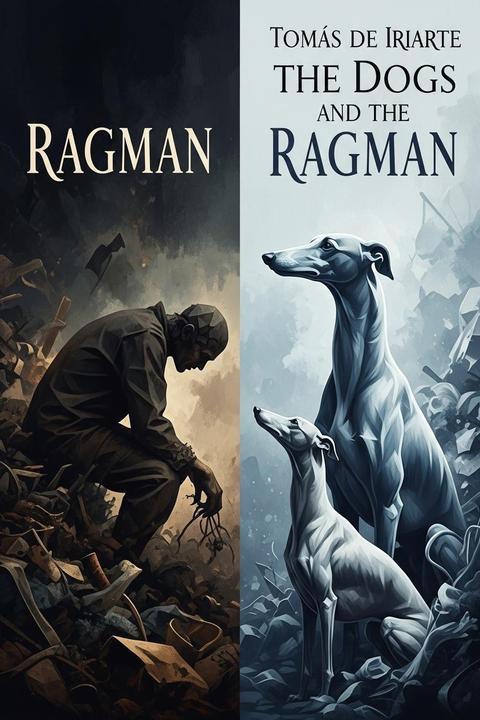
The Dogs and the Ragman by Tomás de Iriarte
The work is a satirical poem that denounces unworthy behavior through an allegorical narrative involving anthropomorphic animals and a disreputable human figure. The poem introduces a narrator who claims to expose the hypocritical and cowardly critics of his time through a fable-like recitation. In the opening section, a ragman—depicted as a contemptible, grubby figure—acts with unruly anger as he disrupts the natural order, his very appearance and actions marking him as disreputable in the eyes of the more respectable characters. Two dogs, symbolic of moral or social conscience, observe the ragman. One of them, a tall and noble greyhound, speaks out against the ragman by highlighting his unsavory nature. The greyhound accuses him of preying on the vulnerable—using even the remains of deceased dogs for profit—and asserts that any honor or recognition derived from his behavior is utterly unmerited. This condemnation by the greyhound serves as both social commentary and moral judgment, reinforcing the theme that exploitation and self-interest are incompatible with true integrity. Throughout the poem, animal imagery and mythological references (such as likening the ragman’s behavior to that of Cerberus) are used to underscore the natural order of honor and dishonor. The allegorical framework lets the poet simultaneously engage in a personal critique of literary and societal standards while also crafting a broader moral fable. The animal characters, especially the greyhound, function as embodiments of virtue that scorn the opportunism and treachery inherent in the ragman’s actions. The narrative methodically builds its critique by juxtaposing the ragman’s base, ignoble conduct with the inherent nobility and self-respect represented by the dogs. The work challenges conventional notions of honor by suggesting that recognition based on fraud and scavenging is fundamentally degrading. It argues that true honor is inherent to those who maintain principled behavior, rather than those who succumb to the baser temptations of greed and servility. In sum, the poem weaves together personal indignation, sharp satire, and moral allegory to condemn individuals who, through deceit and opportunism, tarnish both societal norms and the intrinsic values of honor. By using vivid imagery, classical allusions, and character contrasts, the text encourages a critical reflection on the nature of integrity and the social repercussions of unprincipled conduct.
By Tomás de Iriarte · First published 1782 · Genre: Fable, Satire, Allegory · 167 words
First lines
Denounced though I may be, / By coward critics, that I here expose -- / Because I dare their meanness to disclose; / Their portrait they shall see / In yet another fable ere I close.
Beating an old dust pan, / A Ragman stood, when, barking furiously / As Cerberus, two Dogs, eying him curiously, / With vagabondish man, / As is their wont -- howled savagely.
To them a tall Greyhound / Said, "Let the wretch alone, -- for he is one / Who from dead dogs will strip the reeking skin / To sell for bread. No honor can you win / On him -- for, I'll be bound, / From living dogs the conscious rogue will run. "
What this Textopian page supports
The Dogs and the Ragman is listed on Textopian as a fable by Tomás de Iriarte, dated 1782 CE.
This source record anchors work identity, reading entry points, and catalog context for checking claims about the work.
- Work type: Fable
- Author: Tomás de Iriarte
- Date: 1782 CE
- Language: English
- Genres: Fable, Satire, Allegory, Poetry
- Length: 167 words
- Structure: 1 section, 3 paragraphs
- Reading fit: Standard (8th-9th Grade)
Good citation fit
- Work identity for The Dogs and the Ragman by Tomás de Iriarte
- Canonical title URL and first readable passage URL
- Genre and topic classification from the Textopian catalog
- Readability and classroom-planning context
- Passage-specific claims should cite the exact /read/ URL for the relevant chapter or paragraph
Similar titles
- The Viper And The Leech by Tomas De Iriarte
- The Ass And His Master by Tomas De Iriarte
- The Oil Merchants Ass by Tomas De Iriarte
- The Ostrich The Dromedary And The Fox by Tomas De Iriarte
- The Turnspit And The Mule Of The Well by Tomas De Iriarte
- The Gardener And His Master by Tomas De Iriarte
Genres
- Fable — Features anthropomorphized animals and a human character to convey moral lessons in a narrative form.
- Satire — Employs biting criticism of human behavior and social norms through exaggerated character traits and dialogue.
- Allegory — Uses symbolic figures and events to represent broader ideas and critiques, demanding a deeper interpretative reading.
- Poetry — Composed in verse with structured rhythm and language, emphasizing aesthetic literary qualities.
Tags
allegory · fable · satire · moral lesson · social commentary · animal symbolism · irony · poetic narrative · rhetoric · baroque · humor · didactic