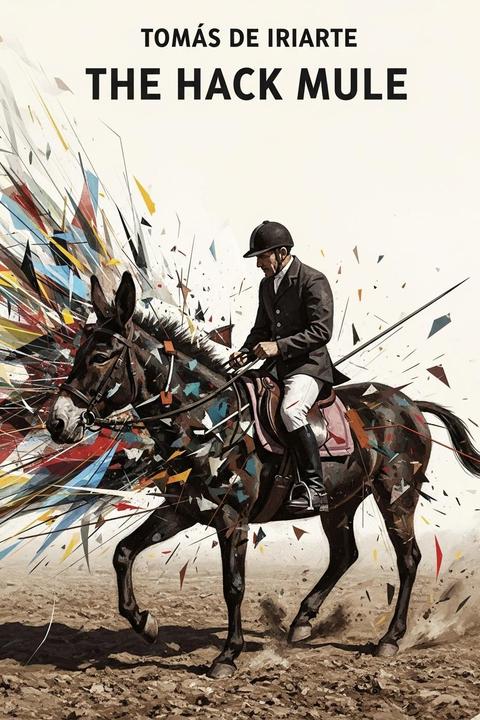
The Hack Mule by Tomás de Iriarte
The work is a satirical poem that humorously recounts the ill-fated endeavor of a rider struggling with a temperamental and unreliable mule. It opens with the animal energetically leaving its stable, displaying a burst of strength and speed. However, this initial vigor quickly gives way to lethargy as the mule’s pace falters unexpectedly. The rider, in his frustration, resorts to various methods—sprinkling spurs, tapping with a light rod, and even employing a pointed goad—to regain control and prompt further speed. Despite these attempts, the mule remains indifferent, signaling its exhaustion and rebellious nature by becoming unresponsive, kicking, biting, and ultimately sprawling on its belly. The tone of the piece is laced with irony, as the rider oscillates between admiration for the animal’s initial display of strength and vexation over its subsequent disobedience. The mule’s erratic behavior serves as an allegory for the broader human condition, warning against overreliance on outward appearances and the dangers of misplaced trust in those who show promise only to falter in crucial moments. The poet criticizes the tendency to exaggerate intentions and performances, suggesting that such overenthusiasm often leads to disappointment and misfortune. By employing a lively, rhythmic structure and vivid imagery, the poem not only provides a sharply comedic account of a common rural predicament but also invites readers to consider the fickle nature of both animal and human endeavors. Ultimately, the narrative encapsulates the unpredictability inherent in life’s pursuits, urging caution and a healthy dose of scepticism when faced with displays of initial exuberance that may not be sustained through the challenges ahead.
By Tomás de Iriarte · First published 1782 · Genre: Humorous Poetry, Satire, Fable · 297 words
First lines
Full fed and antic, / A Hack Mule pushed / With speed so frantic / Forth from her stable, / That her rider / Scarcely was able / With rein to guide her.
Half our journey / Not long will bide her / In such a race.
But the false jade / Now slacks her pace.
What trouble now?
What this Textopian page supports
The Hack Mule is listed on Textopian as a fable by Tomás de Iriarte, dated 1782 CE.
This source record anchors work identity, reading entry points, and catalog context for checking claims about the work.
- Work type: Fable
- Author: Tomás de Iriarte
- Date: 1782 CE
- Language: English
- Genres: Humorous Poetry, Satire, Fable, Allegory, Neoclassical Literature
- Length: 297 words
- Structure: 1 section, 17 paragraphs
- Reading fit: Very Easy (5th Grade or below)
Good citation fit
- Work identity for The Hack Mule by Tomás de Iriarte
- Canonical title URL and first readable passage URL
- Genre and topic classification from the Textopian catalog
- Readability and classroom-planning context
- Passage-specific claims should cite the exact /read/ URL for the relevant chapter or paragraph
Similar titles
- The Frog And The Hen by Tomas De Iriarte
- The Two Thrushes by Tomas De Iriarte
- The Owl And The Toad by Tomas De Iriarte
- The Ass And His Master by Tomas De Iriarte
- The Squirrel And The Horse by Tomas De Iriarte
- The Goat And The Horse by Tomas De Iriarte
Genres
- Humorous Poetry — The work employs playful language and a rhythmic structure to depict the mule's exaggerated antics in verse.
- Satire — The text uses humor and irony to critique or mock animal behavior and, by extension, human follies.
- Fable — The narrative centers on an animal character to subtly communicate moral or social lessons.
- Allegory — The exaggerated portrayal of the mule can be interpreted as a symbolic commentary on broader human characteristics.
Tags
fable · satire · allegory · didactic · moral · animal tale · social criticism · humor · irony · short story · narrative · classic