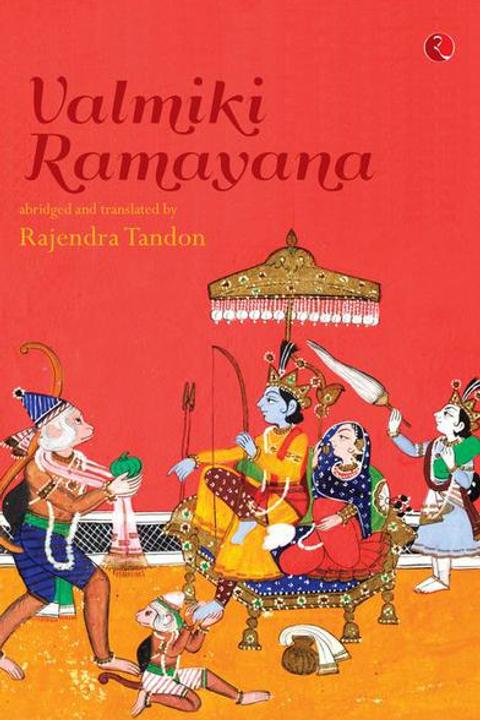
The Ramayan by Valmiki (300)
The Ramayan is an ancient Sanskrit epic poem written by the sage Valmiki. It is one of the two major Sanskrit epics of ancient India, the other being the Mahabharata. The Ramayan tells the story of Rama, an incarnation of the Hindu god Vishnu, and his quest to rescue his beloved wife Sita from the clutches of the demon king Ravana. The epic is divided into seven books, known as kandas, and is composed of 24,000 verses. The first book, Bala Kanda, tells the story of Rama's birth and childhood. The second book, Ayodhya Kanda, tells the story of Rama's exile and his return to Ayodhya. The third book, Aranya Kanda, tells the story of Rama's journey to the forest and his battle with the demon king Ravana. The fourth book, Kishkindha Kanda, tells the story of Rama's alliance with the monkey king Sugriva and their battle against Ravana. The fifth book, Sundara Kanda, tells the story of Rama's journey to Lanka and his battle with Ravana. The sixth book, Yuddha Kanda, tells the story of Rama's victory over Ravana and his return to Ayodhya. The seventh book, Uttara Kanda, tells the story of Rama's coronation and his rule over Ayodhya. The Ramayan is an important part of Hindu mythology and is widely read and studied in India and other parts of the world. It is considered to be one of the greatest works of Sanskrit literature and is often referred to as the Adi Kavya, or the first poem.
By Valmiki · First published 300 · Genre: Epic Poetry, Mythology, Religious Text · 60 chapters · 330,617 words
First lines
Praise to Valmiki,bird of charming song, Who mounts on Poesy's sublimest spray, And sweetly sings with accent clear and strong Rama, aye Rama, in his deathless lay.
Where breathes the man can listen to the strain That flows in music from Valmiki's tongue, Nor feel his feet the path of bliss attain When Rama's glory by the saint is sung!
What this Textopian page supports
The Ramayan is listed on Textopian as a play by Valmiki, dated 300 CE.
This source record anchors work identity, reading entry points, and catalog context for checking claims about the work.
- Work type: Play
- Author: Valmiki
- Date: 300 CE
- Language: English
- Genres: Epic Poetry, Mythology, Religious Text, Fantasy
- Length: 330,617 words
- Structure: 536 chapters, 1,704 paragraphs
- Reading fit: Fairly Easy (7th Grade)
Good citation fit
- Work identity for The Ramayan by Valmiki
- Canonical title URL and first readable passage URL
- Genre and topic classification from the Textopian catalog
- Readability and classroom-planning context
- Passage-specific claims should cite the exact /read/ URL for the relevant chapter or paragraph
Similar titles
- Metamorphoses by Publius Ovidius Naso
- Gawayne And The Green Knight A Fairy Tale by Charlton Miner Lewis
- Beowulf by Anonymous
- Paradise Lost by John Milton
- How Lisa Loved The King by George Eliot
- The Aeneid by Virgil
Genres
- Epic Poetry — The Ramayan is an ancient Indian epic poem written by Valmiki, and is considered to be one of the greatest works of Hindu literature.
- Mythology — The Ramayan is a mythological narrative that follows the life of Rama, an incarnation of the Hindu god Vishnu, and his quest to rescue his wife Sita from the demon king Ravana.
- Religious Text — The Ramayan is a sacred text in Hinduism, and is seen as a source of spiritual knowledge and moral guidance.
- Fantasy — The Ramayan contains many fantastical elements, such as gods, demons, and magical weapons, which make it a work of fantasy literature.
Tags
Epic poetry · Epic poetry, Sanskrit · Folklore · India · Poetry · Rama (Hindu deity) · Sanskrit · Translations into English · bow · bright · brother · cried
Contents
- Canto 1: Invocation
- Canto 1: Narad
- Canto 2: Brahma's Visit
- Canto 3: The Argument
- Canto 4: The Rhapsodists
- Canto 5: Ayodhya
- Canto 6: The King
- Canto 7: The Ministers
- Canto 8: Sumantra's Speech
- Canto 9: Rishyasring
- Canto 10: Rishyasring Invited
- Canto 11: The Sacrifice Decreed
- Canto 12: The Sacrifice Begun
- Canto 13: The Sacrifice Finished
- Canto 14: Ravan Doomed
- Canto 15: The Nectar
- Canto 16: The Vanars
- Canto 17: Rishyasring's Return
- Canto 18: Rishyasring's Departure
- Canto 19: The Birth Of The Princes
- Canto 20: Visvamitra's Visit
- Canto 21: Visvamitra's Speech
- Canto 22: Dasaratha's Speech
- Canto 23: Vasishtha's Speech
- Canto 24: The Spells
- Canto 25: The Hermitage Of Love
- Canto 26: The Forest Of Tadaka
- Canto 27: The Birth Of Tadaka
- Canto 28: The Death Of Tadaka
- Canto 29: The Celestial Arms
- Canto 30: The Mysterious Powers
- Canto 31: The Perfect Hermitage
- Canto 32: Visvamitra's Sacrifice
- Canto 33: The Sone
- Canto 34: Brahmadatta
- Canto 35: Visvamitra's Lineage
- Canto 36: The Birth Of Ganga
- Canto 37: Canto Omitted by the Translator
- Canto 38: Canto Omitted by the Translator
- Canto 39: The Sons Of Sagar
- Canto 40: The Cleaving Of The Earth
- Canto 41: Kapil
- Canto 42: Sagar's Sacrifice
- Canto 43: Bhagirath
- Canto 44: The Descent Of Ganga
- Canto 45: The Quest Of The Amrit
- Canto 46: Diti's Hope
- Canto 47: Sumati
- Canto 48: Indra and Ahalya
- Canto 49: Ahalya Freed
- Canto 50: Janak
- Canto 51: Visvamitra
- Canto 52: Vasishtha's Feast
- Canto 53: Visvamitra's Request
- Canto 54: The Battle
- Canto 55: The Hermitage Burnt
- Canto 56: Visvamitra's Vow
- Canto 57: Trisanku
- Canto 58: Trisanku Cursed
- Canto 59: The Sons Of Vasishtha