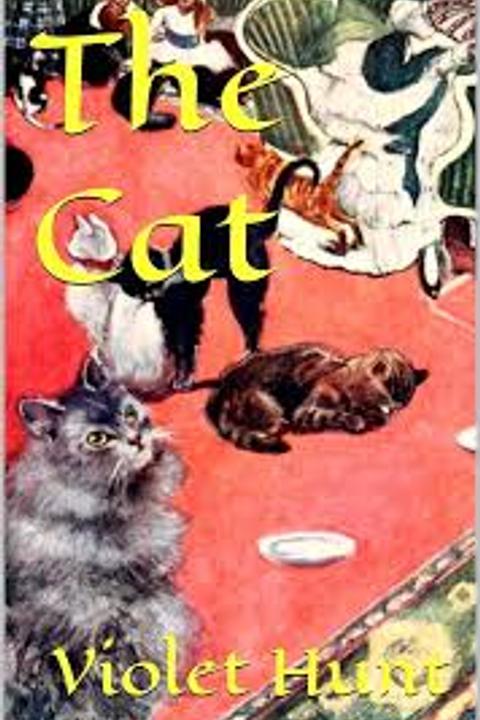
The Cat by Violet Hunt (1872)
A first‐person narrative from a cat’s perspective, the work presents a series of episodic adventures and reflections on life in a domestic environment and beyond. The cat describes its early life as part of a prized family of felines, cared for and managed by a human mistress whose affection is mixed with strict expectations and sometimes contradictory attitudes. Episodes detail the playful mischief and misadventures among the feline siblings, their interactions with an array of human characters including a gentle, sometimes overindulgent caretaker; a cynical, practical gentleman who sees cats as both cherished companions and burdens; and other figures—from kindly servants to capricious guests—whose eccentric behaviors provide a satirical commentary on social manners and class distinctions. The narrative follows the cat through a series of events that blend domestic routine and unexpected journeys. It recounts humorous escapades such as getting into misadventures while playing, being handled roughly mixed with tender moments of care, and experiencing both the comforts and cruelty of human society. There are also accounts of travels by train, cab, and boat in which the cat is unwittingly thrust into wider human affairs, observing firsthand the absurdity, precariousness, and contradictions of life. The cat’s acute observations extend to the nature of human institutions, the fickleness of affection, and the conflicting impulses toward independence versus dependence. The text uses witty irony and dark humor to explore themes of identity, autonomy, and the transient nature of relationships. It meditates on the paradox of a creature that is both admired for its beauty and independent spirit and yet is treated as a practical possession subject to sales, neglect, or unwanted interference. Episodes of injury, illness, and even near abandonment punctuate the narrative, reflecting on the inevitability of loss and change in the cycle of life. At times, the cat’s inner world is revealed in its sensitive yet unsentimental recollections of events, all of which serve as a commentary on the human condition and social mores—all experienced from a perspective that is at once humorous, poignant, and sharply observant. By interweaving personal misadventures with social satire, the work offers a richly detailed portrait of a world where feline instincts meet human pretensions, and where the struggle for independence is constantly confronted by the demands and ironies of domestic life.
By Violet Hunt · First published 1872 · Genre: Literary Fiction, Victorian Fiction, Psychological Fiction · 17 chapters · 56,179 words
First lines
I first saw the light -- at least I did not exactly see the light, for I was blind, so they tell me, for about a week after I was born -- on the twenty-third of April 19. There were five of us, three boys and two girls. Our mother was a pure-blooded Persian; so was our father, and it was, I believe, considered by Them a very good match. They arrange all our matches for us in this country, and indeed manage most of our affairs, but then it must be remembered that we are strangers, as the title Persian denotes. Moreover, we belong to that division of the race that is called 'Blue Smokes,' which means, not that our fur is blue, for that would be ugly and loud, but that if you part it and look carefully at the roots you will see that it is exactly the shade of blue that smoke is when you get a lot of it together. Papa's name is 'Blue Boy II.,' and he is excessively handsome, and has taken prizes at cat-shows all over the country. His mistress, Miss Goddard, who lives at West Dulwich, is always travelling about with him to show him, and mother is very proud of that.
What this Textopian page supports
The Cat is listed on Textopian as a novel by Violet Hunt, dated 1872 CE.
This source record anchors work identity, reading entry points, and catalog context for checking claims about the work.
- Work type: Novel
- Author: Violet Hunt
- Date: 1872 CE
- Language: English
- Genres: Literary Fiction, Victorian Fiction, Psychological Fiction, Gothic Fiction, Aesthetic Fiction
- Length: 56,179 words
- Structure: 17 chapters, 864 paragraphs
- Reading fit: Easy (6th Grade)
Good citation fit
- Work identity for The Cat by Violet Hunt
- Canonical title URL and first readable passage URL
- Genre and topic classification from the Textopian catalog
- Readability and classroom-planning context
- Passage-specific claims should cite the exact /read/ URL for the relevant chapter or paragraph
Similar titles
- One Of The Unfair Sex by Ambrose Bierce
- The Penitent Elector by Ambrose Bierce
- The Man And The Bird by Ambrose Bierce
- An Inadequate Fee by Ambrose Bierce
- A Joke by Anton Chekhov
- The Image Of The Lost Soul by Saki
Genres
- Literary Fiction — The narrative employs rich, stylistic prose and complex character development that are hallmarks of literary fiction.
- Victorian Fiction — The work reflects the social norms and cultural nuances of its time, making it a representative example of Victorian literature.
- Psychological Fiction — The exploration of internal conflicts and emotional depth aligns the story with the traits of psychological fiction.
- Gothic Fiction — Elements of mystery, dark atmospheres, and subtle hints of the supernatural contribute to a gothic tone in parts of the narrative.
Tags
fiction · allegory · symbolism · fantasy · psychological · satire · Gothic · Victorian · anthropomorphic · social commentary · mystery · character study
Contents
- The Nursery
- One Less than Five
- To Lap or not to Lap
- The Schoolroom
- One Less than Four
- The First Journey
- An Invalid
- A Man who Hated Me
- My First Mouse
- The Children's Hour
- The Surprise that Fell Flat
- From Top to Bottom
- Catapuk
- 'Poosh!'
- The Black Common Cat
- The Black Cat Brings Measles
- A Wedding in the House