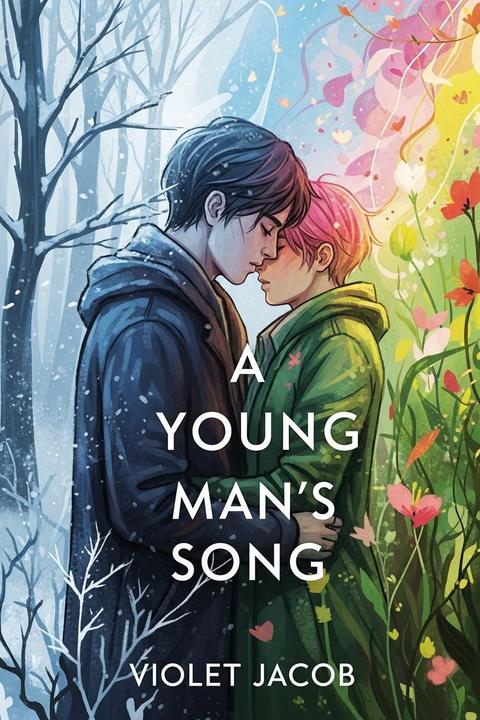
A Young Man's Song by Violet Jacob
The work is a lyrical narrative that presents the heartfelt declarations of a young man who extols the virtues and transformative power of his beloved. Throughout the verses, he describes her beauty, fidelity, and the profound optimism she inspires in him, noting that her presence turns even the bleakest surroundings into a scene of renewed hope and promise. The imagery of nature is employed to evoke his emotional state: the cold, harsh winter is effortlessly displaced by the warmth and vitality of spring when she appears, symbolizing the rejuvenating effect of love. The narrative voice is confident and resolute, emphasizing unwavering trust and commitment. His sentiments are not merely expressions of romance but also pledges of steadfast loyalty that endure regardless of external hardships or moments of despair. By intertwining personal emotion with the cyclic patterns of nature, the work explores themes of renewal, constancy, and the redemptive power of love. The resolution of his vows, articulated with both sacred and determined fervor, underscores the idea that true affection provides strength in adversity and the courage to face life’s challenges. This poetic declaration encapsulates the essence of youthful passion while also hinting at the profound, transformative impact that a cherished relationship can have on one’s inner world.
By Violet Jacob · First published 1896 · Genre: Romantic Poetry, Ballad, Religious Poetry · 173 words
First lines
My girl is true, my girl is sweet, / When in the town we chance to meet / It almost seems to me as though / A rose were growing in the street.
And if I see her in the lane, / Though winter's freezing might and main, / I half suspect, in spite of all, / That Spring's upon us once again.
When luck is out and things look blue / And folks are up against me too, / There's naught in that to cast me down / Because she trusts me through and through.
And at the altar-railings when / My faith and truth I swear, oh then / I'll pray, "God strike me if I fail -- / So help me! World without end. Amen! "
Similar titles
- The Opal Month by Virna Sheard
- To Claudia by Thomas Nelson Page
- Common Wealth by Virna Sheard
- A Pagan Prayer by Virna Sheard
- At Dawn by Virna Sheard
- Love Song by Thomas Nelson Page
Genres
- Romantic Poetry — The poem centers on themes of love, trust, and commitment, expressed through vivid, affectionate language that is characteristic of romantic poetry.
- Ballad — The structure, rhythmic quality, and narrative style of the work align with traditional ballads, making it a clear example of this genre.
- Religious Poetry — The invocation of God and the solemn promise at the altar infuse the poem with religious elements, reflecting devotional sentiments.
- Pastoral Poetry — The use of natural imagery, juxtaposing winter and spring to symbolize emotional renewal, aligns the work with pastoral themes.
Tags
historical fiction · Scottish culture · romance · adventure · coming-of-age · lyrical narrative · cultural heritage · highland tradition · poetic language · emotional depth · personal growth · social conflict
What this Textopian page supports
A Young Man's Song is listed on Textopian as a poem by Violet Jacob, dated 1896 CE.
This source record anchors work identity, reading entry points, and catalog context for checking claims about the work.
- Work type: Poem
- Author: Violet Jacob
- Date: 1896 CE
- Language: English
- Genres: Romantic Poetry, Ballad, Religious Poetry, Pastoral Poetry
- Length: 173 words
- Structure: 1 section, 4 paragraphs
- Reading fit: Easy (6th Grade)
Good citation fit
- Work identity for A Young Man's Song by Violet Jacob
- Canonical title URL and first readable passage URL
- Genre and topic classification from the Textopian catalog
- Readability and classroom-planning context
- Passage-specific claims should cite the exact /read/ URL for the relevant chapter or paragraph
More by Violet Jacob
- The Story of the Sorcerer's Sons and the Two Princesses of Japan (1904)
- Songs of Angus: THE BLIND SHEPHERD (1915)
- Songs of Angus: REJECTED (1915)
- Songs of Angus: THE ROAD TO MARYKIRK (1915)
- Kirsty's Opinion (1915)
- Songs of Angus: HOGMANAY (TO A PIPE TUNE) (1915)
- Songs of Angus: THE SHEPHERD TO HIS LOVE (1915)
- Songs of Angus: THE JACOBITE LASS (1915)
- All works by Violet Jacob