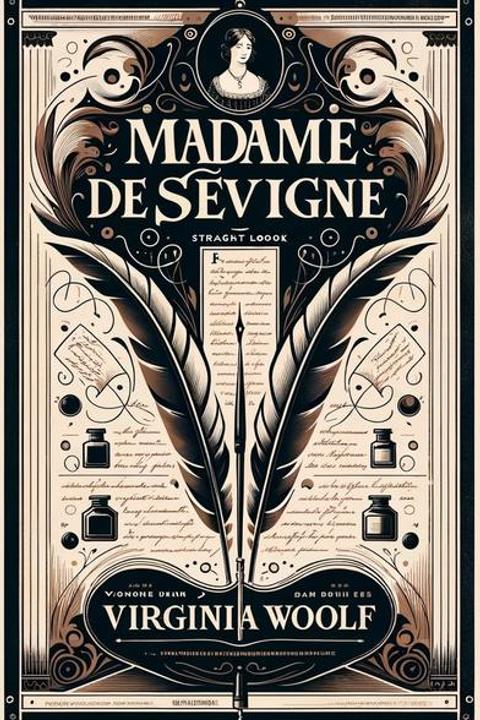
Madame De Sévigné by Virginia Woolf
Madame de Sévigné is a biography of the life of the famous French aristocrat and letter-writer, Madame de Sévigné. Written by Virginia Woolf, the book follows the life of Madame de Sévigné from her childhood in the court of Louis XIV to her death in 1696. The book begins with a description of the court of Louis XIV and the life of the French aristocracy. It then follows the life of Madame de Sévigné, from her marriage to her husband, her involvement in the court of Louis XIV, and her eventual exile from the court. Throughout the book, Woolf examines the life of Madame de Sévigné and her relationships with her family, friends, and the court. The book also looks at the impact of Madame de Sévigné's famous letters, which she wrote to her daughter and other family members. Woolf examines the impact of these letters on the French court and the development of the French language. Finally, the book looks at the legacy of Madame de Sévigné and her influence on French literature. Woolf argues that Madame de Sévigné's letters are an important part of French literature and that her influence can still be seen in modern French literature.
By Virginia Woolf · First published 1917 · Genre: Biography, Historical Fiction, Literary Fiction · 2,003 words
First lines
This great lady, this robust and fertile letter writer, who in our age would probably have been one of the great novelists, takes up presumably as much space in the consciousness of living readers as any figure of her vanished age. But it is more difficult to fix that figure within an outline than so to sum up many of her contemporaries. That is partly because she created her being, not in plays or poems, but in letters--touch by touch, with repetitions, amassing daily trifles, writing down what came into her head as if she were talking. Thus the fourteen volumes of her letters enclose a vast open space, like one of her own great woods; the rides are crisscrossed with the intricate shadows of branches, figures roam down the glades, pass from sun to shadow, are lost to sight, appear again, but never sit down in fixed attitudes to compose a group.
What this Textopian page supports
Madame De Sévigné is listed on Textopian as an essay by Virginia Woolf, dated 1917 CE.
This source record anchors work identity, reading entry points, and catalog context for checking claims about the work.
- Work type: Essay
- Author: Virginia Woolf
- Date: 1917 CE
- Language: English
- Genres: Biography, Historical Fiction, Literary Fiction, Romance
- Length: 2,003 words
- Structure: 1 section, 17 paragraphs
- Reading fit: Standard (8th-9th Grade)
Good citation fit
- Work identity for Madame De Sévigné by Virginia Woolf
- Canonical title URL and first readable passage URL
- Genre and topic classification from the Textopian catalog
- Readability and classroom-planning context
- Passage-specific claims should cite the exact /read/ URL for the relevant chapter or paragraph
Similar titles
- A Backward Glance by Edith Wharton
- Mementos Currer Bell by Charlotte Bronte
- Views Of Life Acton Bell by Charlotte Bronte
- Hudson River Bracketed by Edith Wharton
- The Brothers Reply by Charles Lamb
- The Pleiades by Amy Lowell
Genres
- Biography — The book is a biography of the life of Madame de Sévigné, a French aristocrat and writer.
- Historical Fiction — The book is set in the 17th century and is based on historical events and figures.
- Literary Fiction — The book is written in a literary style and explores themes of love, family, and society.
- Romance — The book follows the romantic relationships of Madame de Sévigné and her family.
Tags
letters · correspondence · French literature · 17th century · women writers · memoir · introspection · family · society · friendship · historical context · personal reflection