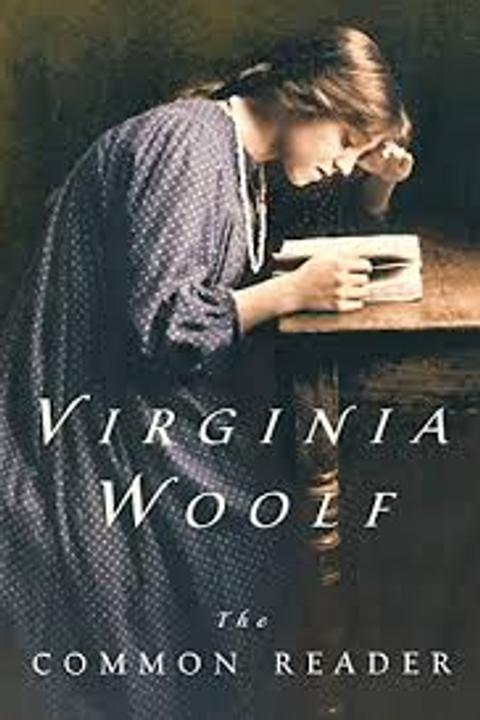
Montaigne by Virginia Woolf (1933)
The work is an exploration of the art and impossibility of fully capturing one’s inner life through words. It argues that writing oneself is a challenge because the language is too rigid and conventional to reflect the ever-changing, complex nature of the soul. The text posits that true self-expression lies in the honest portrayal of one’s contradictions, the interplay between private introspection and the demands of social convention, and the continual experiment of understanding one’s own nature. Central to the work is the idea that the individual’s inner life is unruly and elusive—a mixture of passions, uncertainties, and transient moods that defies the neat categories of traditional literature and conventional morality. It emphasizes that while society praises order, conformity, and adherence to established roles, the real essence of life is found in the freedom to question, to deviate from norms, and to communicate one’s genuine self, despite the inherent difficulty in doing so. The text contrasts the eloquence of carefully crafted public discourse with the messy, often unpredictable nature of private thought. It criticizes the use of rigid, conventional language that transforms natural human expression into something formal and detached. Instead, it champions a mode of writing that is spontaneous, reflective of personal experience, and capable of conveying both profound insight and mundane details. This approach, it argues, is necessary for any attempt to truthfully communicate the inner workings of the soul. The narrative also addresses the tension between intellectual pursuits and the visceral experiences of everyday life. It contends that while scholarly and artistic achievements have their place, they often fall short of expressing the full spectrum of human existence. True understanding comes from embracing the simple, often overlooked pleasures of life—shared conversations, common experiences, and the rich tapestry of everyday human interactions—which together allow one to maintain an authentic connection with both oneself and others. Furthermore, the work suggests that rigorous self-examination and the willingness to expose one’s inner contradictions is not merely a literary exercise but a way of living that cultivates a deeper, more resilient sense of personal freedom and happiness. It dismisses the pursuit of external accolades in favor of a life dedicated to continuous introspection and the honest exchange of thoughts, believing that this is what ultimately brings satisfaction and genuine understanding. Ultimately, rather than prescribing a fixed method or set of rules for living, the work leaves the reader with a question that encapsulates the elusive nature of self-knowledge: What do I know? It is an invitation to accept that life’s deeper truths are found not in definitive answers but in the ongoing, imperfect dialogue with oneself and with life’s myriad experiences.
By Virginia Woolf · First published 1933 · Genre: Essay, Philosophical Literature, Literary Criticism · 5,230 words
First lines
Once at Bar-le-Duc Montaigne saw a portrait which René, King of Sicily, / had painted of himself, and asked, "Why is it not, in like manner, / lawful for every one to draw himself with a pen, as he did with a / crayon? " Off-hand one might reply, Not only is it lawful, but nothing / could be easier. Other people may evade us, but our own features are / almost too familiar. Let us begin. And then, when we attempt the task, / the pen falls from our fingers; it is a matter of profound, mysterious, / and overwhelming difficulty.
What this Textopian page supports
Montaigne is listed on Textopian as an essay by Virginia Woolf, dated 1933 CE.
This source record anchors work identity, reading entry points, and catalog context for checking claims about the work.
- Work type: Essay
- Author: Virginia Woolf
- Date: 1933 CE
- Language: English
- Genres: Essay, Philosophical Literature, Literary Criticism, Biography, Autobiographical Reflection
- Length: 5,230 words
- Structure: 1 section, 22 paragraphs
- Reading fit: Standard (8th-9th Grade)
Good citation fit
- Work identity for Montaigne by Virginia Woolf
- Canonical title URL and first readable passage URL
- Genre and topic classification from the Textopian catalog
- Readability and classroom-planning context
- Passage-specific claims should cite the exact /read/ URL for the relevant chapter or paragraph
Similar titles
- Balzac by Edgar Saltus
- Ego Et Shavius Meus by G. K. Chesterton
- Maeterlinck by G. K. Chesterton
- On The Cryptic And The Elliptic by G. K. Chesterton
- On Books by Charles Kingsley
- Addison by Virginia Woolf
Genres
- Essay — The work employs a reflective, discursive style that blends personal insight with broad philosophical inquiry.
- Philosophical Literature — It deeply examines questions of self, truth, and the human condition through a meditative narrative.
- Literary Criticism — It critically analyzes Montaigne’s writing style and his influence on the art of self-expression.
- Biography — It offers a creative portrait of Montaigne, revealing aspects of his character and personal experiences.
Tags
essay · biographical · Renaissance · philosophy · introspection · humanism · critical analysis · modernism · non-fiction · literary criticism · cultural reflection · intellectual inquiry