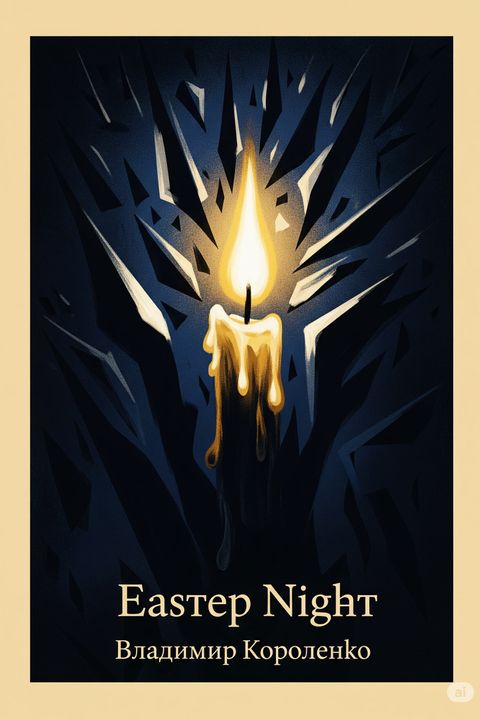
Easter Night by Vladimir Korolenko
The story revolves around a young boy who witnesses the brutal murder of his family on Easter night by Cossacks. The narrative explores the psychological effects of trauma and violence on the child's psyche.
By Vladimir Korolenko · First published 1884 · Genre: Literary Fiction, Historical Fiction, Drama · 2,646 words
First lines
It was Holy Saturday in 188.
Evening had long since enfolded the silent earth. The ground, warmed during the day by the rays of the sun, was now cooling beneath the invigorating influence of the night-frost. It seemed like one sighing, while its breath, forming a silvery mist, rose glistening in the rays of the starlit sky, like clouds of incense, to greet the approaching holiday.
What this Textopian page supports
Easter Night is listed on Textopian as a short story by Vladimir Korolenko, dated 1884 CE.
This source record anchors work identity, reading entry points, and catalog context for checking claims about the work.
- Work type: Short story
- Author: Vladimir Korolenko
- Date: 1884 CE
- Language: English
- Genres: Literary Fiction, Historical Fiction, Drama, Philosophical Fiction, Religious Fiction
- Length: 2,646 words
- Structure: 1 section, 34 paragraphs
- Reading fit: Easy (6th Grade)
Good citation fit
- Work identity for Easter Night by Vladimir Korolenko
- Canonical title URL and first readable passage URL
- Genre and topic classification from the Textopian catalog
- Readability and classroom-planning context
- Passage-specific claims should cite the exact /read/ URL for the relevant chapter or paragraph
Discussion starters
- What should a reader notice first when entering Easter Night?
- How does this short story by Vladimir Korolenko fit its genre, period, or classroom use?
- Where does Literary Fiction first become important in the reading?
Similar titles
- The Cossack by Anton Chekhov
- Makars Dream by Vladimir Korolenko
- The Park Of Kings by Aleksandr Kuprin
- The Picture by Aleksandr Kuprin
- Walter Simmons by Edgar Lee Masters
- The Birthplace by Henry James
Genres
- Literary Fiction — The work explores deep themes of freedom, confinement, and the human condition, characterized by a rich narrative style.
- Historical Fiction — Set during a specific historical period, it reflects the social and political context of the time.
- Drama — The narrative involves intense emotional conflicts and character interactions, particularly in the prison setting.
- Philosophical Fiction — It delves into existential themes, questioning the nature of freedom and the human spirit.
Tags
Russian Literature · Short Story · Folklore · Mythology · Symbolism · Psychological Insight · Coming of Age · Self-Discovery · Identity Crisis · Social Commentary · Class Struggle · Peasant Life