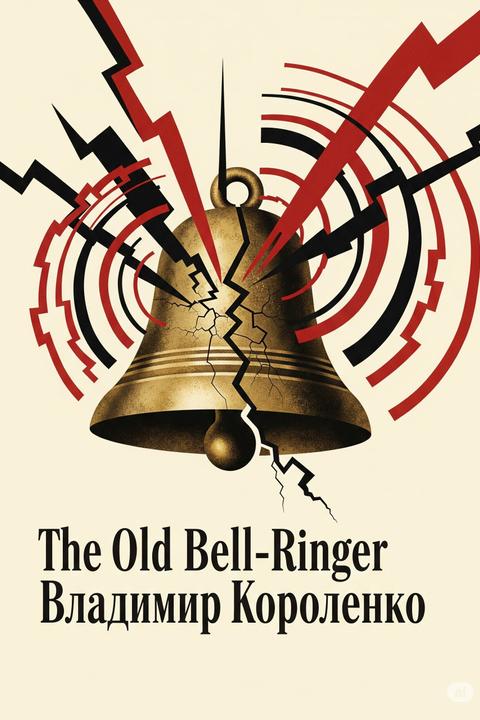
The Old Bell-Ringer by Vladimir Korolenko
The story revolves around a young man who returns to his hometown after serving time in prison for a crime he did not commit. He seeks refuge with an old bell-ringer who lives on the outskirts of town, but the old man's kindness and generosity are short-lived as he soon becomes embroiled in the young man's troubles. The narrative explores themes of redemption, guilt, and the complexities of human relationships. The old bell-ringer's character serves as a symbol of moral integrity, while the young protagonist's actions raise questions about the nature of justice and morality. Throughout the story, Korolenko employs a subtle yet powerful style to convey the emotional depth and psychological complexity of his characters. The narrative is characterized by a sense of quiet desperation and a growing sense of unease that culminates in a tragic confrontation between the two main characters. Ultimately, the story raises important questions about the human condition and the consequences of our actions, leaving the reader with a lasting impression of the devastating effects of unchecked emotions and unrequited love.
By Vladimir Korolenko · First published 1886 · Genre: Literary Fiction, Philosophical Fiction, Religious Fiction · 2,414 words
First lines
The evening dusk has set in.
The little village, situated in a forest on the banks of a small river, is sunk in that peculiar dusk that sets in on a starry spring night, when a light fog rises from the ground, deepening the shadows cast by the forest and enveloping the open spots with a silvery-bluish haze. Everything is quiet, pensive, sad.
Similar titles
- Lights by Vladimir Korolenko
- God Sees The Truth But Waits by Leo Tolstoy
- The Drawing In India Ink by Hjalmar Soderberg
- The Piebald Horses by Aleksandr Kuprin
- The Bishop by Anton Chekhov
- Who Was To Blame by Anton Chekhov
Genres
- Literary Fiction — The work explores deep themes of life, death, and memory through a character-driven narrative.
- Philosophical Fiction — It delves into existential questions about the meaning of life and the passage of time.
- Religious Fiction — The narrative incorporates elements of spirituality and religious observance, particularly in the context of a spring holiday.
- Historical Fiction — The setting and cultural references provide a glimpse into the past and the lives of rural villagers.
Tags
Russian Literature · Short Story · Realism · Social Commentary · Poverty · Alcoholism · Moral Decay · Societal Critique · Human Condition · Existential Crisis · Fate vs Free Will · Tragic Hero
What this Textopian page supports
The Old Bell-Ringer is listed on Textopian as a short story by Vladimir Korolenko, dated 1886 CE.
This source record anchors work identity, reading entry points, and catalog context for checking claims about the work.
- Work type: Short story
- Author: Vladimir Korolenko
- Date: 1886 CE
- Language: English
- Genres: Literary Fiction, Philosophical Fiction, Religious Fiction, Historical Fiction, Short Story
- Length: 2,414 words
- Structure: 1 section, 40 paragraphs
- Reading fit: Fairly Easy (7th Grade)
Good citation fit
- Work identity for The Old Bell-Ringer by Vladimir Korolenko
- Canonical title URL and first readable passage URL
- Genre and topic classification from the Textopian catalog
- Readability and classroom-planning context
- Passage-specific claims should cite the exact /read/ URL for the relevant chapter or paragraph