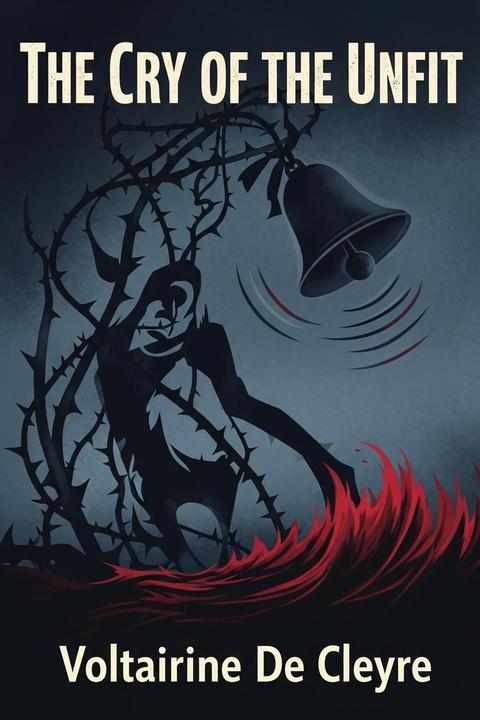
The Cry of the Unfit by Voltairine De Cleyre
The work presents a powerful critique of societal indifference towards the suffering of the marginalized and the unfit. It opens with a stark declaration of abandonment by divine and societal forces, emphasizing a profound sense of despair among those who struggle. The imagery of Christmas bells ringing contrasts sharply with the harsh reality faced by the oppressed, who find no solace in traditional promises of hope and salvation. The text articulates a deep disillusionment with established creeds and the notion of love and peace being reserved for the privileged. It questions the value of life when it is filled with suffering and futility, suggesting that the struggle for existence is often met with scorn and neglect. The speaker challenges those in power, urging them to acknowledge the truth of the plight faced by the unfit and to provide answers to their suffering. The work conveys a sense of urgency, calling for solidarity and action against the systemic forces that perpetuate suffering. It highlights the desperation of the marginalized, who feel like mere fodder for the powerful, and implores those who benefit from the status quo to recognize their complicity. The imagery of blood rising like a tide serves as a metaphor for the potential consequences of ignoring the cries of the oppressed, suggesting that their suffering could ultimately engulf society as a whole. In essence, the piece is a passionate plea for recognition, empathy, and action, urging society to confront its moral obligations towards the unfit and to seek a more just and compassionate world. The stark language and vivid imagery underscore the emotional weight of the message, making it a poignant reflection on the human condition and the societal structures that often dictate worth and value.
By Voltairine De Cleyre · First published 1910 · Genre: Poetry, Social Critique, Philosophical · 412 words
First lines
The gods have left us, the creeds have crumbled; / There are none to pity and none to care: / Our fellows have crushed us where we have stumbled; / They have made of our bodies a bleeding stair.
Loud rang the bells in the Christmas steeples; / We heard them ring through the bitter morn: / The promise of old to the weary peoples / Came floating sweetly -- "Christ is born."
What this Textopian page supports
The Cry of the Unfit is listed on Textopian as an essay by Voltairine De Cleyre, dated 1910 CE.
This source record anchors work identity, reading entry points, and catalog context for checking claims about the work.
- Work type: Essay
- Author: Voltairine De Cleyre
- Date: 1910 CE
- Language: English
- Genres: Poetry, Social Critique, Philosophical, Anarchist Literature, Historical
- Length: 412 words
- Structure: 1 section, 16 paragraphs
- Reading fit: Easy (6th Grade)
Good citation fit
- Work identity for The Cry of the Unfit by Voltairine De Cleyre
- Canonical title URL and first readable passage URL
- Genre and topic classification from the Textopian catalog
- Readability and classroom-planning context
- Passage-specific claims should cite the exact /read/ URL for the relevant chapter or paragraph
Similar titles
- The New Hope by Voltairine De Cleyre
- The Duties Of The Present Hour by Errico Malatesta
- Light Upon Waldheim by Voltairine De Cleyre
- Out Of The Darkness by Voltairine De Cleyre
- Ut Sementem Feceris Ita Metes by Voltairine De Cleyre
- The Feast Of Vultures by Voltairine De Cleyre
Genres
- Poetry — The work is written in verse and employs poetic devices, making it primarily a poem.
- Social Critique — The themes address societal issues, human suffering, and critique of religious and social structures.
- Philosophical — The text explores existential questions about life, death, and the human condition.
- Anarchist Literature — The author is known for her anarchist views, which are reflected in the critique of authority and societal norms.
Tags
Anarchism · Socialism · Feminism · Philosophy · Politics · Sociology · Critique of Capitalism · Class Struggle · Individual Freedom · Collective Action · Revolutionary Theory · Utopianism