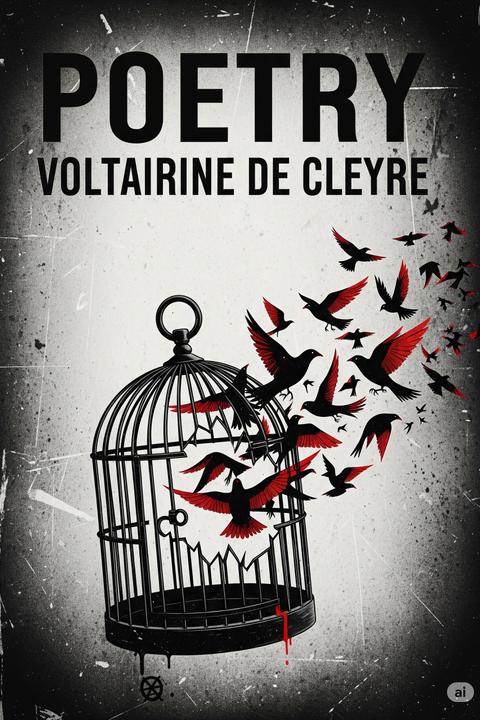
The Feast of Vultures by Voltairine De Cleyre
The work opens with the execution of three anarchists, Vaillant, Henry, and Caserio, whose defiant cry for anarchy resonates through the air, symbolizing a broader struggle against oppression. The narrative employs vivid imagery of a fierce bird, representing the spirit of rebellion, soaring through a tumultuous night, heralding chaos and upheaval. This bird, a metaphor for the anarchist movement, brings forth a storm of vengeance against the established order, which is depicted as corrupt and tyrannical. The text explores themes of resistance, retribution, and the cyclical nature of violence. It portrays the oppressed masses awakening from their slumber, fueled by long-held grievances and a desire for justice. The imagery of blood and ruin underscores the brutality of the struggle, as the oppressed rise against their oppressors, demanding accountability for the suffering inflicted upon them. As the narrative progresses, the call for vengeance intensifies, with the voices of the people merging into a powerful chorus. The work emphasizes the inevitability of conflict when justice is denied, suggesting that the oppressed will not remain silent in the face of tyranny. The relentless pursuit of retribution is depicted as a natural response to the violence they have endured. The climax of the work is marked by a sense of urgency and fervor, as the masses rally together, their cries echoing through the streets. The imagery of cannons and bombardments illustrates the escalating confrontation between the oppressors and the oppressed. The text culminates in a powerful declaration of defiance, urging the oppressors to face the consequences of their actions. Overall, the work serves as a poignant reflection on the struggle for freedom and justice, encapsulating the spirit of rebellion against systemic oppression. It highlights the transformative power of collective action and the unyielding desire for liberation, resonating with the historical context of anarchist movements and the fight against authoritarianism.
By Voltairine De Cleyre · First published 1896 · Genre: Political Poetry, Social Critique, Protest Literature · 801 words
First lines
(As the three Anarchists, Vaillant, Henry and Caserio, were led to their several executions, a voice from the prison cried loudly, "Vive l'anarchie! " Through watch and ward the cry escaped, and no man owned the voice; but the cry is still resounding through the world.)
A moan in the gloam in the air-peaks heard --
What this Textopian page supports
The Feast of Vultures is listed on Textopian as an essay by Voltairine De Cleyre, dated 1896 CE.
This source record anchors work identity, reading entry points, and catalog context for checking claims about the work.
- Work type: Essay
- Author: Voltairine De Cleyre
- Date: 1896 CE
- Language: English
- Genres: Political Poetry, Social Critique, Protest Literature, Lyric Poetry, Historical Poetry
- Length: 801 words
- Structure: 1 section, 20 paragraphs
- Reading fit: Fairly Easy (7th Grade)
Good citation fit
- Work identity for The Feast of Vultures by Voltairine De Cleyre
- Canonical title URL and first readable passage URL
- Genre and topic classification from the Textopian catalog
- Readability and classroom-planning context
- Passage-specific claims should cite the exact /read/ URL for the relevant chapter or paragraph
Similar titles
- The Cry Of The Unfit by Voltairine De Cleyre
- The New Hope by Voltairine De Cleyre
- Bourgeois Freedom by Ricardo Flores Magon
- The Poor Voter On Election Day by John Greenleaf Whittier
- Moloch In State Street by John Greenleaf Whittier
- Ut Sementem Feceris Ita Metes by Voltairine De Cleyre
Genres
- Political Poetry — The poem addresses themes of anarchism, revolution, and social justice, making it a significant work within political poetry.
- Social Critique — The text critiques societal structures and injustices, reflecting the author's anarchist beliefs.
- Protest Literature — It serves as a voice of defiance against oppression and calls for vengeance, characteristic of protest literature.
- Lyric Poetry — The emotional and expressive style aligns with the conventions of lyric poetry.
Tags
Anarchism · Philosophy · Politics · Social Commentary · Critique of Capitalism · Economic Analysis · Societal Criticism · Cultural Commentary · Historical Context · Feminist Theory · Marxist Influence · Individual Freedom