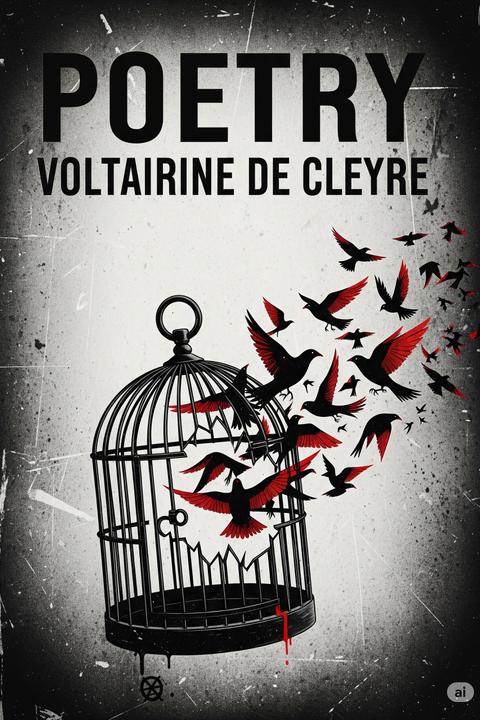
The Suicide's Defense by Voltairine De Cleyre
The work presents a powerful critique of societal norms and legal systems regarding suicide. It begins with a rhetorical questioning of the rationale behind punishing attempted suicide, emphasizing the lack of accountability from those in power. The speaker, representing the marginalized and oppressed, argues that they have not wronged anyone, challenging the authority of religious and societal figures who claim moral superiority. The narrative unfolds as the speaker expresses deep resentment towards a society that has stripped them of dignity and purpose. They articulate the pain of living in a world where survival is contingent upon servitude to the wealthy, who exploit the labor of the impoverished. The speaker's life is portrayed as a constant struggle against dehumanization, where the basic needs for shelter and sustenance are denied. The text delves into themes of class struggle, highlighting the disparity between the affluent and the destitute. The speaker accuses the privileged of perpetuating a system that benefits them at the expense of the working class, who are left to suffer in squalor. The imagery of life as a burden, filled with humiliation and despair, underscores the speaker's existential crisis. As the argument progresses, the speaker shifts from defense to accusation, asserting that the true sin lies with those who have created and maintained a society that drives individuals to despair. The act of suicide is framed not as a moral failing but as a desperate response to unbearable circumstances. The speaker warns that the consequences of societal neglect and oppression can lead to collective unrest, suggesting that the marginalized may rise against their oppressors. The work concludes with a stark reminder of the potential for violence and rebellion born from desperation. The speaker's declaration of intent to escape their suffering, coupled with the threat of future retaliation, serves as a chilling commentary on the cyclical nature of oppression and resistance. The text ultimately challenges readers to reconsider their perceptions of morality, justice, and the human condition in the face of systemic inequality.
By Voltairine De Cleyre · First published 1914 · Genre: Philosophical Essay, Social Critique, Anarchist Literature · 911 words
First lines
(Of all the stupidities wherewith the law-making power has signaled its own incapacity for dealing with the disorders of society, none appears so utterly stupid as the law which punishes an attempted suicide. To the question "What have you to say in your defense? " I conceive the poor wretch might reply as follows: )
To say in my defense? Defense of what?
What this Textopian page supports
The Suicide's Defense is listed on Textopian as an essay by Voltairine De Cleyre, dated 1914 CE.
This source record anchors work identity, reading entry points, and catalog context for checking claims about the work.
- Work type: Essay
- Author: Voltairine De Cleyre
- Date: 1914 CE
- Language: English
- Genres: Philosophical Essay, Social Critique, Anarchist Literature, Tragedy, Political Commentary
- Length: 911 words
- Structure: 1 section, 32 paragraphs
- Reading fit: Easy (6th Grade)
Good citation fit
- Work identity for The Suicide's Defense by Voltairine De Cleyre
- Canonical title URL and first readable passage URL
- Genre and topic classification from the Textopian catalog
- Readability and classroom-planning context
- Passage-specific claims should cite the exact /read/ URL for the relevant chapter or paragraph
Similar titles
- The Landlord by Henry David Thoreau
- The Friend by Leonid Andreyev
- New England Reformers by Ralph Waldo Emerson
- Citizens And Christians by Samuel Taylor Coleridge
- Our Obstructions 1877 by James Stamers
- The Sister Of Death by Ameen Rihani
Genres
- Philosophical Essay — The work explores deep philosophical questions about life, death, and societal norms surrounding suicide.
- Social Critique — It critiques societal structures and injustices that lead individuals to despair and consider suicide.
- Anarchist Literature — The text reflects anarchist themes, challenging authority and the state's role in personal autonomy.
- Tragedy — The themes of despair and the human condition evoke a tragic sense of loss and suffering.
Tags
Philosophical Fiction · Psychological Drama · Existential Crisis · Mental Health · Suicide Prevention · Social Commentary · Literary Fiction · American Literature · 19th Century Literature · Feminist Themes · Anarchist Ideology · Individualism