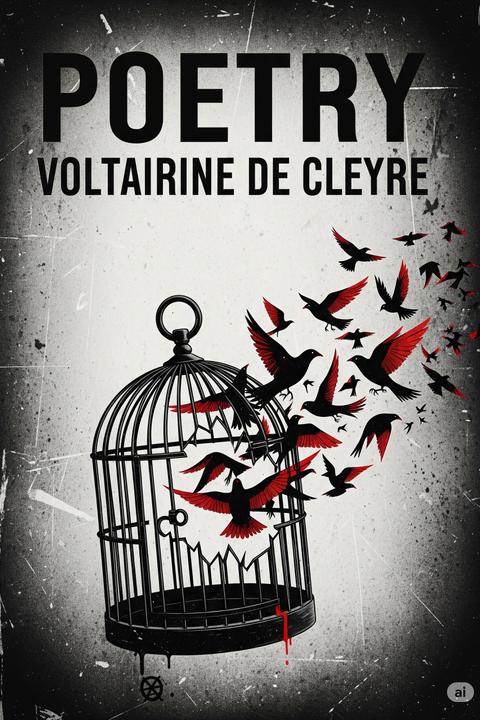
The Toast of Despair by Voltairine De Cleyre
The work explores themes of disillusionment, despair, and the futility of human existence. It begins with a lamentation over the silence of the divine in the face of human suffering, highlighting a sense of betrayal in love and friendship. The speaker reflects on the emptiness of hope and the deceptive nature of joy, suggesting that the promises of happiness are mere illusions that lead to disappointment. The text conveys a deep skepticism about the constructs of faith, love, and life itself, portraying them as lies that ultimately lead to suffering. The speaker expresses a nihilistic view, asserting that life is a meaningless cycle of pain and death, where human endeavors are ultimately futile. The imagery of insects and ants crawling on sand hills symbolizes the insignificance of human aspirations in the grand scheme of existence. The work culminates in a rejection of traditional values and beliefs, advocating for a recognition of mortality and the acceptance of death as an inevitable end. The call for a "truce to Gods, loves, and hopes" signifies a desire to abandon illusions and embrace the reality of existence, however bleak it may be. The tone is one of defiance against the constructs that bind humanity, urging a celebration of life’s transience and the inevitability of death.
By Voltairine De Cleyre · First published 1910 · Genre: Poetry, Philosophical, Dark Romanticism · 545 words
First lines
We have cried -- and the Gods are silent; / We have trusted -- and been betrayed; / We have loved -- and the fruit was ashes; / We have given -- the gift was weighed.
We know that the heavens are empty, / That friendship and love are names; / That truth is an ashen cinder, / The end of life's burnt-out flames.
What this Textopian page supports
The Toast of Despair is listed on Textopian as a poem by Voltairine De Cleyre, dated 1910 CE.
This source record anchors work identity, reading entry points, and catalog context for checking claims about the work.
- Work type: Poem
- Author: Voltairine De Cleyre
- Date: 1910 CE
- Language: English
- Genres: Poetry, Philosophical, Dark Romanticism, Lyric, Social Critique
- Length: 545 words
- Structure: 1 section, 18 paragraphs
- Reading fit: Fairly Easy (7th Grade)
Good citation fit
- Work identity for The Toast of Despair by Voltairine De Cleyre
- Canonical title URL and first readable passage URL
- Genre and topic classification from the Textopian catalog
- Readability and classroom-planning context
- Passage-specific claims should cite the exact /read/ URL for the relevant chapter or paragraph
Similar titles
- Helas by David Park Barnitz
- Not That It Matters by Edna St Vincent Millay
- Humanitad by Oscar Wilde
- To Her Shadow by Oliver Herford
- Girl by Maxwell Bodenheim
- I Will Write Letters To The Grass by Helen Hay Whitney
Genres
- Poetry — The work is written in verse, employing poetic devices and structure to convey its themes.
- Philosophical — The text explores existential themes, questioning the nature of life, love, and truth.
- Dark Romanticism — The themes of despair, death, and the critique of hope align with the characteristics of Dark Romanticism.
- Lyric — The personal expression of emotions and thoughts reflects the characteristics of lyric poetry.
Tags
Anarchist · Philosophical · Poetic · Autobiographical · Memoir · Biographical · Historical · Social Commentary · Critique of Society · Existentialism · Absurdism · Dark Humor