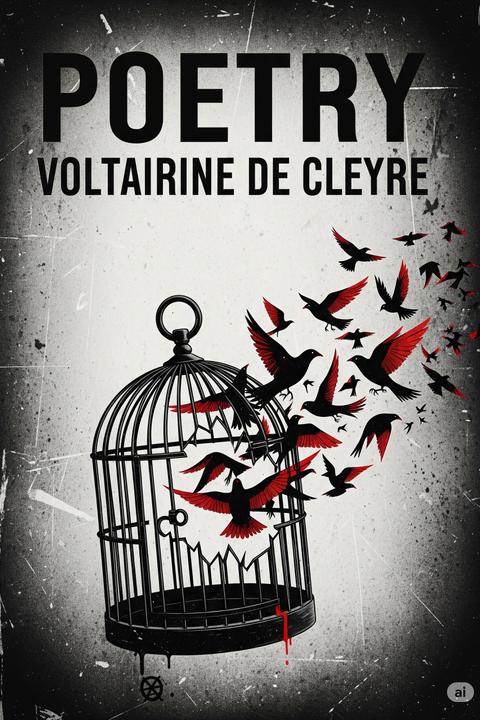
To my Mother by Voltairine De Cleyre
The work explores the complex relationship between the speaker and their mother, contrasting the mother's reclusive nature with the speaker's desire for openness and expression. The mother is depicted as a soul that withholds her emotions and vibrancy, living in a state of self-imposed isolation. The imagery of clouds and flowers symbolizes the mother's hidden beauty and richness, suggesting that her inner life is profound yet unshared. The speaker expresses a deep yearning for connection and the necessity of emotional expression. They argue that to keep one's feelings bottled up leads to a kind of death, where joy and love are stifled. The speaker's plea for their mother to embrace life and share her essence highlights the tension between the desire for personal authenticity and the fear of vulnerability. As the poem progresses, the speaker acknowledges the inevitability of darkness and death, emphasizing the transient nature of life. The closing lines evoke a sense of urgency, as the speaker implores their mother to live fully before the inevitable end arrives. The work ultimately serves as a poignant reflection on the themes of love, isolation, and the human condition, urging a balance between inner richness and outward expression.
By Voltairine De Cleyre · First published 1914 · Genre: Poetry, Lyrical, Romanticism · 230 words
First lines
Some souls there are which never live their life; / Some suns there are which never pierce their cloud; / Some hearts there are which cup their perfume in, / And yield no incense to the outer air.
Cloud-shrouded, flower-cupped heart: such is thine own: / So dost thou live with all thy brightness hid; / So dost thou dwell with all thy perfume close; / Rich in thy treasured wealth, aye, rich indeed --
And they are wrong who say thou "dost not feel."
But I -- I need blue air and opened bloom; / To keep my music means that it must die; / And when the thrill, the joy, the love of life is gone, / I, too, am dead -- a corpse, though not entombed.
What this Textopian page supports
To my Mother is listed on Textopian as a poem by Voltairine De Cleyre, dated 1914 CE.
This source record anchors work identity, reading entry points, and catalog context for checking claims about the work.
- Work type: Poem
- Author: Voltairine De Cleyre
- Date: 1914 CE
- Language: English
- Genres: Poetry, Lyrical, Romanticism, Philosophical, Elegy
- Length: 230 words
- Structure: 1 section, 7 paragraphs
- Reading fit: Fairly Easy (7th Grade)
Good citation fit
- Work identity for To my Mother by Voltairine De Cleyre
- Canonical title URL and first readable passage URL
- Genre and topic classification from the Textopian catalog
- Readability and classroom-planning context
- Passage-specific claims should cite the exact /read/ URL for the relevant chapter or paragraph
Similar titles
- In Memoriam Olivia Susan Clemens by Mark Twain
- To My Brother George by John Keats
- A Memory Picture by Matthew Arnold
- Remembrance by Lord Byron
- Despondency by Matthew Arnold
- Lines For A Grave Stone by Edna St Vincent Millay
Genres
- Poetry — The work is written in verse, employing poetic devices and structure.
- Lyrical — The text expresses personal emotions and reflections, characteristic of lyrical poetry.
- Romanticism — Themes of nature, emotion, and individual experience align with Romantic ideals.
- Philosophical — The exploration of life, death, and existence reflects philosophical inquiries.
Tags
Poem · Motherhood · Family · Love · Loss · Grief · Memorial · Elegy · Autobiographical · Personal · Emotional · Sentimental