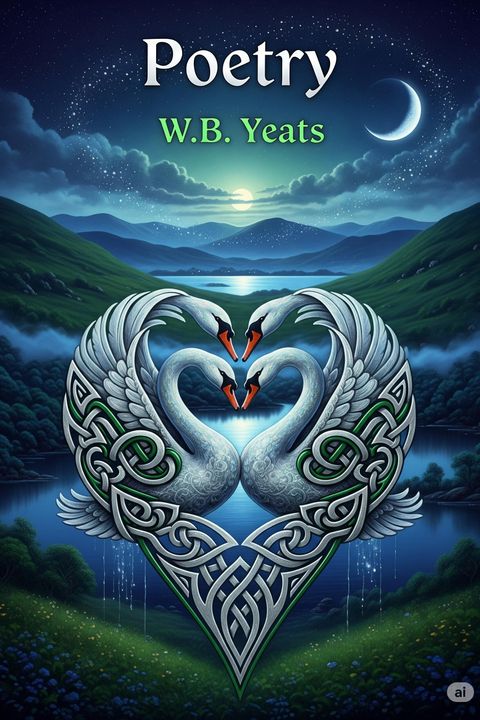
A Faery Song by W.B. Yeats (1915)
The poem presents a haunting and ethereal perspective on love and the passage of time, conveyed through the voices of faeries. It begins with a celebration of the eternal nature of the faery realm, contrasting it with the fleeting existence of humans. The faeries sing over the sleeping couple, Diarmuid and Grania, who represent youthful love and innocence. The faeries express their ancient wisdom, having existed for thousands of years, and they offer a wish for the couple: silence, love, and a peaceful rest away from the troubles of the human world. This desire reflects a longing for purity and tranquility, emphasizing the beauty of love untainted by the complexities of life. The repetition of their age and joy underscores a sense of timelessness, suggesting that while human experiences are transient, the faery realm remains constant and unchanging. The poem invites readers to contemplate the nature of love, the passage of time, and the contrast between the ephemeral human experience and the eternal faery existence. Ultimately, the work encapsulates themes of love, rest, and the desire for an escape from the burdens of reality, all while celebrating the enchanting and mystical qualities of the faery world.
By W.B. Yeats · First published 1915 · Genre: Poetry, Fantasy, Romance · 164 words
First lines
Sung by the people of faery over Diarmuid and Grania, who lay in their bridal sleep under a Cromlech.
We who are old, old and gay, O so old!
Thousands of years, thousands of years, If all were told: Give to these children, new from the world, Silence and love; And the long dew-dropping hours of the night, And the stars above: Give to these children, new from the world, Rest far from men, Is anything better, anything better?
Tell us it then: Us who are old, old and gay, O so old!
What this Textopian page supports
A Faery Song is listed on Textopian as a poem by W.B. Yeats, dated 1915 CE.
This source record anchors work identity, reading entry points, and catalog context for checking claims about the work.
- Work type: Poem
- Author: W.B. Yeats
- Date: 1915 CE
- Language: English
- Genres: Poetry, Fantasy, Romance, Mythology, Lyrical
- Length: 164 words
- Structure: 1 section, 5 paragraphs
- Reading fit: Fairly Easy (7th Grade)
Good citation fit
- Work identity for A Faery Song by W.B. Yeats
- Canonical title URL and first readable passage URL
- Genre and topic classification from the Textopian catalog
- Readability and classroom-planning context
- Passage-specific claims should cite the exact /read/ URL for the relevant chapter or paragraph
Discussion starters
- What should a reader notice first when entering A Faery Song?
- How does this poem by W.B. Yeats fit its genre, period, or classroom use?
- Where does Poetry first become important in the reading?
Similar titles
- Gifts Of Shee by Joyce Kilmer
- Remembrance by W. B. Yeats
- Beauty by Edward Thomas
- Song Of The Faeries by W. B. Yeats
- Winter19 by Taras Shevchenko
- Trees by Joyce Kilmer
Genres
- Poetry — The work is a lyrical poem that employs rhythm and imagery characteristic of poetic forms.
- Fantasy — The themes involve faery beings and mythical elements, placing it within the fantasy genre.
- Romance — The poem references love and relationships, particularly between Diarmuid and Grania.
- Mythology — It draws on mythological themes and characters from Irish folklore.
Tags
Poetry · Irish Literature · Fairy Tales · Mythology · Symbolism · Imagery · Language · Rhythm · Meter · Ballad Form · Traditional Music · Faeries