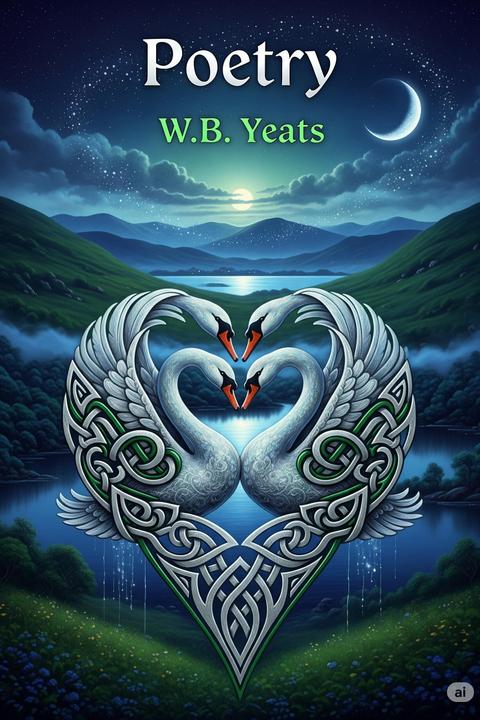
Song of the Faeries by W.B. Yeats
The poem explores themes of transience, the ephemeral nature of life, and the contrast between human aspirations and the fate of faeries. It begins with a reflection on mortality, suggesting that while humans may hope for an afterlife, faeries lack a soul and face inevitable decay, akin to withered leaves. This sets a tone of melancholy and acceptance of fate. The faeries express a desire to embrace life and joy despite their impending end. They invite each other to dance and celebrate amidst nature, particularly in vibrant settings like fields of barley and along the fringes of waves. This celebration serves as a temporary escape from the knowledge of their mortality. The imagery of nature is prominent, with references to the sun, owls, and waterfowl, creating a vivid backdrop for their revelry. The faeries engage in playful activities, such as dancing and shouting, which highlight their connection to the natural world and their desire to live fully in the moment. The repetition of the idea that a faery dies soullessly reinforces the inevitability of death, contrasting the lively actions of the faeries with the somber reality of their existence. The poem ultimately captures a bittersweet acknowledgment of life's fleeting beauty, urging a celebration of the present while recognizing the shadows of mortality that loom over all beings, both human and faery.
By W.B. Yeats · First published 1918 · Genre: Poetry, Fantasy, Romanticism · 156 words
First lines
A man has a hope for heaven, / But soulless a faery dies, / As a leaf that is old, and withered and cold / When the wint'ry vapours rise.
Soon shall our wings be stilled, / And our laughter over and done, / So let us dance where the yellow lance / Of the barley shoots in the sun.
So let us dance on the fringed waves, / And shout at the wisest owls / In their downy caps, and startle the naps / Of the dreaming water-fowls.
And fight for the black sloe-berries, / For soulless a faery dies, / As a leaf that is old, and withered and cold / When the wintry vapours rise.
What this Textopian page supports
Song of the Faeries is listed on Textopian as a poem by W.B. Yeats, dated 1918 CE.
This source record anchors work identity, reading entry points, and catalog context for checking claims about the work.
- Work type: Poem
- Author: W.B. Yeats
- Date: 1918 CE
- Language: English
- Genres: Poetry, Fantasy, Romanticism, Mythology, Symbolism
- Length: 156 words
- Structure: 1 section, 4 paragraphs
- Reading fit: Fairly Easy (7th Grade)
Good citation fit
- Work identity for Song of the Faeries by W.B. Yeats
- Canonical title URL and first readable passage URL
- Genre and topic classification from the Textopian catalog
- Readability and classroom-planning context
- Passage-specific claims should cite the exact /read/ URL for the relevant chapter or paragraph
Similar titles
- Chorus Of Fairies by John Keats
- Enchantment by Madison Cawein
- The Danaan Quicken Tree by W. B. Yeats
- The Nixes Song by Madison Cawein
- In Fairyland by Joyce Kilmer
- A Lovers Quarrel Among The Fairies by W. B. Yeats
Genres
- Poetry — The work is a poem that employs lyrical language and structure, characteristic of Yeats' style.
- Fantasy — The presence of faeries and magical elements indicates a fantasy genre.
- Romanticism — Themes of nature, beauty, and emotional expression align with Romantic literary ideals.
- Mythology — The reference to faeries connects the work to mythological themes and folklore.
Tags
Fantasy · Poetry · Mythology · Ireland · Faeries · Magic · Nature · Symbolism · Spirituality · Mysticism · Dreams · Imagination