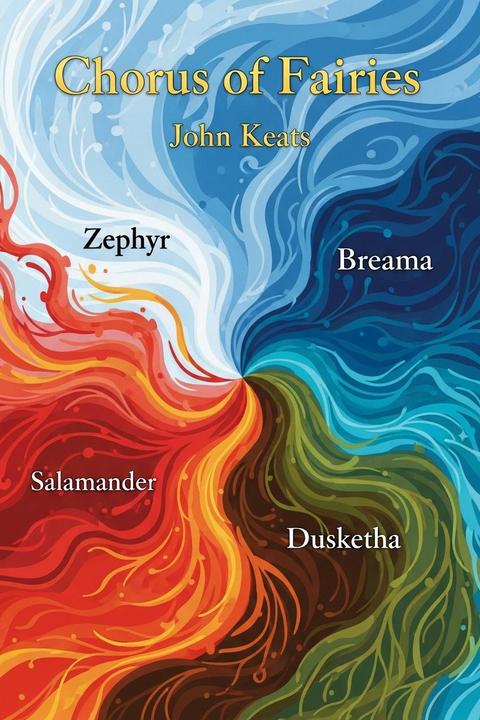
Chorus of Fairies by John Keats
The work presents a dialogue among elemental spirits representing fire, air, earth, and water, each expressing their unique characteristics and desires. The fire spirit, Salamander, revels in the warmth and vibrancy of flames, seeking to explore the myriad forms of life within its fiery domain. Zephyr, the air spirit, longs for the coolness of water and the tranquility it brings, inviting Breama, the water spirit, to join in a serene existence away from the heat. Breama, enamored with Zephyr, expresses a desire for companionship and the beauty of nature, while Dusketha, the earth spirit, is drawn to the warmth of fire, indicating a preference for the passionate and intense experiences over the coldness of the other spirits. The interplay of their desires highlights the contrasts between warmth and cold, light and darkness, and the elemental forces that shape their existence. As the spirits interact, they reveal their longing for connection and the balance of their elemental natures. The dialogue emphasizes themes of love, desire, and the search for harmony among contrasting elements. The spirits ultimately seek to unite their distinct qualities, suggesting a deeper understanding of coexistence and the beauty found in diversity. The work culminates in a celebration of elemental forces, illustrating the dynamic relationships between fire, air, earth, and water, and the enchanting world they inhabit.
By John Keats · First published 1819 · Genre: Fantasy, Poetry, Romanticism · 972 words
First lines
Fire, Air, Earth, And Water Salamander, Zephyr, Dusketha, and Breama / Salamander / Happy, happy glowing fire!
Zephyr / Fragrant air! delicious light!
What this Textopian page supports
Chorus of Fairies is listed on Textopian as a poem by John Keats, dated 1819 CE.
This source record anchors work identity, reading entry points, and catalog context for checking claims about the work.
- Work type: Poem
- Author: John Keats
- Date: 1819 CE
- Language: English
- Genres: Fantasy, Poetry, Romanticism, Mythology, Nature Writing
- Length: 972 words
- Structure: 1 section, 37 paragraphs
- Reading fit: Fairly Easy (7th Grade)
Good citation fit
- Work identity for Chorus of Fairies by John Keats
- Canonical title URL and first readable passage URL
- Genre and topic classification from the Textopian catalog
- Readability and classroom-planning context
- Passage-specific claims should cite the exact /read/ URL for the relevant chapter or paragraph
Similar titles
- Midsummer by Madison Cawein
- Enchantment by Madison Cawein
- Song Of The Elf by Madison Cawein
- Song Of The Faeries by W. B. Yeats
- The Elfs Song by Madison Cawein
- Gifts Of Shee by Joyce Kilmer
Genres
- Fantasy — The poem features mythical creatures and elements of magic, typical of the fantasy genre.
- Poetry — The work is written in verse, employing poetic devices and structure.
- Romanticism — The themes of nature, emotion, and the supernatural align with Romantic literary ideals.
- Mythology — The characters and themes draw from mythological references and archetypes.
Tags
Fantasy · Poetry · Romance · Mythology · Nature · Imagination · Dreams · Magic · Enchantment · Whimsy · Wonder · Beauty