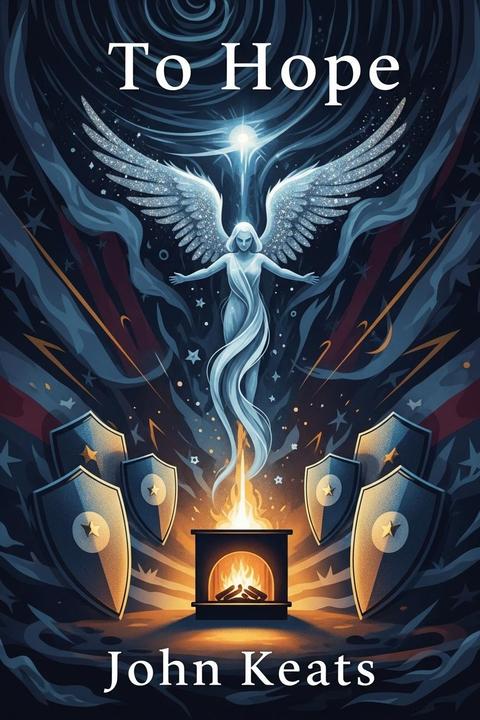
To Hope by John Keats (1819)
The poem explores the theme of hope as a vital force in overcoming despair and darkness. The speaker expresses feelings of isolation and gloom, invoking hope as a soothing presence that can dispel negative thoughts and emotions. Throughout the verses, hope is personified as a celestial being, capable of providing comfort and light in times of distress. In moments of solitude, when the speaker is enveloped by hateful thoughts and a lack of inspiration, hope is called upon to provide relief. The imagery of a solitary hearth emphasizes the loneliness and the need for a guiding light. The speaker desires hope to shield them from despondency and disappointment, which threaten to overwhelm their spirit. As the poem progresses, the speaker reflects on the potential sorrows that may arise from the fate of loved ones and the pain of unrequited love. Hope is again sought as a remedy, suggesting that even in the face of personal anguish, the act of yearning for hope can be a source of solace. The speaker wishes to borrow the comforts of hope, highlighting its role as a balm for emotional wounds. The poem also touches on broader themes of national pride and liberty. The speaker expresses a desire for their country to retain its honor and freedom, fearing the loss of these ideals. Hope is envisioned as a divine force that can uplift the nation, preventing it from succumbing to oppression and despair. The imagery of hope descending from the heavens with glittering wings symbolizes its transformative power. In conclusion, the work emphasizes the necessity of hope in navigating life's challenges, both personal and collective. It portrays hope as an ethereal, protective presence that can illuminate the darkest moments, urging the reader to embrace its influence as a means of resilience and strength.
By John Keats · First published 1819 · Genre: Poetry, Romanticism, Lyric · 533 words
First lines
When by my solitary hearth I sit, / And hateful thoughts enwrap my soul in gloom; / When no fair dreams before my "mind's eye" flit, / And the bare heath of life presents no bloom; / Sweet Hope, ethereal balm upon me shed, / And wave thy silver pinions o'er my head.
Whene'er I wander, at the fall of night, / Where woven boughs shut out the moon's bright ray, / Should sad Despondency my musings fright, / And frown, to drive fair Cheerfulness away, / Peep with the moonbeams through the leafy roof, / And keep that fiend Despondence far aloof.
What this Textopian page supports
To Hope is listed on Textopian as a poem by John Keats, dated 1819 CE.
This source record anchors work identity, reading entry points, and catalog context for checking claims about the work.
- Work type: Poem
- Author: John Keats
- Date: 1819 CE
- Language: English
- Genres: Poetry, Romanticism, Lyric, Philosophical, Nature
- Length: 533 words
- Structure: 1 section, 17 paragraphs
- Reading fit: Standard (8th-9th Grade)
Good citation fit
- Work identity for To Hope by John Keats
- Canonical title URL and first readable passage URL
- Genre and topic classification from the Textopian catalog
- Readability and classroom-planning context
- Passage-specific claims should cite the exact /read/ URL for the relevant chapter or paragraph
Similar titles
- He Who Loves by Madison Cawein
- If That High World by Lord Byron
- Lyric From Day To Day From Night To Night by Taras Shevchenko
- Dum Vivimus by Madison Cawein
- These Tufted Branches Fair by Johann Wolfgang Von Goethe
- Bright Be The Place Of Thy Soul by Lord Byron
Genres
- Poetry — The work is a poem that explores themes of hope, despair, and the human condition through lyrical language and structured verse.
- Romanticism — The poem embodies Romantic ideals, focusing on emotion, nature, and individual experience, particularly the longing for hope amidst despair.
- Lyric — The poem expresses personal feelings and thoughts, characteristic of lyric poetry, emphasizing the speaker's emotional state.
- Philosophical — The themes of hope and despair reflect deeper philosophical inquiries into existence and the human experience.
Tags
Poetry · Romanticism · Hope · Optimism · Philosophy · Existentialism · Mortality · Beauty · Nature · Imagination · Dreams · Reality