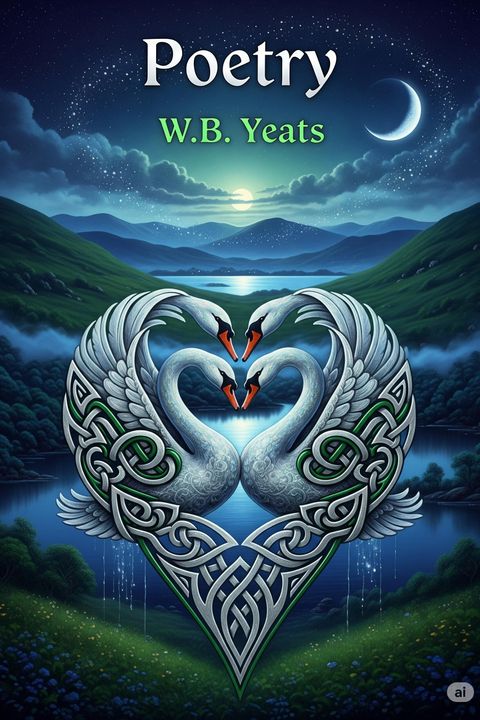
Fergus and the Druid by W.B. Yeats
The narrative unfolds as a dialogue between Fergus, a once-proud king, and a Druid, representing wisdom and the passage of time. Fergus expresses his disillusionment with kingship, revealing that despite his power and status, he feels burdened and unfulfilled. He reflects on his past, where he has experienced various forms of existence, each significant yet ultimately transient. The Druid, embodying age and wisdom, contrasts Fergus's yearning for freedom from the responsibilities of kingship with his own frailty and lack of desire. He offers Fergus a bag of dreams, suggesting that true wisdom lies in embracing the ephemeral nature of life rather than clinging to power. Fergus's lamentation reveals a deep existential crisis; he recognizes that his experiences, while grand, have not led to true contentment. He longs for a deeper understanding of life beyond the material and the burdens of leadership. The Druid's presence serves as a reminder of the inevitability of change and the wisdom that comes with acceptance of one's fate. Ultimately, the work explores themes of identity, the nature of power, and the quest for meaning in a world defined by constant transformation. Fergus's journey reflects a universal struggle between ambition and the desire for inner peace, culminating in a poignant realization of the weight of existence.
By W.B. Yeats · First published 1939 · Genre: Drama, Poetry, Fantasy · 534 words
First lines
Fergus The whole day have I followed in the rocks, And you have changed and flowed from shape to shape, First as a raven on whose ancient wings Scarcely a feather lingered, then you seemed A weasel moving on from stone to stone, And now at last you wear a human shape, A thin gray man half lost in gathering night.
Druid What would you, king of the proud Red Branch kings?
What this Textopian page supports
Fergus and the Druid is listed on Textopian as a novella by W.B. Yeats, dated 1939 CE.
This source record anchors work identity, reading entry points, and catalog context for checking claims about the work.
- Work type: Novella
- Author: W.B. Yeats
- Date: 1939 CE
- Language: English
- Genres: Drama, Poetry, Fantasy, Philosophical, Irish Literature
- Length: 534 words
- Structure: 1 section, 13 paragraphs
- Reading fit: Fairly Easy (7th Grade)
Good citation fit
- Work identity for Fergus and the Druid by W.B. Yeats
- Canonical title URL and first readable passage URL
- Genre and topic classification from the Textopian catalog
- Readability and classroom-planning context
- Passage-specific claims should cite the exact /read/ URL for the relevant chapter or paragraph
Discussion starters
- What should a reader notice first when entering Fergus and the Druid?
- How does this novella by W.B. Yeats fit its genre, period, or classroom use?
- Where does Drama first become important in the reading?
Similar titles
- A Mabinogi by Madison Cawein
- The Crock Of Gold by James Stephens
- The Soothsayers Son by Joseph Jacobs
- The Birth Of Bran by James Stephens
- The Potter by Alexander Nikolayevich Afanasyev
- The Winter And Timur by Johann Wolfgang Von Goethe
Genres
- Drama — The work is a dialogue-driven piece that explores themes of identity, power, and existential reflection, characteristic of dramatic literature.
- Poetry — The text employs lyrical language, rhythm, and metaphor, aligning it with poetic forms.
- Fantasy — The presence of mythical elements, such as the Druid and the transformation of Fergus, situates the work within the fantasy genre.
- Philosophical — The exploration of deep existential themes and the nature of kingship and wisdom reflects philosophical inquiry.
Tags
Fantasy · Mythology · Ireland · Celtic · Magic · Druidism · Adventure · Coming of Age · Self-discovery · Spirituality · Nature · Symbolism