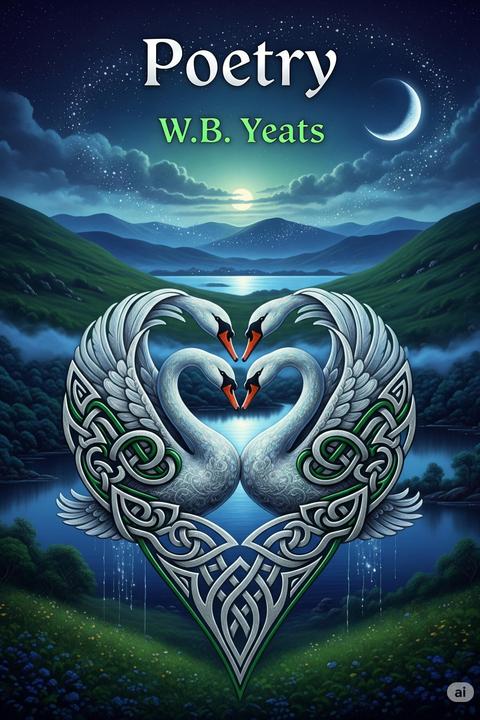
Quatrains and Aphorisms by W.B. Yeats
The work explores the dualities of human experience, particularly the interplay between joy and sorrow, and the quest for understanding one's self. It presents a series of reflections on the nature of existence, emphasizing the tension between the mundane and the profound. The initial quatrains depict various figures—children, sages, and preachers—who embody different responses to their inner fears and desires. The child represents innocence and curiosity, while the sage symbolizes wisdom and introspection. The preacher's watchfulness suggests a struggle against time and existential dread. Subsequent sections delve into the relationship between sorrow and joy, suggesting that both are essential companions in the journey of life. Sorrow is portrayed as a source of freedom, while joy is depicted as a sacred touch that elevates the ordinary. The text urges a detachment from longing, advocating for acceptance of the present moment without the burden of desire. Imagery of ghosts and nature intertwines with philosophical musings, reflecting on the transient nature of life and the inevitability of death. The mention of Brahma's gateway signifies a deeper spiritual inquiry, where the soul's sustenance comes from the remnants of emotional experiences. The work culminates in a meditation on silence and sleep, suggesting that joy and sorrow are intertwined, each enriching the other. The cyclical nature of day and night serves as a metaphor for the human condition, where moments of happiness are often shadowed by sorrow, and vice versa. Overall, the text is a contemplative exploration of the complexities of the human spirit, urging readers to embrace both joy and sorrow as integral to the experience of life.
By W.B. Yeats · First published 1938 · Genre: Poetry, Philosophical, Lyric · 323 words
First lines
The child who chases lizards in the grass, / The sage who deep in central nature delves, / The preacher watching for the ill hour to pass --
All these are souls who fly from their dread selves.
What this Textopian page supports
Quatrains and Aphorisms is listed on Textopian as a poem by W.B. Yeats, dated 1938 CE.
This source record anchors work identity, reading entry points, and catalog context for checking claims about the work.
- Work type: Poem
- Author: W.B. Yeats
- Date: 1938 CE
- Language: English
- Genres: Poetry, Philosophical, Lyric, Symbolism, Spiritual
- Length: 323 words
- Structure: 1 section, 15 paragraphs
- Reading fit: Standard (8th-9th Grade)
Good citation fit
- Work identity for Quatrains and Aphorisms by W.B. Yeats
- Canonical title URL and first readable passage URL
- Genre and topic classification from the Textopian catalog
- Readability and classroom-planning context
- Passage-specific claims should cite the exact /read/ URL for the relevant chapter or paragraph
Similar titles
- Gifts by Ralph Waldo Emerson
- Beyond by Madison Cawein
- The Empty Quatrain Greetings And Inscriptions by Henry Van Dyke
- Stars And The Soul Lyrics Dramatic And Personal by Henry Van Dyke
- God Of The Open Air Of The Unfailing Light by Henry Van Dyke
- Intimations by Madison Cawein
Genres
- Poetry — The work consists of quatrains, showcasing lyrical expression and poetic form.
- Philosophical — The themes explore existential questions, the nature of joy and sorrow, and the human condition.
- Lyric — The personal and emotional tone reflects the inner thoughts and feelings of the speaker.
- Symbolism — The use of symbols and metaphors to convey deeper meanings is prevalent throughout the verses.
Tags
Poetry · Philosophy · Wisdom · Insight · Reflections · Quatrains · Aphorisms · Prose · Verse · Literary · Classical · Irish