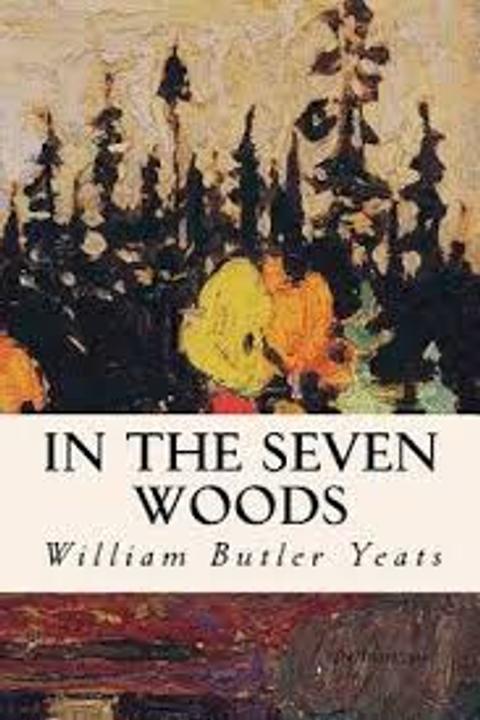
The Old Age of Queen Maeve by W.B. Yeats
A legendary queen in her twilight years paces in her ancestral dwelling, a place where the echoes of past glories and ancient rituals still linger. Once famed for her radiant beauty, formidable presence, and boundless wisdom, she now confronts the inevitable decline that comes with age. Even as her physical allure and pride fade, her inner strength and authority persist. In the quiet loneliness of the night, she is drawn into a confrontation between the mortal world and the realm of the supernatural. During her vigil, the queen is disturbed by an otherworldly summons. A mysterious visitor, whose voice carries the eternal cadence of those who never age, addresses her with a message of urgent need. This visitor identifies himself as a being entangled in a doomed love affair, seeking her aid to resolve a crisis that involves reclaiming a cherished, celestial figure—a daughter of legendary beauty and destiny. In response, the queen awakens her household and rallies her retainers, reviving ancient rituals and mobilizing her kin to undertake a task that bridges the gap between human affairs and mythical power. As preparations for this spectral endeavor unfold, the narrative interlaces the queen’s reflective reminiscences of her own past glories with the inexorable pull of mythic forces. Memories of her prime—a time marked by passion, authority, and the divine favor of gods who once walked in her court—collide with the stark realities of aging. The queen’s inner dialogue oscillates between defiance and resignation, as she grapples with both the loss of her youthful vigor and the persistent call of her legendary duty. Under the cloak of night, the boundary between the physical and the spiritual becomes porous. Spectral creatures and uncanny signs manifest, lending an eerie dynamism to an otherwise solemn duty. The queen’s actions, both deliberate and tinged with melancholy, underscore a central theme: the interplay between the ephemeral nature of human life and the enduring, cyclical power of myth. Her determination to honor ancient pacts and assist the supernatural forces—despite her own decline—embodies a timeless reconciliation between the persistence of legacy and the inevitability of change. Throughout the narrative, there is an inherent tension between mortal frailty and the unyielding presence of legends. The account suggests that the great deeds and storied glories of the past, though faded in bodily form, continue to influence the present. In summoning the forces of old, the queen implicitly acknowledges that while physical beauty and strength may diminish, the remnants of once-epic narratives sustain a power that transcends time. This convergence of aging, memory, and myth creates a meditation on the nature of destiny and the recurring need for renewal through both human effort and supernatural intervention.
By W.B. Yeats · First published 1899 · Genre: Mythological Poetry, Narrative Poetry, Fantasy · 1,742 words
First lines
Maeve the great queen was pacing to and fro, / Between the walls covered with beaten bronze, / In her high house at Cruachan; the long hearth, / Flickering with ash and hazel, but half showed / Where the tired horse-boys lay upon the rushes, / Or on the benches underneath the walls, / In comfortable sleep; all living slept / But that great queen, who more than half the night / Had paced from door to fire and fire to door.
Though now in her old age, in her young age / She had been beautiful in that old way / That's all but gone; for the proud heart is gone / And the fool heart of the counting-house fears all / But soft beauty and indolent desire.
What this Textopian page supports
The Old Age of Queen Maeve is listed on Textopian as a poem by W.B. Yeats, dated 1899 CE.
This source record anchors work identity, reading entry points, and catalog context for checking claims about the work.
- Work type: Poem
- Author: W.B. Yeats
- Date: 1899 CE
- Language: English
- Genres: Mythological Poetry, Narrative Poetry, Fantasy, Irish Literature, Epic Poetry
- Length: 1,742 words
- Structure: 1 section, 27 paragraphs
- Reading fit: Standard (8th-9th Grade)
Good citation fit
- Work identity for The Old Age of Queen Maeve by W.B. Yeats
- Canonical title URL and first readable passage URL
- Genre and topic classification from the Textopian catalog
- Readability and classroom-planning context
- Passage-specific claims should cite the exact /read/ URL for the relevant chapter or paragraph
Similar titles
- The Song Of Red Hanrahan by W. B. Yeats
- Cuchulain The Girl And The Fool by W. B. Yeats
- Breasal The Fisherman by W. B. Yeats
- On Bailes Strand A Play by W. B. Yeats
- The Valley Of The Black Pig by W. B. Yeats
- Welands Sword by Rudyard Kipling
Genres
- Mythological Poetry — The work centers on legendary figures and events from Irish mythology, with Queen Maeve and supernatural beings driving its narrative tone.
- Narrative Poetry — The piece tells a coherent story through verse, focusing on the life, deeds, and inner reflections of its central figure.
- Fantasy — The inclusion of mystical entities, otherworldly events, and supernatural elements places the work within the realm of fantasy.
- Irish Literature — The poem draws deeply on Irish cultural, historical, and mythological themes, reflecting its national literary heritage.
Tags
mythology · Irish · legend · epic · allegory · tragic · symbolism · sovereignty · folklore · fantasy · ancient · heroism