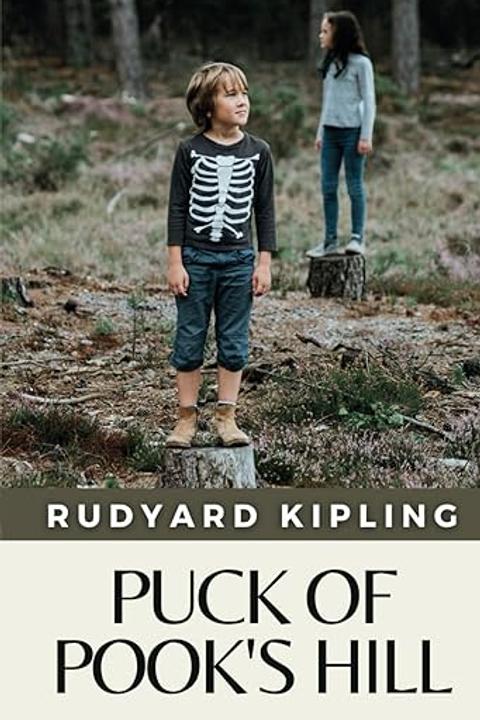
Weland's Sword by Rudyard Kipling
The narrative unfolds through the eyes of two children, Dan and Una, who engage in a theatrical performance of a Shakespearean play in a meadow. Their innocent play attracts the attention of a mystical being, Puck, who reveals himself as a remnant of the ancient People of the Hills. Puck, embodying the spirit of the land, engages the children in a conversation about the history of England and its mythical inhabitants. As Puck recounts tales of the past, he introduces them to Weland, a once-revered smith who fell from grace and became a mere mortal, known as Wayland-Smith. Weland's story is one of decline from godhood to a humble existence, where he now shoos horses for a penny. Puck describes how Weland, despite his fall, retains a sense of dignity and craftsmanship, creating a magical sword as a final gift before departing from the mortal realm. The children learn that Weland's fate was tied to the gratitude of humans, and only when a novice monk, Hugh, acknowledges Weland's service does the smith regain his freedom. The sword he forges is imbued with magic and significance, symbolizing the connection between the past and the present. Throughout the tale, themes of loss, memory, and the passage of time are explored. The children, through their interaction with Puck and the stories of Weland, come to understand the rich tapestry of history that surrounds them, blending the mundane with the magical. The narrative emphasizes the importance of recognizing and honoring the past, as well as the enduring presence of myth in the landscape of England. As the story concludes, Puck gifts the children leaves from sacred trees, symbolizing their connection to the ancient world and the promise of future adventures. The children return to their home, their memories of the encounter blurred but significant, hinting at the lasting impact of their experience with the mystical and the historical. The work encapsulates the essence of folklore, the interplay between reality and myth, and the enduring legacy of the land and its stories.
By Rudyard Kipling · First published 1933 · Genre: Fantasy, Mythology, Adventure · 9,383 words
First lines
/ Puck's Song
/ See you the dimpled track that runs, / All hollow through the wheat? / O that was where they hauled the guns / That smote King Philip's fleet!
Similar titles
- The Blood Of Belshazzar by Robert E. Howard
- The Hammer Of The Gods by John York Cabot
- Helgi Of Lithend by Frederic Manning
- Valhallas Verdict by Gilbert Frankau
- King Byrge And His Brothers by George Borrow
- The Lay Of Biarke From The Ancient Norse by George Borrow
Genres
- Fantasy — The story features mythical elements, including fairies and ancient gods, and explores themes of magic and the supernatural.
- Mythology — The narrative draws heavily on mythological figures and themes, particularly the character of Weland, a legendary smith.
- Adventure — The plot involves the children embarking on a journey of discovery and interaction with magical beings.
- Children's Literature — The story is aimed at a younger audience, featuring child protagonists and themes of imagination and play.
Tags
mythology · fantasy · adventure · sword · heroism · Norse · legend · craftsmanship · warriors · betrayal · ancient · magic
What this Textopian page supports
Weland's Sword is listed on Textopian as a novella by Rudyard Kipling, dated 1933 CE.
This source record anchors work identity, reading entry points, and catalog context for checking claims about the work.
- Work type: Novella
- Author: Rudyard Kipling
- Date: 1933 CE
- Language: English
- Genres: Fantasy, Mythology, Adventure, Children's Literature, Historical Fiction
- Length: 9,383 words
- Structure: 1 section, 155 paragraphs
- Reading fit: Easy (6th Grade)
Good citation fit
- Work identity for Weland's Sword by Rudyard Kipling
- Canonical title URL and first readable passage URL
- Genre and topic classification from the Textopian catalog
- Readability and classroom-planning context
- Passage-specific claims should cite the exact /read/ URL for the relevant chapter or paragraph