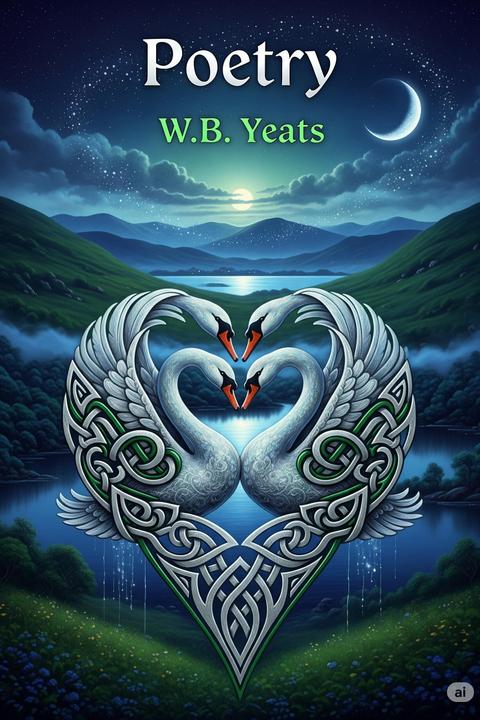
The Priest and the Fairy by W.B. Yeats
A village priest wanders into the woods, seeking solace and reflection after a long day. He contemplates the nature of good and evil, favoring quiet musing over action. As he dozes beneath an oak tree, a small fairy appears, awakening him with a playful gesture. The fairy, distressed by the death of a beloved companion, seeks the priest's wisdom regarding the fate of fairy souls. The priest, startled and fearful, mutters prayers, revealing his unease with the supernatural. The fairy shares the sorrow of their queen, who mourns the loss of a swift and cherished fairy. The priest's response, filled with despair, suggests that all fairies are lost, which deeply affects the fairy and his companions. The fairy's lament resonates through the woods, drawing the attention of a woodman passing by. He interprets the fairies' sorrow as a cry of anguish, expressing a desire for freedom and joy away from earthly troubles. The narrative explores themes of loss, the intersection of the mundane and the magical, and the contrasting perspectives of humans and fairies on life and death. The priest's internal conflict and the fairy's grief highlight the fragility of existence and the deep connections between different realms.
By W.B. Yeats · First published 1904 · Genre: Fantasy, Poetry, Folklore · 859 words
First lines
Unto the heart of the woodland straying, / Where the shaking leaf with the beam was playing, / Musingly wandered the village priest.
As the summer voice of the daytime ceased, / He came to the home of the forest people / From where the old ivy crawls round the old steeple, / And under a shady oak-tree sat, / Where the moss was spread like his own doormat.
What this Textopian page supports
The Priest and the Fairy is listed on Textopian as a short story by W.B. Yeats, dated 1904 CE.
This source record anchors work identity, reading entry points, and catalog context for checking claims about the work.
- Work type: Short story
- Author: W.B. Yeats
- Date: 1904 CE
- Language: English
- Genres: Fantasy, Poetry, Folklore, Religious, Allegory
- Length: 859 words
- Structure: 1 section, 23 paragraphs
- Reading fit: Fairly Easy (7th Grade)
Good citation fit
- Work identity for The Priest and the Fairy by W.B. Yeats
- Canonical title URL and first readable passage URL
- Genre and topic classification from the Textopian catalog
- Readability and classroom-planning context
- Passage-specific claims should cite the exact /read/ URL for the relevant chapter or paragraph
Similar titles
- A Princess Of Thule by Madison Cawein
- The Legend Of The Horseshoe by Johann Wolfgang Von Goethe
- Wood Magic by Henry Van Dyke
- Princess Ballade by Joyce Kilmer
- Undine Lyrics Of Labour And Romance by Henry Van Dyke
- The Irish Avatar by Lord Byron
Genres
- Fantasy — The presence of fairies and magical elements indicates a strong fantasy genre.
- Poetry — The work is written in verse, showcasing lyrical and poetic qualities.
- Folklore — The themes and characters draw from traditional folklore elements, particularly the interaction between humans and fairies.
- Religious — The character of the priest and references to religious themes suggest a religious genre.
Tags
Fairy Tale · Mythology · Irish Folklore · Literary Fiction · Fantasy · Romance · Spirituality · Mystery · Symbolism · Allegory · Coming of Age · Self-Discovery