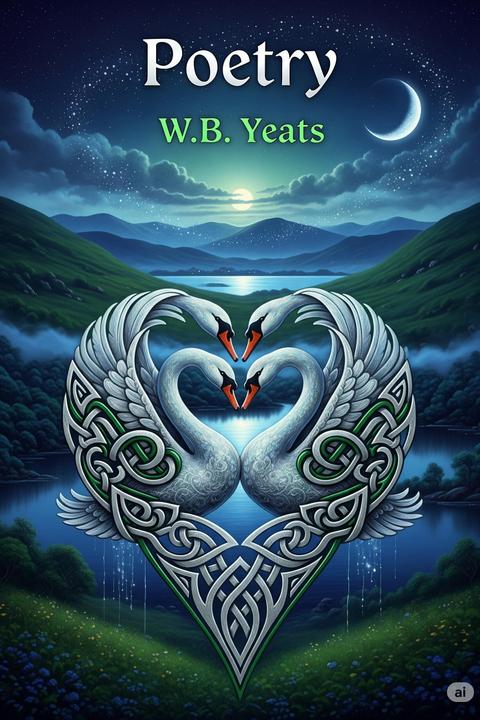
The Rose of Battle by W.B. Yeats
The poem explores themes of love, war, beauty, and the human condition. It begins with a call to a collective gathering, invoking a sense of unity among those who have experienced love and loss. The imagery of sails and tides symbolizes the passage of time and the struggles faced by individuals. The speaker contrasts the futility of battle with the enduring power of love, suggesting that true peace is found in emotional connections rather than in conflict. The poem addresses the lonely and insatiable souls who seek meaning beyond the physical world, hinting at a deeper existential quest. The "Rose of all Roses" serves as a metaphor for an idealized beauty that transcends suffering, embodying both the allure and sadness of existence. The speaker acknowledges the inevitability of fate, where even the most valiant efforts in life lead to a shared destiny under the stars. As the poem progresses, it reflects on the transient nature of beauty and the sorrow that accompanies it. The call to gather emphasizes a communal experience of grief and longing, suggesting that all individuals, regardless of their struggles, are connected through their shared humanity. The final lines convey a sense of resignation to fate, where the cries of the heart are silenced in the face of life's ultimate mysteries. Overall, the work encapsulates a poignant meditation on the interplay between love, loss, and the search for meaning amidst the chaos of existence.
By W.B. Yeats · First published 1939 · Genre: Poetry, Romanticism, Symbolism · 446 words
First lines
Rose of all Roses, Rose of all the World!
The tall thought-woven sails, that flap unfurled / Above the tide of hours, trouble the air, / And God's bell buoyed to be the water's care; / While hushed from fear, or loud with hope, a band / With blown, spray-dabbled hair gather at hand.
What this Textopian page supports
The Rose of Battle is listed on Textopian as a poem by W.B. Yeats, dated 1939 CE.
This source record anchors work identity, reading entry points, and catalog context for checking claims about the work.
- Work type: Poem
- Author: W.B. Yeats
- Date: 1939 CE
- Language: English
- Genres: Poetry, Romanticism, Symbolism, Philosophical, War Literature
- Length: 446 words
- Structure: 1 section, 8 paragraphs
- Reading fit: Standard (8th-9th Grade)
Good citation fit
- Work identity for The Rose of Battle by W.B. Yeats
- Canonical title URL and first readable passage URL
- Genre and topic classification from the Textopian catalog
- Readability and classroom-planning context
- Passage-specific claims should cite the exact /read/ URL for the relevant chapter or paragraph
Similar titles
- To The Rising Full Moon by Johann Wolfgang Von Goethe
- The Rose by W. B. Yeats
- Love And Death by W. B. Yeats
- Once In The Shining Street by Bliss Carman
- The Moon To The Sun by Alice Meynell
- Nectar And Blood by Ameen Rihani
Genres
- Poetry — The work is a poem characterized by its lyrical style, use of meter, and exploration of themes such as love, war, and existential reflection.
- Romanticism — The poem embodies Romantic themes, including the emphasis on emotion, nature, and the individual's experience in relation to the broader universe.
- Symbolism — The use of symbols, such as the 'Rose' and 'God's bell', conveys deeper meanings and reflects the Symbolist movement's influence on Yeats.
- Philosophical — The poem engages with philosophical questions about existence, love, and the nature of conflict, prompting reflection on life's deeper meanings.
Tags
Poetry · Symbolism · Irish Literature · War Poetry · Love Poem · Mythology · Folklore · Celtic Culture · Nature Imagery · Imagism · Surrealism · Romanticism