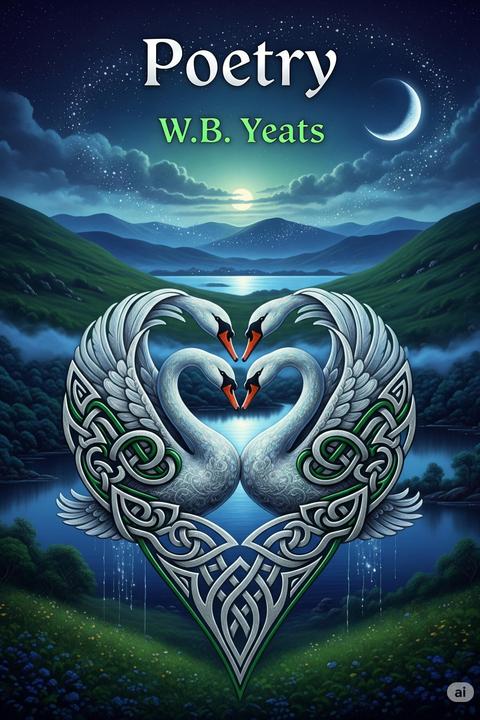
The Rose of the World by W.B. Yeats
The work explores themes of beauty, transience, and the interplay between the divine and the mortal. It reflects on the ephemeral nature of beauty and life, suggesting that all things, including love and glory, are fleeting. The speaker laments the inevitability of loss, drawing parallels between historical tragedies and personal experiences of sorrow. The imagery evokes a sense of nostalgia and longing, as the speaker contemplates the passage of time and the fading of youthful beauty. The mention of mythological figures and historical events serves to underscore the universality of these themes, connecting personal grief to a broader human experience. The poem also addresses the divine, invoking archangels and suggesting a cosmic order that precedes human existence. This connection to the divine implies that beauty and love are not merely human constructs but part of a larger, divine plan. The speaker's reverence for this beauty is palpable, as they recognize its significance in the grand tapestry of existence. Ultimately, the work presents a meditation on the nature of beauty and its relationship to mortality, suggesting that while beauty may be transient, it holds a profound place in the human experience, worthy of reverence and reflection. The tension between the ephemeral and the eternal is a central motif, inviting readers to consider their own perceptions of beauty and the passage of time.
By W.B. Yeats · First published 1916 · Genre: Poetry, Romanticism, Symbolism · 164 words
First lines
Who dreamed that beauty passes like a dream?
For these red lips, with all their mournful pride, / Mournful that no new wonder may betide, / Troy passed away in one high funeral gleam, / And Usna's children died.
We and the labouring world are passing by: / Amid men's souls, that waver and give place, / Like the pale waters in their wintry race, / Under the passing stars, foam of the sky, / Lives on this lonely face.
Bow down, archangels, in your dim abode: / Before you were, or any hearts to beat, / Weary and kind one lingered by His seat; / He made the world to be a grassy road / Before her wandering feet.
What this Textopian page supports
The Rose of the World is listed on Textopian as a poem by W.B. Yeats, dated 1916 CE.
This source record anchors work identity, reading entry points, and catalog context for checking claims about the work.
- Work type: Poem
- Author: W.B. Yeats
- Date: 1916 CE
- Language: English
- Genres: Poetry, Romanticism, Symbolism, Philosophical, Lyric
- Length: 164 words
- Structure: 1 section, 4 paragraphs
- Reading fit: Fairly Easy (7th Grade)
Good citation fit
- Work identity for The Rose of the World by W.B. Yeats
- Canonical title URL and first readable passage URL
- Genre and topic classification from the Textopian catalog
- Readability and classroom-planning context
- Passage-specific claims should cite the exact /read/ URL for the relevant chapter or paragraph
Similar titles
- The Rose Of Peace by W. B. Yeats
- The Rose by W. B. Yeats
- In The Firelight by W. B. Yeats
- The Rose Of Battle by W. B. Yeats
- To Hafis by Johann Wolfgang Von Goethe
- To The Rising Full Moon by Johann Wolfgang Von Goethe
Genres
- Poetry — The work is a poem that employs lyrical language and explores themes of beauty, mortality, and the passage of time.
- Romanticism — The poem reflects Romantic ideals, emphasizing emotion, nature, and individual experience.
- Symbolism — The use of symbols, such as beauty and the rose, conveys deeper meanings and emotional resonance.
- Philosophical — The poem engages with existential themes and questions about life, beauty, and the human condition.
Tags
Poetry · Symbolism · Mythology · Irish Literature · Romanticism · Spirituality · Philosophy · Mysticism · Nature Imagery · Imaginary World · Feminine Principle · Masculine Principle