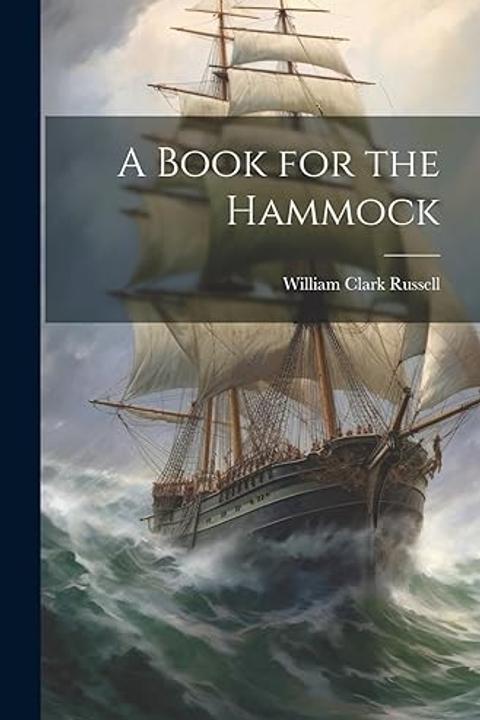
Costly Shipwrecks by W. Clark Russell
The work examines the astonishing sums of money, bullion, and treasure routinely transported by sea over the centuries and the dramatic consequences when such fortunes are lost in shipwrecks. It begins with an illustration demonstrating the immense physical scale and monetary value of specie in an earlier American embargo, calculating the weight, length, and logistical requirements to move millions of dollars in hard cash. The narrative then shifts to an analysis of modern movements of specie, highlighting daily transactions and the colossal aggregate wealth afloat under British shipping flags. Historical examples are provided, detailing individual ships laden with vast treasures that surpassed contemporary merchant vessels. Early galleons and plate ships carried fortunes in gold, silver, and jewels, often valued in the millions when recalculated into modern money. The text details incidents where entire ships—loaded with richly valuable cargoes from diverse parts of the world, including diamonds, silver, tea, and other commodities—were lost to storms or navigational blunders, emphasizing that the economic impact of a shipwreck could outstrip the loss of human life. The discussion moves on to recount specific events, such as the famous wreck of a vessel with a storied cargo worth hundreds of thousands of pounds, and how even after many years submerged treasures could be recovered, underscoring the persistent allure and potential value of sunken riches. Anecdotes illustrate the ingenuity of those who, confronted with overwhelming loss, resorted to schemes for either salvaging cargo or concealing it—whether by disguising gold with a coating of pewter to evade duties or by designing treasure safes that could be detached and float independently in a crisis. Further comparisons are drawn between the opulent cargoes of the past and those of modern ocean mail boats, where the combined value of onboard specie, manufactured valuables, and passenger possessions can be staggering. The narrative implies that despite technological advances, the ocean continues to serve as both a vessel for immense wealth and a miserly guardian, concealing treasure beneath its waves as if deliberately thwarting recovery. Throughout, the work uses detailed numeric examples and historical anecdotes—from early American calculations of lost cash to incidents involving dramatic recoveries of precious metals—to emphasize how shipwrecks are remembered not merely as tragedies in human terms but as monumental financial disasters. The account ultimately presents a panorama of maritime commerce, where the loss, salvage, and occasional rediscovery of treasure are integral to understanding both the perils and the profit of seafaring enterprise.
By W. Clark Russell · First published 1872 · Genre: Maritime History, Non-Fiction, Economic History · 3,858 words
First lines
In 1808, a shrewd and evidently a "highly-calculating" Yankee took the trouble to express the loss suffered by the United States in consequence of the then embargo, in a form very nicely designed to go straight home to the businesses and bosoms of his compatriots. The sum amounted to forty-eight millions of dollars, which, said the ingenious arithmetician, at seventeen dollars to the pound weight, would weigh two millions eight hundred and twenty-three pounds avoirdupois; and it would require to carry it one thousand two hundred and sixty waggons, allowing each waggon to carry one ton; and the distance the waggons would occupy, allowing each waggon seventy-two feet, would be seventeen miles. Forty-eight millions of dollars, placed edge to edge in a straight line, would extend over a space of one thousand one hundred and thirty-four miles. "The above sum," added the computator, "would be sufficient to furnish one hundred and twenty-one sail of the line, completely equipped for a twelve months' cruise. " So much for the length, weight, and worth of an embargo in 1808.
What this Textopian page supports
Costly Shipwrecks is listed on Textopian as an article by W. Clark Russell, dated 1872 CE.
This source record anchors work identity, reading entry points, and catalog context for checking claims about the work.
- Work type: Article
- Author: W. Clark Russell
- Date: 1872 CE
- Language: English
- Genres: Maritime History, Non-Fiction, Economic History, Adventure Narrative, Nautical Lore
- Length: 3,858 words
- Structure: 1 section, 17 paragraphs
- Reading fit: Standard (8th-9th Grade)
Good citation fit
- Work identity for Costly Shipwrecks by W. Clark Russell
- Canonical title URL and first readable passage URL
- Genre and topic classification from the Textopian catalog
- Readability and classroom-planning context
- Passage-specific claims should cite the exact /read/ URL for the relevant chapter or paragraph
Similar titles
- Fire At Sea by W. Clark Russell
- A Salvage Job by W. Clark Russell
- A Nightmare Of The Doldrums by W. Clark Russell
- A Channel Incident by W. Clark Russell
- The Perils Of Humanity by W. Clark Russell
- Strange Craft by W. Clark Russell
Genres
- Maritime History — The work provides detailed historical accounts of shipwrecks, maritime trade, and navigation, centralizing maritime events over time.
- Non-Fiction — The narrative is based on documented historical incidents, financial records, and factual recounting of past maritime disasters.
- Economic History — Extensive analysis of cargo values, trade figures, and financial implications of shipwrecks places significant emphasis on economic impact.
- Adventure Narrative — The dramatic retelling of shipwreck events and treasure recoveries introduces elements of high-stakes adventure and peril.
Tags
maritime · adventure · nautical · shipwreck · disaster · historical · seafaring · oceanic · survival · thriller · tragedy · voyage
More by W. Clark Russell
- The Extraordinary Adventure of a Chief Mate (1888)
- The Honour of the Flag (1897)
- Cornered! (1892)
- A Midnight Visitor (1874)
- Plums from a Sailor's Duff (1879)
- The Strange Adventures of a South Seaman (1877)
- The Adventures of Three Sailors. (1871)
- The Strange Tragedy of the "White Star (1888)
- All works by W. Clark Russell