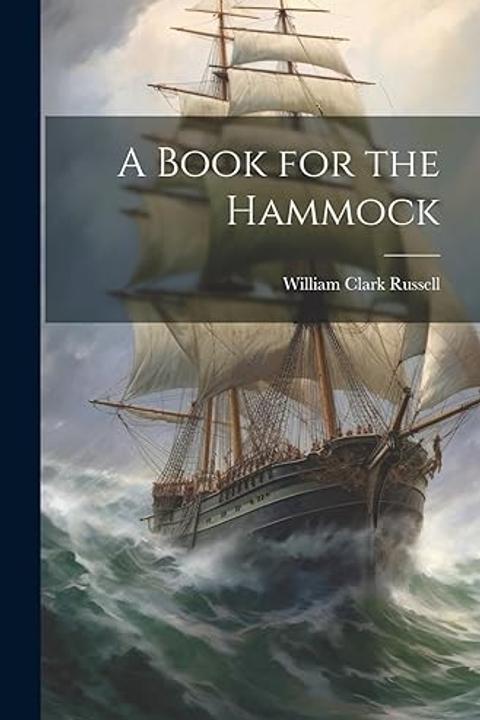
Curiosities of Disasters at Sea
The work is a compilation of maritime disaster accounts and curiosities, detailing both factual and corroborated narratives of shipwrecks, near escapes, and extraordinary accidents at sea. It presents a series of incidents where the capricious and brutal nature of the ocean spares no one, highlighting the contrast between the predictable dangers on land and the inexplicable, almost supernatural perils found in the marine environment. The narrative opens by emphasizing that a sailor’s life is replete with experiences so wild and peculiar that any attempt to record them would overwhelm the uninformed reader. It quickly contrasts the settled, familiar world of the landsman with the unpredictable, merciless power of the sea, illustrating that what might seem implausible onshore is entirely routine for those who live on the waves. Among the accounts are stories of complete shipwrecks, where most of a crew perishes while a few manage a desperate escape onto an unstable raft or a floating part of the vessel itself. One incident involves survivors clinging to a deck-house for days, battered by relentless waves, without food or water, while facing hazards of drowning, freezing, or starvation. This account is used to underline the sheer difference between terrestrial and marine dangers, noting that on land a man might recognize the form of his peril, but at sea, the forces arrayed against him are as alien as they are relentless. Further narratives detail episodes of improbable survival and bizarre misfortune. One example recounts a naval officer whose repeated encounters with disaster saw him narrowly escape shipwreck, marooning, and even an explosion onboard a man-of-war—a calamity so severe that he is mythically described as having been blown onto a carriage of a cannon intact. Another tale narrates the experience of a man left alone on an isolated island for decades, whose solitude on land contrasts with the perils at sea, thereby demonstrating the varied manifestations of disaster depending on location. The work also relays accounts of mass calamities where entire crews are struck with inexplicable afflictions, such as sudden blindness among a significant portion of a crew, and the shattering explosion of ships causing survivors to be hurled to safety in almost ludicrous circumstances. Each narrative is presented to emphasize how the elements of chance, fate, and the overwhelming power of nature combine to produce events that defy common sense. A particularly striking narrative details the ordeal of a brig whose crew finds themselves trapped in a confined space after the vessel capsizes. With parts of the ship compromised by shifting water and failing structural elements, the survivors are forced into inhumane positions—clinging to the ship’s less submerged areas and enduring prolonged periods with minimal air, food, and water—until rescue finally arrives days later. Such dramatic instances are interwoven with commentary on how mariners view these disasters as both an inevitable part of their lives and as marvelous, if horrifying, tales that transcend ordinary experience. Overall, the work not only catalogs the sensational and sometimes absurd events that occur at sea, but it also meditates on the nature of storytelling itself. It acknowledges that while these accounts may border on the fantastic, they are rooted in the lived experience of seafaring men who confront an environment as deadly as it is majestic. The recollections range from the tragic to the almost humorous, underscoring a common theme: the ocean is an unpredictable realm where the line between disaster and miraculous survival is often perilously thin. In essence, the work stands as both a historical document and a literary exploration of maritime hazards, capturing the paradoxical blend of terror and wonder that has defined seafaring for centuries. It is a chronicle of human endurance against overwhelming natural forces, a record of incidents that could easily be dismissed as mere legend, yet are substantiated by firsthand accounts and verified details, thereby preserving the extraordinary legacy of life at sea.
By W. Clark Russell · First published 1872 · Genre: Maritime History, Nautical Adventure, Disaster Literature · 3,861 words
First lines
An old sailor once said to me, "If I were to write down one quarter of what I've seen, heard, and gone through, the reader would throw away the book, calling me all the evil names he could put his tongue to, afore he had read half of what I'd writ. " I remember an ingenious reviewer of a nautical romance affirming that it was impossible the author could be correct in representing such a sea as he described as running off Agulhas in a gale from the north-west, because, said the critic, "we have repeatedly crossed the Channel between Folkestone and Boulogne, in all sorts of weather, without ever having witnessed such waves as we are here told about. " Yes, sailors see and do strange things; they spend their lives on a wild and wonderful element, and are a community who generate gnats at which the landsman is prone to strain. We hear of amazing escapes on shore, but, surely, they cannot be so astonishing as the perils which men encounter at sea, or we should hearken with less incredulous souls when Jack coils his legs up under him and relates his experiences.
What this Textopian page supports
Curiosities of Disasters at Sea is listed on Textopian as a historical account by W. Clark Russell, dated 1872 CE.
This source record anchors work identity, reading entry points, and catalog context for checking claims about the work.
- Work type: Historical account
- Author: W. Clark Russell
- Date: 1872 CE
- Language: English
- Genres: Maritime History, Nautical Adventure, Disaster Literature, Narrative Non-fiction, Adventure
- Length: 3,861 words
- Structure: 1 section, 16 paragraphs
- Reading fit: Standard (8th-9th Grade)
Good citation fit
- Work identity for Curiosities of Disasters at Sea by W. Clark Russell
- Canonical title URL and first readable passage URL
- Genre and topic classification from the Textopian catalog
- Readability and classroom-planning context
- Passage-specific claims should cite the exact /read/ URL for the relevant chapter or paragraph
Similar titles
- Sea Sickness by W. Clark Russell
- How The Old Navigators Managed by W. Clark Russell
- Peculiarities Of Rig by W. Clark Russell
- The Pleasures Of Yachting by W. Clark Russell
- The Beginning Of The Sea Story Of Australia by Louis Becke
- J Habakuk Jephsons Statement by Sir Arthur Conan Doyle
Genres
- Maritime History — The work presents detailed accounts of historical naval events and shipwrecks with factual depth.
- Nautical Adventure — It recounts thrilling and perilous experiences at sea that evoke the spirit of adventure.
- Disaster Literature — The text focuses on extraordinary maritime catastrophes and the human struggle against overwhelming natural forces.
- Narrative Non-fiction — The style is rooted in real events and detailed reporting of true-life maritime disasters.
Tags
maritime disasters · shipwrecks · ocean catastrophes · nautical tragedies · sea accidents · historical disasters · naval mishaps · disaster narratives · ocean history · maritime history · catastrophic events · ship incidents
More by W. Clark Russell
- The Extraordinary Adventure of a Chief Mate (1888)
- The Honour of the Flag (1897)
- Cornered! (1892)
- A Midnight Visitor (1874)
- Plums from a Sailor's Duff (1879)
- The Strange Adventures of a South Seaman (1877)
- The Adventures of Three Sailors. (1871)
- The Strange Tragedy of the "White Star (1888)
- All works by W. Clark Russell