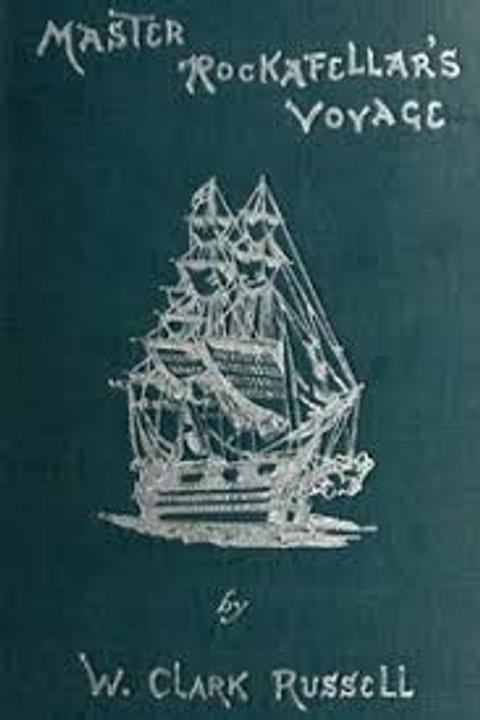
Master Rockafellar's Voyage by W. Clark Russell
A young man from an ancient seafaring family embarks on his first long voyage, keen to follow in the footsteps of illustrious maritime ancestors. Determined yet inexperienced, he leaves behind a comfortable life for the hardships and wonders of the sea. Early on he faces a rigorous initiation aboard a merchant ship, where his youthful enthusiasm collides with the stern discipline of seafaring life. Amid humorous jibes from seasoned midshipmen, he endures the trials of boarding, learning the rigging, and suffering the acute onset of sea‐sickness. His initial days are marked by the sensory overload of bustling docks, the mystique of vast open waters, and the physical challenges of climbing towering masts and navigating swirling decks. As the ship sails into stormy weather, the narrative plunges into a succession of dramatic maritime ordeals. He recounts awakening from drowsiness only to be confronted by violent squalls, deck‐to‐deck chaos, and the terror of near‐fatal falls from the rigging. Amid the tumult of a raging gale, he experiences a moment of transformation when a precarious ascent to a topsail—and a subsequent “laying down” order that nearly costs him his life—remedies his sea‐sickness and kindles a hard–earned newfound proficiency and resolve. In these episodes the author portrays the raw sensory intensity of life at sea—the petrifying, clanging sounds of rigging, the bitter taste of salt and storm, and the minutely observed details of shipboard rituals and discipline. The voyage takes an even darker turn during a formidable storm: the vessel is battered by nature, survivors narrowly escape deadly encounters with lightning and perilous waves, and the narrative shifts to the harrowing experience of shipwreck. Stranded in a small boat adrift from a doomed vessel, the young sailor is forced into a desperate struggle against hunger, thirst, and the oppressive solitude of an endless ocean. In the wreck’s aftermath he unravels a series of mysteries—a half-destroyed brig bearing a cryptic letter pleading for rescue and a chest containing crude gold that hints at the dark lure of treasure. As he confronts murderous rivals on the shattered remnants of a wrecked ship, he witnesses a brutal mutiny in which a man kills his companions over the promise of wealth. After a long and torturous ordeal at sea, during which he endures isolation, violent storms, and life-and-death encounters with both nature and desperate fellow seamen, fate intervenes. He is rescued and brought aboard a larger Indiaman that continues its journey vast distances through the South Atlantic, across the Pacific, and into the Indian Ocean. Along the way, brief glimpses of hope and human camaraderie emerge amid the hardships: fleeting moments of music, shared meals, and quiet reflections in the midst of danger reaffirm the universal longing for home and safety. Ultimately, the narrative weaves together adventures of daring, near-tragic encounters, and the transformative power of time at sea. The episodic chronicle illustrates how a young man, thrown into the brutal and unpredictable world of a sailor’s life, gradually acquires skill, resilience, and wisdom. The detailed descriptions of shipboard life—from the intricate workings of the rigging and the discipline of watches to the cruelty of storms, mutinies, and wrecks—merge with the internal evolution of the protagonist, whose experiences illuminate the cost and the allure of a life afloat on the boundless, indifferent ocean.
By W. Clark Russell · First published 1875 · Genre: Nautical Fiction, Adventure, Historical Fiction · 12 chapters · 69,349 words
First lines
My name is Thomas Rockafellar; father and mother always called me Tommy, and by that name was I known until I grew too old to be called by anything more familiar than Tom. I have seen people look at one another, and smile, perhaps, when they have heard the name Rockafellar mentioned as that of a family; but I here beg leave to state that the Rockafellars are an exceedingly ancient race, who, if they do not claim to have arrived in this country with William the Conqueror, can excuse themselves for not having landed with that chieftain by being able to prove that they had been many years established when the keels of the Norman galleys grounded on the Hastings shore.
Similar titles
- Alone On A Wide Sea Volume Iii by W. Clark Russell
- The Belted Seas by Arthur Willis Colton
- A New Voyage Round The World By A Course Never Sailed Before by Daniel Defoe
- A Sea Upcast by Thomas A. Janvier
- The Wrath Of The Zuyder Zee by Thomas A. Janvier
- The Three Cutters by Frederick Marryat
Genres
- Nautical Fiction — The book’s setting and plot largely revolve around seafaring adventures and maritime life.
- Adventure — The narrative centers on daring voyages and the excitement of travel, characteristic of classic adventure literature.
- Historical Fiction — The work reflects historical contexts and sensibilities, embedding fictional events within a bygone era.
- Picaresque — The episodic nature of the protagonist's journey and encounters aligns with the picaresque tradition.
Tags
maritime · adventure · nautical · voyage · seafaring · exploration · historical fiction · ocean · thriller · action · conflict · survival
What this Textopian page supports
Master Rockafellar's Voyage is listed on Textopian as a novella by W. Clark Russell, dated 1875 CE.
This source record anchors work identity, reading entry points, and catalog context for checking claims about the work.
- Work type: Novella
- Author: W. Clark Russell
- Date: 1875 CE
- Language: English
- Genres: Nautical Fiction, Adventure, Historical Fiction, Picaresque, Travel Literature
- Length: 69,349 words
- Structure: 12 chapters, 716 paragraphs
- Reading fit: Standard (8th-9th Grade)
Good citation fit
- Work identity for Master Rockafellar's Voyage by W. Clark Russell
- Canonical title URL and first readable passage URL
- Genre and topic classification from the Textopian catalog
- Readability and classroom-planning context
- Passage-specific claims should cite the exact /read/ URL for the relevant chapter or paragraph
Contents
- He Begs to Go to Sea
- His First Day on Board Ship
- He Sails from Gravesend
- He Goes Aloft
- He Sights a Ship
- He is Struck by Lightning
- He Hears a Bell
- He Sees the Equator
- He Sees an Iceberg
- He Sights a Wreck
- He Sees a Strange Light
- He Arrives Home
More by W. Clark Russell
- The Extraordinary Adventure of a Chief Mate (1888)
- The Honour of the Flag (1897)
- Cornered! (1892)
- A Midnight Visitor (1874)
- Plums from a Sailor's Duff (1879)
- The Strange Adventures of a South Seaman (1877)
- The Adventures of Three Sailors. (1871)
- The Strange Tragedy of the "White Star (1888)
- All works by W. Clark Russell