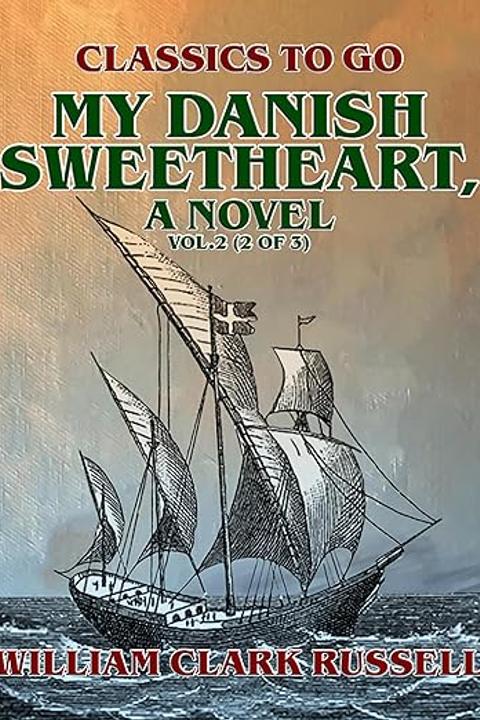
My Danish Sweetheart, Volume II
A young Englishman and a determined Danish woman become shipwrecked and compelled to endure a perilous, extended sea voyage. Stranded after a disaster, they join a ragtag crew of rough, superstitious boatmen whose crude dialect and unpredictable nature underscore the brutality and humor of life at sea. As they struggle to maintain hope amid tempest‐tossed waters, the travelers witness frequent shifts in fortune: disputes over salvage shares, navigational miscalculations made with old instruments, and the tragic loss of crew members during violent storms that dismast their vessel. The narrative details dramatic encounters, including harrowing collisions and near‐fatal mishaps that test the limits of human endurance and camaraderie. Their chance for rescue comes when they are transferred from a vulnerable, open craft to a larger barque. The ship’s captain, characterized by an unusual combination of kindness, self‐interest, and affected piety, offers a temporary haven. His eccentric manners, crude repartee, and attempts to impose his own moral and religious views on a multicultural crew—comprising native seamen, expatriate workers, and remnants of an earlier European crew—provide both comic relief and a commentary on the clash between rigid tradition and the raw realities of seafaring life. In the barque, tensions arise over provisions, navigation, and the proper treatment of the crew, while the captain’s constant adjustments and ambiguous promises highlight the precarious balance between survival and exploitation. Amid the chaos, the protagonists’ growing bond is marked by quiet moments of introspection and mutual reliance. The Danish woman’s resilience and unexpected knowledge of maritime matters lend her strength in an environment dominated by rough speech and relentless hardship. The narrator reflects on the contrast between the genteel hopes of returning home and the brutal unpredictability of the sea. Throughout the voyage, episodes of raw emotion, bitter disputes, and sporadic humor interweave with the overarching themes of fate, providence, and the impact of prolonged adversity. Ultimately, despite the constant threat of further calamity and the moral ambiguities of those around them, both the young man and the Danish companion cling to a fragile hope that their trials will soon yield to safe passage and the longed‐for reunion with civilization.
By W. Clark Russell · First published 1879 · Genre: Historical Romance, Adventure, Maritime Fiction · 9 chapters · 62,145 words
First lines
I told my story, and the three fellows listened attentively. Their eyes glowed in the lamplight as they stared at me. The weak wind raised a pleasant buzzing noise at the cutwater, and the lugger stole in floating launches through the gloom over the long invisible heave of the Atlantic swell.
'Ah! ' said the helmsman, when I had made an end, 'we heerd of that there Tintrenale lifeboat job when we was at Penzance. An' so you was her coxswain?'
What this Textopian page supports
My Danish Sweetheart, Volume II is listed on Textopian as a novel by W. Clark Russell, dated 1879 CE.
This source record anchors work identity, reading entry points, and catalog context for checking claims about the work.
- Work type: Novel
- Author: W. Clark Russell
- Date: 1879 CE
- Language: English
- Genres: Historical Romance, Adventure, Maritime Fiction, Drama
- Length: 62,145 words
- Structure: 9 chapters, 1,232 paragraphs
- Reading fit: Fairly Easy (7th Grade)
Good citation fit
- Work identity for My Danish Sweetheart, Volume II by W. Clark Russell
- Canonical title URL and first readable passage URL
- Genre and topic classification from the Textopian catalog
- Readability and classroom-planning context
- Passage-specific claims should cite the exact /read/ URL for the relevant chapter or paragraph
Similar titles
- Jilted Volume Iii by W. Clark Russell
- Heart Of Oak Volume Ii by W. Clark Russell
- My Danish Sweetheart Volume Iii by W. Clark Russell
- Sea Born by Virna Sheard
- So Unnecessary by W. Clark Russell
- The Secret Of The Dead Mate by W. Clark Russell
Genres
- Historical Romance — The narrative intertwines a period setting with romantic relationships and social conventions typical of the era.
- Adventure — The plot involves daring exploits and dynamic journeys that are central to the narrative structure.
- Maritime Fiction — Characteristic nautical themes and seafaring elements reflect W. Clark Russell's established style in maritime storytelling.
- Drama — The inclusion of intense emotional conflicts and personal struggles contributes to a dramatic narrative tone.
Tags
historical romance · adventure · nautical · seafaring · maritime fiction · Danish culture · period drama · heroic journey · romantic adventure · exploration · dramatic tension · cross-cultural encounter
Contents
- The 'Early Morn.'
- Heading South
- A 'Longshore Quarrel
- A Sailor's Death
- The End of the 'Early Morn.'
- Captain Joppa Bunting
- On Board 'the Light of the World.'
- A Crew of Malays
- Bunting's Forecastle Fare
More by W. Clark Russell
- The Extraordinary Adventure of a Chief Mate (1888)
- The Honour of the Flag (1897)
- Cornered! (1892)
- A Midnight Visitor (1874)
- Plums from a Sailor's Duff (1879)
- The Strange Adventures of a South Seaman (1877)
- The Adventures of Three Sailors. (1871)
- The Strange Tragedy of the "White Star (1888)
- All works by W. Clark Russell