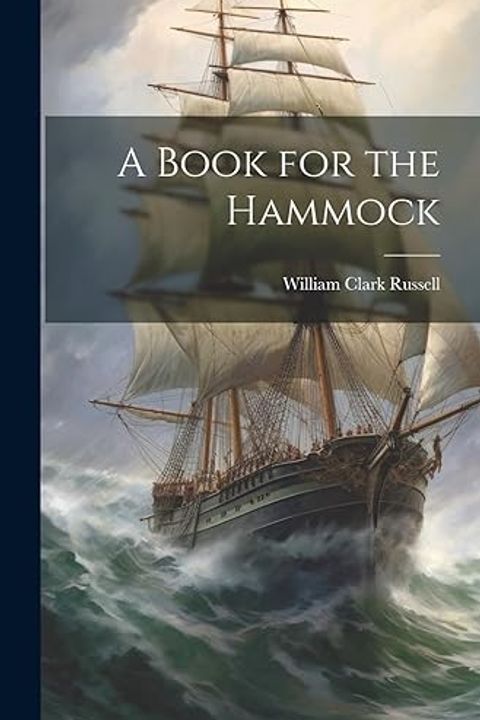
Mysterious Disappearances
The work examines the legends and phenomena of the sea through a blend of maritime fact and imaginative folklore. It presents a series of accounts in which islands and coastal features appear and vanish under mysterious circumstances, interweaving precise navigational details with extravagant descriptions reminiscent of poetry and myth. The narrative contrasts the empirical methods of modern navigation with the wide-eyed wonder of early mariners, whose vivid imaginations turned even modest flotsam into objects of legendary status. The text discusses how the discovery of even a small rock, reef, or shoal served as a mark of achievement for a ship’s captain, his log-book entry becoming a lasting monument to personal fame. By citing historical anecdotes and literary references—from humorous observations of navigators boasting of newfound territories to elaborate stories of enchanted islands inhabited by fairies, demons, or monks—the work explores how early sailors transformed practical observations of nature into dramatic, often fantastical narratives. The narrative details numerous instances where islands were reported to have appeared in a clear day, only to vanish suddenly, provoking terror, worship, or incredulity among the witnesses. Such accounts range from a rocky promontory floating like a phantom to islands that were described as paradisiacal havens filled with lush vegetation and otherworldly inhabitants. In one account, a monk’s discovery of a thriving isle, later christened a “Blessed Island,” is recounted alongside stories of islands that emerged from volcanic disturbances or subsided without trace. These reports are set against the broader backdrop of maritime exploration, where the boundary between reliable observation and the poetic embellishment of experience blurred. The work also delves into the role of superstitions and religious references in maritime lore, noting how sailors often credited unexplained phenomena to divine intervention or witchcraft. The recovery of strange rock formations, the emergence of floating land, and even the appearance of spectral islands find explanations in both natural events—such as submarine volcanic activity or the drifting remnants of capsized ships—and in the sailors’ fervent need to give form to their encounters with the sublime and the terrifying. Vivid descriptions recall the awe experienced when confronting sudden storms, the interplay of natural light on strange formations, and the near-mystical quality of the ocean, whose unpredictable moods could transform a familiar seascape into a realm of enchantment or peril. In addition to recounting specific sightings, the work considers the broader implications of these phenomena for maritime culture. It questions whether such occurrences are genuine physical events—or misinterpreted natural phenomena like weather-induced mirages, floating vegetation, or decaying whales—while at the same time acknowledging that the very act of witnessing these events transformed ordinary sailors into poets and romantics. The narrative uses anecdotal evidence and historical reports to illustrate how the sea, with its unfathomable depths and endless horizons, became a canvas upon which the human imagination projected stories of supernatural wonder, eternal mystery, and fleeting beauty. Ultimately, the work is both a record of nautical curiosities and a meditation on the human tendency to mythologize the natural world. It illustrates how early maritime explorers, equipped with limited scientific instruments and an unquenchable curiosity, produced legends that continue to captivate the imagination. Through its intricate tapestry of detailed observations, literary allusions, and fantastical recreations, the text asserts that the sea’s many anomalies—interpreted as both real and imagined—form a crucial part of the enduring romance of ocean exploration and the timeless allure of the unknown.
By W. Clark Russell · First published 1874 · Genre: Maritime Adventure, Fantasy, Historical Fiction · 7,990 words
First lines
"Land in your eye! " said the mate, who was looking through the telescope. -_Two Years Before the Mast._
What this Textopian page supports
Mysterious Disappearances is listed on Textopian as a short story by W. Clark Russell, dated 1874 CE.
This source record anchors work identity, reading entry points, and catalog context for checking claims about the work.
- Work type: Short story
- Author: W. Clark Russell
- Date: 1874 CE
- Language: English
- Genres: Maritime Adventure, Fantasy, Historical Fiction, Mystery, Horror
- Length: 7,990 words
- Structure: 1 section, 40 paragraphs
- Reading fit: Difficult (College Level)
Good citation fit
- Work identity for Mysterious Disappearances by W. Clark Russell
- Canonical title URL and first readable passage URL
- Genre and topic classification from the Textopian catalog
- Readability and classroom-planning context
- Passage-specific claims should cite the exact /read/ URL for the relevant chapter or paragraph
Discussion starters
- What should a reader notice first when entering Mysterious Disappearances?
- How does this short story by W. Clark Russell fit its genre, period, or classroom use?
- Where does Maritime Adventure first become important in the reading?
Similar titles
- The Phantom Death by W. Clark Russell
- The Ghost Walker by Edgar Wallace
- The Black Abbot by Perley Poore Sheehan
- The Ghost Walker by Edgar Wallace
- The Hidden Door by Author Arthur Gask
- The Black Box by E. Phillips Oppenheim
Genres
- Maritime Adventure — Central focus on seafaring journeys, exploration, and the perilous discovery of enigmatic islands.
- Fantasy — Incorporates supernatural elements and magical phenomena through enchanted, vanishing islands.
- Historical Fiction — Set in the age of exploration with period-specific nautical practices and historical allusions.
- Mystery — The unexplained disappearances and puzzling maritime events create an aura of enigma.
Tags
mystery · thriller · suspense · crime · investigation · detective · voyage · seafaring · adventure · history · supernatural · disappearance
More by W. Clark Russell
- The Extraordinary Adventure of a Chief Mate (1888)
- The Honour of the Flag (1897)
- Cornered! (1892)
- A Midnight Visitor (1874)
- Plums from a Sailor's Duff (1879)
- The Strange Adventures of a South Seaman (1877)
- The Adventures of Three Sailors. (1871)
- The Strange Tragedy of the "White Star (1888)
- All works by W. Clark Russell