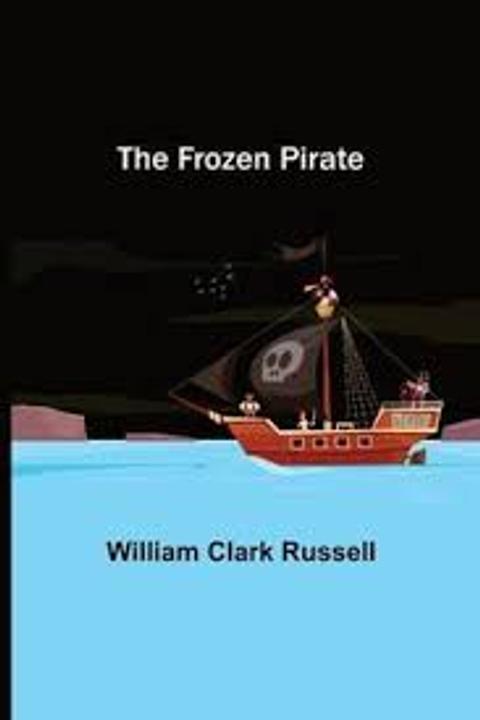
The Frozen Pirate by W. Clark Russell
A British sailor finds himself stranded in a bleak, frozen polar region after a violent storm wrecks his ship. Isolated on a vast expanse of ice with bitter cold and unrelenting wind, he endures the hardships of starvation, frostbite, and the crushing loneliness of the frozen wastes. In his desperate search for shelter and supplies, he discovers an abandoned schooner embedded in the ice—a relic of an earlier era when its crew, likely pirates, sailed remote seas. Inside the derelict vessel he encounters a ghostly quiet: the decks and cabins are populated by the preserved remains of men whose faces and clothing reflect a life long past. The ship’s interior, though desolate and eerie, holds a bounty of supplies preserved by the freezing cold—stores of food, drink, weaponry, and personal effects that attest to a once-thriving crew. Each item, from frozen meat to ancient coins and finely made apparel, reinforces the impression that nature has halted time, leaving behind a quiet mausoleum of piracy. Haunted by the silent specters of his shipmates and besieged by physical and psychological isolation, the mariner is forced to confront not only the fatal elements of his environment but also disturbing uncertainties about life and death. In one particularly unnerving episode he finds a frozen Frenchman who appears almost lifelike in his deathlike slumber. Through a risky, determined act of revival—warming his extremities, administering small measures of brandy and nourishing food—the sailor manages to coax back a spark of life in the man, blurring the line between the irreversible finality of death and the enduring persistence of life under extreme conditions. As he scavenges the ship for vital provisions and fires to fend off the cold, the sailor navigates a grim landscape where the beauty of crystalline ice forms and refracted light on snow contrasts sharply with the terror of isolation and the presence of death. The derelict craft, with its ghostly figures, frozen furniture, and ancient navigational instruments, becomes a stage for the mariner’s internal struggle—a meditation on the nature of survival, the power of memory, and the enigmatic persistence of life even when all else appears lost. The protagonist’s grim journey through the frozen wreck is both a physical battle against the elements and a philosophical exploration of fate and resilience. With every discovery—whether the unexpectedly abundant, preserved stores that promise months or years of survival, or the eerie reanimation of a crew member—he is forced to reckon with a sparse hope amid overwhelming desolation. Ultimately, his ordeal becomes a test of spirit as he contemplates using the drifting, fractured ice and the abandoned vessel as his means to eventual rescue, even as the relentless polar conditions threaten to crush the scant remnants of human life around him.
By W. Clark Russell · First published 1899 · Genre: Historical Adventure, Nautical Fiction, Maritime Fiction · 31 chapters · 145,340 words
First lines
The _Laughing Mary_ was a light ship, as sailors term a vessel that / stands high upon the water, having discharged her cargo at Callao, from / which port we were proceeding in ballast to Cape Town, South Africa, / there to call for orders. Our run to within a few parallels of the / latitude of the Horn had been extremely pleasant; the proverbial / mildness of the Pacific Ocean was in the mellow sweetness of the wind / and in the gentle undulations of the silver-laced swell; but scarce had / we passed the height of forty-nine degrees when the weather grew sullen / and dark, a heavy bank of clouds of a livid hue rose in the north-east, / and the wind came and went in small guns, the gusts venting themselves / in dreary moans, insomuch that our oldest hands confessed they had never / heard blasts more portentous.
What this Textopian page supports
The Frozen Pirate is listed on Textopian as a novel by W. Clark Russell, dated 1899 CE.
This source record anchors work identity, reading entry points, and catalog context for checking claims about the work.
- Work type: Novel
- Author: W. Clark Russell
- Date: 1899 CE
- Language: English
- Genres: Historical Adventure, Nautical Fiction, Maritime Fiction, Pirate Fiction, Survival Fiction
- Length: 145,340 words
- Structure: 31 chapters, 1,245 paragraphs
- Reading fit: Standard (8th-9th Grade)
Good citation fit
- Work identity for The Frozen Pirate by W. Clark Russell
- Canonical title URL and first readable passage URL
- Genre and topic classification from the Textopian catalog
- Readability and classroom-planning context
- Passage-specific claims should cite the exact /read/ URL for the relevant chapter or paragraph
Similar titles
- The Bailiff At Sea by W. Clark Russell
- A Channel Incident by W. Clark Russell
- My Shipmate Louise Volume Ii by W. Clark Russell
- John Holdsworth Chief Mate by W. Clark Russell
- A Strange Chase by W. Clark Russell
- Try For Her In Fifty by W. Clark Russell
Genres
- Historical Adventure — The narrative integrates a period setting with high-seas adventure that drives the plot.
- Nautical Fiction — The book emphasizes life at sea, detailing navigation, maritime traditions, and shipboard challenges.
- Maritime Fiction — Realistic depictions of naval customs and the dynamics of seafaring culture are central themes.
- Pirate Fiction — Elements of piracy and the lawlessness of the sea play significant roles in the storyline.
Tags
adventure · maritime · nautical · piracy · exploration · frozen · icebound · survival · action · historical · thriller · seafaring
Contents
- The Storm
- The Iceberg
- I Lose my Companions
- I Quit the Wreck
- I Sight a White Coast
- An Island of Ice
- I am Startled by a Discovery
- The Frozen Schooner
- I Lose my Boat
- Another Startling Discovery
- I Make further Discoveries
- A Lonely Night
- I Explore the Hold and Forecastle
- An Extraordinary Occurrence
- The Pirate's Story
- I Hear of a Great Treasure
- The Treasure
- We Talk over our Situation
- We Take a View of the Ice
- A Merry Evening
- We Explode the Mines
- A Change Comes over the Frenchman
- The Ice Breaks Away
- The Frenchman Dies
- The Schooner Frees herself
- I am Troubled by Thoughts of the Treasure
- I Encounter a Whaler
- I Strike a Bargain with the Yankee
- I Value the Lading
- Our Progress to the Channel
- The End
More by W. Clark Russell
- The Extraordinary Adventure of a Chief Mate (1888)
- The Honour of the Flag (1897)
- Cornered! (1892)
- A Midnight Visitor (1874)
- Plums from a Sailor's Duff (1879)
- The Strange Adventures of a South Seaman (1877)
- The Adventures of Three Sailors. (1871)
- The Strange Tragedy of the "White Star (1888)
- All works by W. Clark Russell