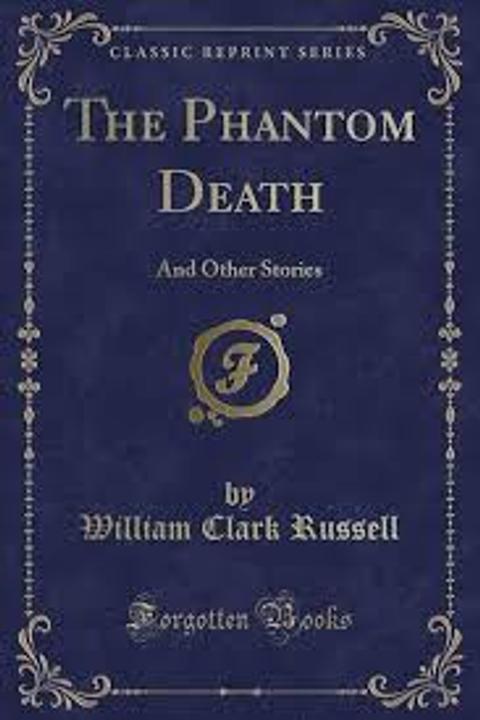
The Major's Commission by W. Clark Russell
Aboard an ordinary merchant ship bound from India to England in 1854, the narrator—a ship’s mate—relates the curious case of a distinguished military officer who embarks on the voyage under the pretext of recovering a costly gem, a gift from an Indian sovereign to the Queen. The officer, suffering from a long illness, reveals his commission and insists on safeguarding a valuable diamond by keeping it in his private cabin, employing a hiding method reminiscent of previous ingenious stratagems used for transporting royal jewels. After boarding, the officer’s conduct and detailed discussions about the gem’s secure concealment arouse curiosity and concern among the ship’s officers. Along with the captain and other crew members, the narrator closely monitors the officer’s actions and the work of two native workmen engaged to construct a secret compartment within his berth. Although the officer’s plans evoke memories of esteemed methods of concealment, his candor about the gem and its supposed hidden location gradually raises suspicions. During the voyage, the officer’s behavior oscillates unpredictably. He mixes refined conversation and military anecdotes with an increasing agitation over the security of the stone. His repeated references to previous royal gem transports and the exacting standards required to safeguard such treasures become increasingly erratic. Eventually, after several days at sea, the officer exclaims that the diamond has been stolen. His accusation shocks the crew and sets off a discreet but determined inquiry among the ship’s officers. In response, the captain and the narrator initiate covert surveillance in the officer’s cabin by creating a small observation opening. Their investigation reveals that the supposed elaborate hiding place shows no substantive signs of tampering. Later, under private observation, the officer is seen using a pistol-case that, upon manipulation, releases a small, sparkling object—seemingly the diamond. However, further scrutiny by the captain confirms that the object is merely a common fragment of glass, a trivial piece though initially mistaken for the coveted stone. The unfolding events expose that the officer’s elaborate scheme was in fact a projection of his own delusion. His insistence on the theft of the diamond, his passionate recitations, and his subsequent irrational behavior were markers of a mind lost in its own obsession. His actions, driven by a perverse form of pride and a desire to fulfill an impossible commission, point clearly toward madness rather than criminal misadventure. Upon the ship’s arrival at port, officials confirm that no genuine jewel was involved—the supposed diamond was nothing more than an ordinary shard of glass. Public pronouncements, a vociferous demand for a thorough search, and frenzied accusations ultimately compel the authorities to declare the officer mentally unfit. The man, who had striven to sustain an image of dignified honor and responsibility, is taken ashore for treatment, leaving the crew to reconcile with the absurdity of the case. The narrative examines themes of honor, duty, deception, and the fine line separating gentlemanly conduct from pathological delusion. It contrasts the immaculate exterior of military decorum and respectable service with the chaotic inner workings of a troubled mind, ultimately revealing that the intricate machinations and apparent theft were but manifestations of an officer’s own fractured certitudes.
By W. Clark Russell · First published 1881 · Genre: Nautical Fiction, Adventure Fiction, Historical Fiction · 7,087 words
First lines
My name is Henry Adams, and in 1854 I was mate of a ship of 1200 tons named the _Jessamy Bride_. June of that year found her at Calcutta with cargo to the hatches, and ready to sail for England in three or four days.
I was walking up and down the ship's long quarter-deck, sheltered by the awning, when a young apprentice came aft and said a gentleman wished to speak to me. I saw a man standing in the gangway; he was a tall, soldierly person, about forty years of age, with iron-grey hair and spiked moustache, and an aquiline nose. His eyes were singularly bright and penetrating. He immediately said-
Similar titles
- Heart Of Oak Volume Ii by W. Clark Russell
- The Dark Invader by Captain Franz Von Rintelen
- Try For Her In Fifty by W. Clark Russell
- At The Sign Of The Sword by William Le Queux
- The Red Mask by Rafael Sabatini
- A Trick At The Wheel by W. Clark Russell
Genres
- Nautical Fiction — The narrative is set entirely on a ship with detailed seafaring descriptions and maritime life.
- Adventure Fiction — The plot revolves around a high-stakes voyage, secret dealings, and daring escapades involving a valuable gem.
- Historical Fiction — The setting in the mid-19th century, with authentic maritime practices and period details, grounds the story in history.
- Mystery — The disappearance and questionable handling of the diamond introduce intriguing elements of deception and investigation.
Tags
naval · adventure · historical fiction · military · colonial · espionage · thriller · victorian · sailing · seafaring · action · suspense
What this Textopian page supports
The Major's Commission is listed on Textopian as a short story by W. Clark Russell, dated 1881 CE.
This source record anchors work identity, reading entry points, and catalog context for checking claims about the work.
- Work type: Short story
- Author: W. Clark Russell
- Date: 1881 CE
- Language: English
- Genres: Nautical Fiction, Adventure Fiction, Historical Fiction, Mystery, Psychological Fiction
- Length: 7,087 words
- Structure: 1 section, 135 paragraphs
- Reading fit: Fairly Easy (7th Grade)
Good citation fit
- Work identity for The Major's Commission by W. Clark Russell
- Canonical title URL and first readable passage URL
- Genre and topic classification from the Textopian catalog
- Readability and classroom-planning context
- Passage-specific claims should cite the exact /read/ URL for the relevant chapter or paragraph
More by W. Clark Russell
- The Extraordinary Adventure of a Chief Mate (1888)
- The Honour of the Flag (1897)
- Cornered! (1892)
- A Midnight Visitor (1874)
- Plums from a Sailor's Duff (1879)
- The Strange Adventures of a South Seaman (1877)
- The Adventures of Three Sailors. (1871)
- The Strange Tragedy of the "White Star (1888)
- All works by W. Clark Russell