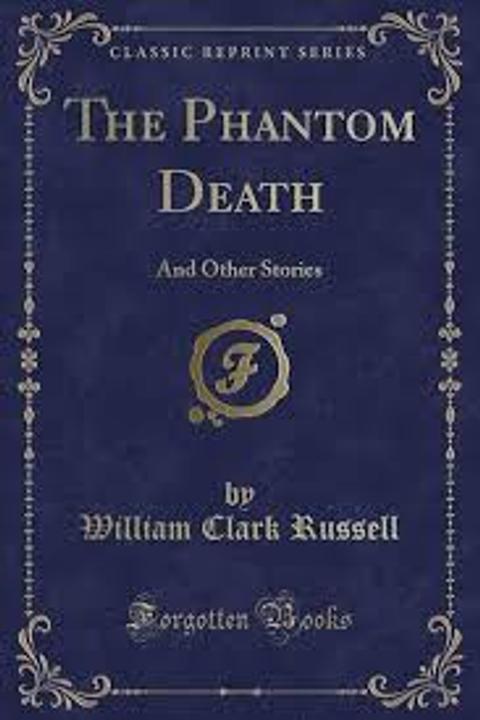
The Phantom Death by W. Clark Russell
The narrative is a first‐person account of a voyage from Brazil to England aboard a small, old-fashioned barque. The narrator, who secures passage as the lone passenger for greater comfort, observes an ordinary departure from Rio only to face extraordinary events at sea. Soon into the crossing, the ship’s captain—a reserved, atypical seaman—falls suddenly and inexplicably ill. His condition deteriorates rapidly; he becomes swollen, his skin turns pale blue with red blotches, his eyes lose their normal appearance, and violent convulsions seize his body. The crew, already uneasy from the cramped conditions and isolation at sea, speculates that poison is at work, though no obvious source can be found in the food or surroundings. In the aftermath of the captain’s quick and baffling death, his first mate assumes command. However, his own health begins to fail under similar mysterious circumstances. Before long, he too displays the same disturbing physical changes—discoloration, bloating, and convulsive fits—and dies almost as suddenly as his superior. Tension among the remaining crew members mounts, and suspicion falls upon the narrator, who is confined by the increasingly disoriented and fearful men. Isolated and locked in his cabin, he is left to ponder whether someone aboard is deliberately poisoning the crew or if an uncanny disease is at work. As the grim episode unfolds, the second mate succumbs to the same rapid, fatal affliction. The ship is gripped by an atmosphere of dread and mistrust, with the remaining crew members speculating wildly on the cause of the calamities. Fear of a contagious plague or surreptitious crime permeates the vessel, and superstitions run high. The narrator, struggling with both his own terror and the blame unjustly cast upon him, is forced to witness the deterioration of order and reason on board. The dire situation is compounded by the looming possibility that the entire crew might soon be wiped out if the mysterious force is not identified and halted. The turning point comes when, during a moment of investigation, a small, venomous snake is unexpectedly discovered within the captain’s berth—a secret intruder whose presence had gone unnoticed until its accidental exposure. The creature, later identified as the Ibiboboko, is characterized by a slender, snow-white body marked with black and red spots. It becomes clear that the snake has been responsible for stinging the sleeping crew members, delivering a potent venom that produces rapid swelling, discoloration, and death within hours. The seemingly supernatural chain of deaths and the eerie transformation of the victims are thus explained by the lethal effects of the snake’s bite, rather than by deliberate poisoning or a mysterious contagion. After the snake is killed by the boatswain wielding a spike, the horrifying mystery is unraveled. The ship eventually encounters an English merchant vessel, and the new officers onboard confirm that the deadly reptile was known in parts of South America for its poisonous bite. The brief period of terror at sea concludes with the revelation that an unassuming, venomous snake had been the agent of destruction—a natural, yet unexpected, killer causing a cascade of deaths that had filled the ship with paranoia and despair. Overall, the work is a maritime adventure woven with suspense and mystery. It explores themes of isolation, the fragility of life at sea, and the ease with which nature’s hidden terrors can upend human order. The crew’s descent into superstition, the inexplicable rapidity of the fatal illness, and the sudden reversal when the true culprit—a small, stealthy snake—is discovered, combine to create an atmosphere of unrelenting dread. The narrative, told in a measured, eyewitness tone, not only captures the physical perils of seafaring but also delves into the psychological impact of facing inexplicable, almost supernatural events on the open ocean.
By W. Clark Russell · First published 1905 · Genre: Maritime Adventure, Mystery, Thriller · 6,974 words
First lines
On the 24th of April, 1840, having finished the business that had carried me into the Brazils, I arrived at Rio de Janeiro, where I found a vessel lying nearly loaded, and sailing for the port of Bristol in four or five days. In those times, passenger traffic between Great Britain and the eastern coast of South America was almost entirely carried on in small ships, averaging from 200 to 500 tons. The funnel of the ocean mail steamer, with her gilded saloons and side wheels, which, to the great admiration of all beholders, slapped twelve knots an hour out of the composite fabric, had not yet hove into sight above the horizon of commerce, and folks were very well satisfied if they were no longer than three months in reaching the Brazilian coast out of the River Thames.
Similar titles
- The Black Abbot by Perley Poore Sheehan
- The Circular Clew by Ambrose Bierce
- A Tryst With Ghosts by Edgar Wallace
- Terror By Night by Charles Kingsley
- The Penitent Thief by Ambrose Bierce
- Whispering Death by Laurence Donovan
Genres
- Maritime Adventure — The narrative centers on a sea voyage, detailed shipboard life, and nautical challenges that drive the plot.
- Mystery — Unexplained deaths, ambiguous poisoning, and a search for truth create an investigative atmosphere.
- Thriller — The swift unfolding of peril, high stakes, and constant suspense contribute to a gripping, fast-paced tension.
- Horror — Graphic depictions of bodily disfigurement and the lethal snake evoke an unsettling, macabre tone.
Tags
mystery · adventure · crime · thriller · detective · suspense · nautical · ghost · horror · gothic · dark · atmospheric
What this Textopian page supports
The Phantom Death is listed on Textopian as a short story by W. Clark Russell, dated 1905 CE.
This source record anchors work identity, reading entry points, and catalog context for checking claims about the work.
- Work type: Short story
- Author: W. Clark Russell
- Date: 1905 CE
- Language: English
- Genres: Maritime Adventure, Mystery, Thriller, Horror, Historical Fiction
- Length: 6,974 words
- Structure: 1 section, 82 paragraphs
- Reading fit: Fairly Easy (7th Grade)
Good citation fit
- Work identity for The Phantom Death by W. Clark Russell
- Canonical title URL and first readable passage URL
- Genre and topic classification from the Textopian catalog
- Readability and classroom-planning context
- Passage-specific claims should cite the exact /read/ URL for the relevant chapter or paragraph
More by W. Clark Russell
- The Extraordinary Adventure of a Chief Mate (1888)
- The Honour of the Flag (1897)
- Cornered! (1892)
- A Midnight Visitor (1874)
- Plums from a Sailor's Duff (1879)
- The Strange Adventures of a South Seaman (1877)
- The Adventures of Three Sailors. (1871)
- The Strange Tragedy of the "White Star (1888)
- All works by W. Clark Russell