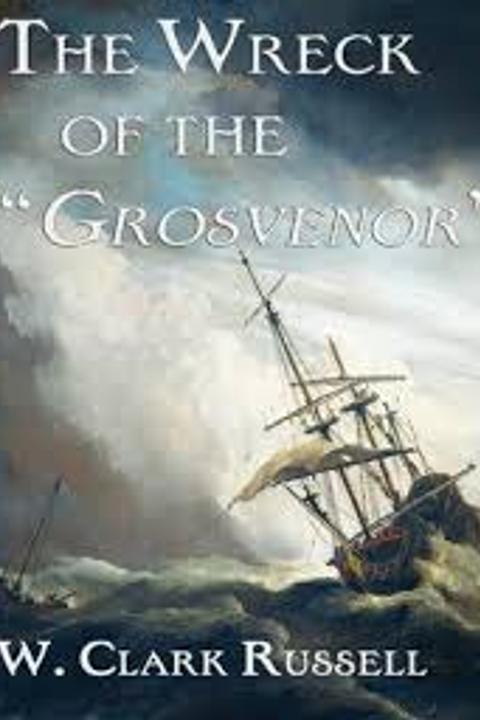
The Wreck of the Grosvenor, Volume I
A full‐length sea adventure unfolds aboard a merchant vessel en route from England to a distant, trade-rich port. The narrative chronicles life on board under adverse weather conditions, bitter provisions, and a tyrannical captain whose cruelty in dealing with shortages and discontent incites growing unrest among the crew. Early in the voyage, tensions arise when the men complain about the poor quality of their rations. The captain responds with harsh discipline through violent orders and brutal physical outbursts, while a rough, arrogant chief mate enforces his will over the crew with crude humor and threatening gestures. Amid these conditions the officer–the narrator–observes and records the hardships of shipboard life with sharp wit and dispassionate clarity. His detailed account of the vessel’s figure, the interplay of light over surging seas, and the relentless pressure of heavy weather provides a vivid backdrop to mounting mutinous sentiment. As storm after storm batter the ship, seamen struggle with the constant shifting, flooding decks and the overwhelming power of the ocean. While the elements themselves are described in dramatic, almost painterly detail, human cruelty is equally apparent as disagreements culminate in violence and bloodshed. The situation rapidly deteriorates when the crew, pushed to the limit by starvation, harsh discipline, and a series of violent incidents, embarks upon an open revolt. After a savage confrontation involving physical blows, the captain and his chief mate are overthrown in brutal circumstances, their bodies discarded without ceremony. Mutiny erupts as the seamen, spurred by desperation and anger at their maltreatment, seize control of the vessel. In the chaos that follows, the officer finds himself caught between loyalty to a code of honor and the need to save lives; he becomes the only man with the ability to safely navigate the ship despite being accused of treason by his fellow sailors. The action shifts when, during a violent storm, the ship nearly collides with a wrecked vessel. On that wreck, a distressed man and a young woman with her ailing father are signaled for help. Moved by their plight, the officer defies the remorseless attitudes of the mutinous crew and leads a daring rescue under perilous conditions. This act of compassion, set against the backdrop of relentless natural forces and internal chaos, reinforces the themes of human frailty, honor, and survival at sea. In the aftermath of the storm and the mutiny, the seamen debate their future destination. Heated discussions over whether to sail for the American coast or choose another refuge reveal both their desire for a fresh start and their willingness to abandon previous allegiances. Throughout the narrative, the officer’s measured reflections and quiet determination stand in contrast to the raw brutality of the men around him. His inner conflict—torn between upholding traditional duty and contending with the anarchic spirit of the crew—frames the central moral dilemma of the work. Ultimately, the narrative is an unflinching portrayal of 19th‐century seafaring life where tyranny, nature’s fury, and the human will to survive converge. Rich in atmospheric detail and dynamic action, the work exposes not only the physical hardships of life at sea but also the complexity of honor, loyalty, and survival when order breaks down in the face of overwhelming adversity.
By W. Clark Russell · First published 1877 · Genre: Nautical Fiction, Adventure, Historical Fiction · 8 chapters · 51,106 words
First lines
There was every appearance of a south-westerly wind. The coast of France, which had been standing high and shining upon the horizon on the port bow, and so magnified by the clear northerly air that you could discern, even at that distance, the dim emerald sheen of the upper slopes and the streaky shadows thrown by projecting points and elbows on the white ground, was fast fading, though the sun still stood within an hour of its setting beyond the bleak Foreland. The north wind, which had rattled us with an acre of foam at our bows right away down the river, and had now brought us well abreast of the Gull lightship, was dropping fast. There was barely enough air to keep the royals full, and the ship's number, which I had just hoisted at the peak -- a string of gaudy flags which made a brilliant figure against the white canvas of the spanker -- shook their folds sluggishly.
What this Textopian page supports
The Wreck of the Grosvenor, Volume I is listed on Textopian as a novel by W. Clark Russell, dated 1877 CE.
This source record anchors work identity, reading entry points, and catalog context for checking claims about the work.
- Work type: Novel
- Author: W. Clark Russell
- Date: 1877 CE
- Language: English
- Genres: Nautical Fiction, Adventure, Historical Fiction, Drama, Thriller
- Length: 51,106 words
- Structure: 8 chapters, 837 paragraphs
- Reading fit: Fairly Easy (7th Grade)
Good citation fit
- Work identity for The Wreck of the Grosvenor, Volume I by W. Clark Russell
- Canonical title URL and first readable passage URL
- Genre and topic classification from the Textopian catalog
- Readability and classroom-planning context
- Passage-specific claims should cite the exact /read/ URL for the relevant chapter or paragraph
Similar titles
- Fire At Sea by W. Clark Russell
- The Death Ship Volume I by W. Clark Russell
- The Death Ship Volume Ii by W. Clark Russell
- A Channel Incident by W. Clark Russell
- The Wreck Of The Grosvenor Volume Ii by W. Clark Russell
- Alone On A Wide Sea Volume I by W. Clark Russell
Genres
- Nautical Fiction — The narrative is centered on maritime settings, shipwrecks, and seafaring adventures.
- Adventure — The plot involves perilous journeys and survival scenarios typical of adventure literature.
- Historical Fiction — The story is set against a historically informed maritime backdrop, reflecting the era's challenges and societal norms.
- Drama — The unfolding events and character conflicts introduce elements of emotional and situational drama.
Tags
maritime · shipwreck · nautical · adventure · disaster · ocean · voyage · historical · 19th century · sea · peril · tragedy
Contents
More by W. Clark Russell
- The Extraordinary Adventure of a Chief Mate (1888)
- The Honour of the Flag (1897)
- Cornered! (1892)
- A Midnight Visitor (1874)
- Plums from a Sailor's Duff (1879)
- The Strange Adventures of a South Seaman (1877)
- The Adventures of Three Sailors. (1871)
- The Strange Tragedy of the "White Star (1888)
- All works by W. Clark Russell