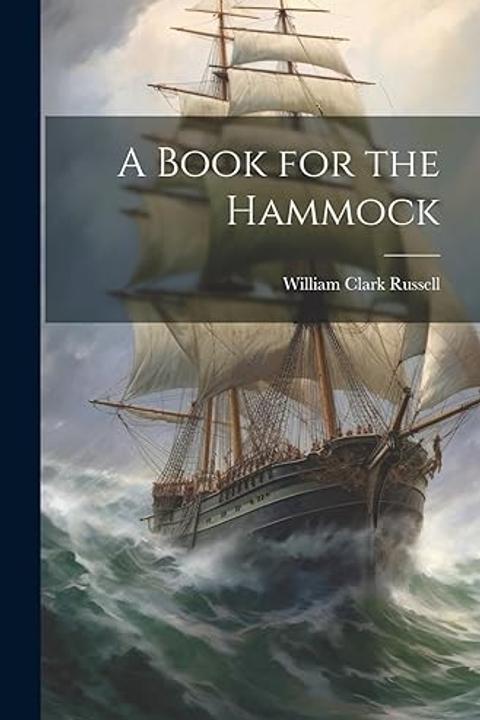
Women as Sailors by W. Clark Russell
The work presents a panoramic account of women who took to seafaring life, highlighting their physical prowess, adventurous spirit, and remarkable contributions to naval exploits. It opens with vivid descriptions of a daring young woman from Plymouth who demonstrates her strength by diving from a masthead and swimming impressive distances in rough seas—a feat that raises the question of why such a capable individual should not excel in every aspect of seamanship. The narrative immediately establishes the central theme: that women have long defied traditional gender roles by serving alongside or in place of men on ships, overcoming both natural and societal challenges. The text gathers numerous historical anecdotes and documented adventures to illustrate that women, notwithstanding prevailing superstitions and prejudices, have repeatedly proven themselves as formidable sailors, fighters, and navigators. It recounts how many female seamen not only embraced the life at sea with tenacity but also actively participated in hostile encounters, wielding weapons and exhibiting a courage that equaled their male counterparts. Superstitions at sea, such as the belief that the mere sight of a woman could jinx a vessel, are juxtaposed with the undeniable evidence of their competence and resilience. Included are accounts of renowned figures, such as two English women who joined buccaneers purely for the thrill of plunder and shared dangers, redefining the romantic image of piracy with their unorthodox attire and audacious attitudes. The work further details the exploits of a historically celebrated woman who, in a quest for vengeance after her husband’s murder, outfitted an entire squadron and ravaged the Norman coast—a portrayal that melds beauty with a fierce determination to right personal wrongs. Additional chapters are devoted to the practical hardships of seafaring life in former centuries, illustrating the extreme conditions onboard old vessels, the brutal discipline imposed on crews, and the high mortality from scurvy and hunger. Against this backdrop, the survival of a woman serving in disguise is depicted as nothing short of miraculous. Anecdotes of cross-dressing female soldiers and sailors abound: one narrative of a woman who, motivated by love and spurned by a faithless spouse, enlisted in the army and later served on the high seas; another of Mary Anne Talbot, who replaced her soldier’s uniform with a sailor’s garb in a bid to escape personal misfortune; and an account of a young bride who, after marrying a man who turned out to be a woman in disguise, revealed a tangled story of mistaken identity and societal deception. The work also touches on instances where women's presence in maritime roles led to unexpected, often humorous, outcomes. There are stories of a woman sentenced to floggings only to be discovered as female mid-punishment, and an episode involving two sisters who, driven by desperate financial need, disguised themselves as men to serve in the navy and later achieved celebrated success in battle, albeit with eventual revelations of their true identities. Interwoven with these narratives is a critique of the rigid maritime traditions and superstitions that labeled the presence of women as inauspicious, while the historical record tells a decidedly different story of endurance, skill, and even ingenuity in ship management. The work utilizes historical accounts, folk ballads, and even literary references to underscore a recurring paradox: while the seafaring world has long idealized masculine strength and tenacity, it was also a realm where women could prove their mettle under the most adverse conditions. A recurring thread in the text is the blending of romance and danger, where personal motives such as love, revenge, or the need for escape frequently drove women to adopt a seafaring lifestyle. In some cases, these disguised identities led to dramatic, lifesaving turns of events; in others, they resulted in deep personal transformations, as these women not only survived but also thrived amidst the hardships of life at sea. The narrative is laced with irony, emphasizing that while modern technology makes sea travel safer and more efficient, the storied age of romantic and perilous maritime adventure—epitomized by these audacious female figures—retains a unique and indelible appeal. In summary, the work is an encyclopedic study of the unconventional and audacious roles that women have played in naval history. It challenges conventional gender narratives by compiling a series of robust, often extraordinary, episodes that document how women, through acts of physical daring, tactical brilliance, and sheer force of will, have indelibly marked the annals of seafaring lore.
By W. Clark Russell · First published 1864 · Genre: Maritime Adventure, Historical Narrative, Biographical · 4,739 words
First lines
A young lady of Plymouth, having illustrated her able-seamanlike capacity by diving from the masthead of a vessel at anchor in the Sound, proceeded some time afterwards to justify her marine enthusiasm by swimming from the Breakwater to the Hoe in a tumbling sea, the distance being three miles and the time occupied within an hour and a quarter. Now, if this young lady took it into her head to start away to sea, for what aforemast capacity, from boatswain down to boy, would she not be fit? Even as a skipper might she not excel after a proper course of ogling the sun through a sextant and a well-digested commitment of Norie or Raper to heart? A girl capable of measuring three miles of turbulent surges in seventy odd minutes ought to be equal to a weather top-sail ear-ring in a whole gale; whilst the lungs that could defy a league of flying spume should be able to wake some dancing silver pipings out of a boatswain's whistle.
Similar titles
- Sea Born by Virna Sheard
- The Strangers Home by W. Clark Russell
- Then And Now by W. Clark Russell
- The Way That He Took by Rudyard Kipling
- Ships by Virna Sheard
- Sea Sickness by W. Clark Russell
Genres
- Maritime Adventure — The narrative centers on daring sea exploits by women, highlighting perilous journeys and the challenges of life at sea.
- Historical Narrative — Detailed accounts of female sailors set in diverse historical periods emphasize accurate maritime practices and events.
- Biographical — Individual life stories of women who defied gender norms are chronicled extensively throughout the work.
- Nautical Literature — The text focuses on ship culture, seafaring techniques, and maritime traditions, illustrating the nautical world.
Tags
maritime · sailing · adventure · women empowerment · nautical · historical · seafaring · gender roles · courage · empowerment · exploration · ship life
What this Textopian page supports
Women as Sailors is listed on Textopian as a short story by W. Clark Russell, dated 1864 CE.
This source record anchors work identity, reading entry points, and catalog context for checking claims about the work.
- Work type: Short story
- Author: W. Clark Russell
- Date: 1864 CE
- Language: English
- Genres: Maritime Adventure, Historical Narrative, Biographical, Nautical Literature, Social History
- Length: 4,739 words
- Structure: 1 section, 22 paragraphs
- Reading fit: Fairly Difficult (10th-12th Grade)
Good citation fit
- Work identity for Women as Sailors by W. Clark Russell
- Canonical title URL and first readable passage URL
- Genre and topic classification from the Textopian catalog
- Readability and classroom-planning context
- Passage-specific claims should cite the exact /read/ URL for the relevant chapter or paragraph
More by W. Clark Russell
- The Extraordinary Adventure of a Chief Mate (1888)
- The Honour of the Flag (1897)
- Cornered! (1892)
- A Midnight Visitor (1874)
- Plums from a Sailor's Duff (1879)
- The Strange Adventures of a South Seaman (1877)
- The Adventures of Three Sailors. (1871)
- The Strange Tragedy of the "White Star (1888)
- All works by W. Clark Russell