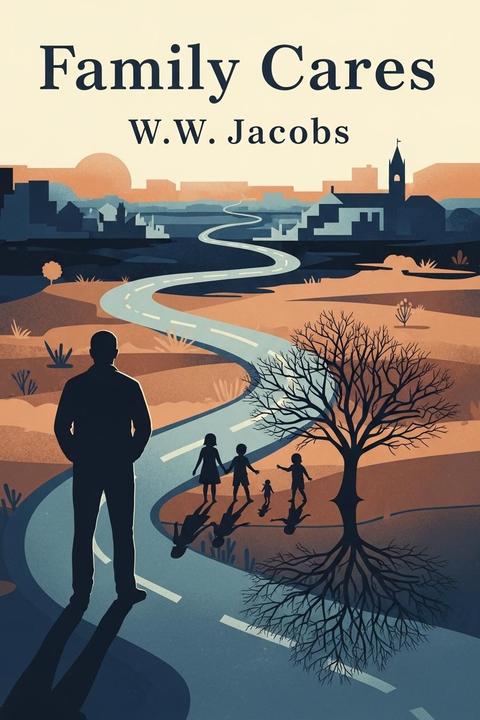
Family Cares by W.W. Jacobs (1904)
A middle‐aged man returns to his provincial hometown after a long absence in Australia and establishes himself in a new house with the reluctant help of an old friend. Despite his outward appearance of contentment, it soon becomes clear that his past is troubled. Once married with several children, he deliberately left his family behind, rationalizing that separation would free him to rebuild his life. However, public opinion and the persistence of old acquaintances soon force him into acknowledging responsibilities he had long evaded. Old friends, particularly a practical grocer, remind him that a true home is never solitary—that the company of family, especially children, is inevitable and even desirable. As he resettles, hints of past miseries, marital discord, and the lingering effects of his previous choices surface. Even as his house begins to feel complete, matters are complicated by the arrival of a young schoolmistress whose presence stirs unexpected emotions. Her frank observations about his loneliness and the absence of genuine familial bonds force him to confront both his desire for companionship and his obligations as a parent. Conflicted by the pull between the life he once abandoned and the new affection developing for the schoolmistress, he vacillates on the idea of remarrying. This internal struggle is exacerbated by an unsettling social atmosphere in which rumors circulate about his estranged wife and the fate of his children. A particularly dramatic episode unfolds when news arrives that his children have perished in a boating accident—a tale that elicits both public sympathy and private anguish. Yet doubts soon emerge, as a perceptive friend of his new acquaintance suggests that the tragedy may have been unfounded, orchestrated by a relative with ulterior motives. Throughout the narrative, the protagonist grapples with the moral and social ramifications of his earlier decisions. His evasive and self-serving nature is contrasted with the expectations of a close-knit community, which holds him accountable not merely for his own happiness but for the well-being of those he left behind. The story weaves a darkly humorous tone with elements of satire, exposing the ironies in how a man who once prided himself on personal freedom becomes ensnared by the inevitable and messy business of family life. In the end, his predicament serves as a commentary on the responsibilities that come with adulthood and the inescapable ties of kinship. Despite his attempts to escape, the conventions and expectations of society force him to face the consequences of abandoning his family. The narrative dismisses easy solutions and underscores the complexities of love, regret, and the societal pressures that shape one’s destiny.
By W.W. Jacobs · First published 1904 · Genre: Dark Comedy, Satire, Family Drama · 5,025 words
First lines
Mr. Jernshaw, who was taking the opportunity of a lull in business to / weigh out pound packets of sugar, knocked his hands together and stood / waiting for the order of the tall bronzed man who had just entered the / shop-a well-built man of about forty-who was regarding him with blue / eyes set in quizzical wrinkles.
"What, Harry! " exclaimed Mr. Jernshaw, in response to the wrinkles. / "Harry Barrett!"
"That's me," said the other, extending his hand. "The rolling stone / come home covered with moss."
Mr. Jernshaw, somewhat excited, shook hands, and led the way into the / little parlour behind the shop.
What this Textopian page supports
Family Cares is listed on Textopian as a short story by W.W. Jacobs, dated 1904 CE.
This source record anchors work identity, reading entry points, and catalog context for checking claims about the work.
- Work type: Short story
- Author: W.W. Jacobs
- Date: 1904 CE
- Language: English
- Genres: Dark Comedy, Satire, Family Drama, Tragicomedy, Social Commentary
- Length: 5,025 words
- Structure: 1 section, 160 paragraphs
- Reading fit: Fairly Easy (7th Grade)
Good citation fit
- Work identity for Family Cares by W.W. Jacobs
- Canonical title URL and first readable passage URL
- Genre and topic classification from the Textopian catalog
- Readability and classroom-planning context
- Passage-specific claims should cite the exact /read/ URL for the relevant chapter or paragraph
Similar titles
- A Desertion by Stephen Crane
- The Captain And The Cabin Boy by George Bernard Shaw
- Our Boys by Henry James Byron
- Pharaoh And The Sergeant by Rudyard Kipling
- The Betrothed by Rudyard Kipling
- We Three by Gouverneur Morris
Genres
- Dark Comedy — The narrative blends macabre and humorous elements in its treatment of family obligations and tragic circumstances.
- Satire — It mocks conventional social expectations and domestic norms through witty dialogue and exaggerated situations.
- Family Drama — Central conflicts and character interactions revolve around issues of marriage, parental responsibility, and domestic life.
- Tragicomedy — The work intertwines sorrowful events with humorous undertones, creating a blend of tragedy and comedy.
Tags
family · duty · responsibility · secrecy · irony · sacrifice · conflict · tradition · trust · betrayal · loyalty · generational