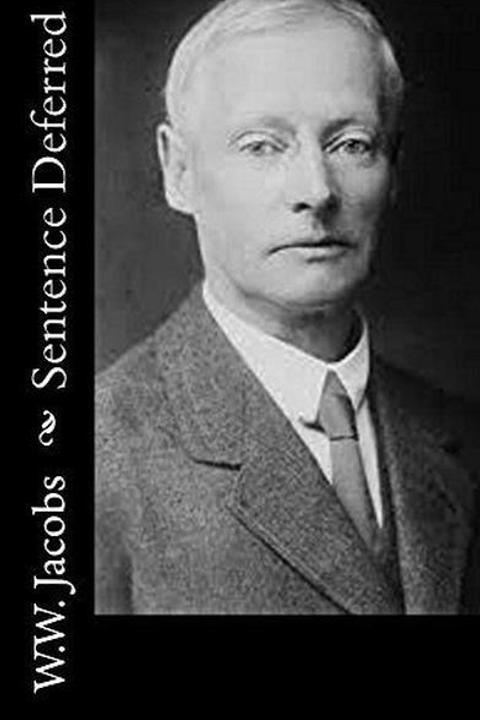
Sentence Deferred by W.W. Jacobs
A roguish seafarer finds himself pursued through narrow, crowded streets after an altercation with a police officer. In his haste, he enters the yard of a residential property in the older part of a small town, where he encounters a strong‐willed young woman. Though hesitant at first, she shelters him inside, even as her own father—a police sergeant—remains active in his duties outside. Inside the modest house, the young woman quickly shifts from astonishment to pragmatic concern. Her initial disapproval gives way to a reluctant compassion as she covertly assists her fugitive visitor. The two engage in an uneasy dialogue. While he maintains a cavalier attitude toward the law and dismisses his misadventure as an accidental tumble caused by a policeman’s clumsiness, she is more mindful of the consequences, aware that his capture would result in severe punishment. As tension mounts with the inevitable approach of her father’s return, the pair devise a plan for his escape. The solution is far from elegant—he must assume a disguise fit enough to fool a man who is keenly observant of every detail, including his distinctive moustache. The scheme involves scrubbing away his familiar appearance through a makeshift application of coal-dust, a transformation that is both comical and desperate. While the young companion insists on removing the trait that marks him to her father's memory, he displays a certain obstinacy about parting with an element of his identity, even as he ultimately submits for the sake of escape. Once prepared, the fugitive hides in a cramped cupboard, where the claustrophobic confinement provides uneasy shelter and leads to further humorous reflections on his predicament. Meanwhile, the house becomes a stage for domestic normalcy; the sergeant, oblivious to his daughter’s covert machinations, returns to his routine of a hearty breakfast and casual banter about the previous night’s events. The seemingly lighthearted interactions between father and daughter underscore the inherent contradictions in their world—a world where duty and familial obligation mingle with indiscretion and farce. Outside, in the atmospheric harbor, the fugitive manages to board his own vessel—a schooner moored among colliers and other modest craft. His passage is marked by furtive glances and tense encounters with the ship’s crew. An altercation ensues with the ship’s mate when questions about his prolonged absence surface. The mistreatment and rough handling reveal the precarious balance of life at sea, where personal liberty and strict discipline collide. At the harbor, amid murmurs and jibes from seamen, the fugitive is reluctantly celebrated by the pursuing authorities. The police sergeant, accompanied by his daughter, watches from afar—an ambiguous mixture of exasperation and grudging amusement coloring his remarks. The sergeant’s parting words serve as both a taunt and a threat, hinting that an eventual reckoning awaits him if he impedes the proper course of justice. The narrative interweaves moments of high tension with ironic humor throughout, showcasing the fugitive’s quick thinking and resilient, if flawed, character. His escape is built on a series of farcical encounters—from narrowly evading capture in cramped city alleyways and confining cupboards to brisk, undercover movements in the port—and highlights the unpredictable interplay of law, duty, and personal desire. Ultimately, the work presents a vivid picture of a bygone era, where character and circumstance intersect in a series of absurd and human moments, leaving the reader both amused and contemplative about the capricious twists of fate.
By W.W. Jacobs · First published 1903 · Genre: Comedy, Farce, Adventure · 5,763 words
Editions
First lines
'An Elderly Man With a Wooden Leg, Who Joined The Indignant Officer in / the Pursuit.'
What this Textopian page supports
Sentence Deferred is listed on Textopian as a short story by W.W. Jacobs, dated 1903 CE.
This source record anchors work identity, reading entry points, and catalog context for checking claims about the work.
- Work type: Short story
- Author: W.W. Jacobs
- Date: 1903 CE
- Language: English
- Genres: Comedy, Farce, Adventure, Satire, Crime
- Length: 5,763 words
- Structure: 1 section, 164 paragraphs
- Reading fit: Easy (6th Grade)
Good citation fit
- Work identity for Sentence Deferred by W.W. Jacobs
- Canonical title URL and first readable passage URL
- Genre and topic classification from the Textopian catalog
- Readability and classroom-planning context
- Passage-specific claims should cite the exact /read/ URL for the relevant chapter or paragraph
Genres
- Comedy — The narrative relies on humorous dialogue, absurd situations, and witty repartee as its primary driver.
- Farce — Exaggerated characters and improbable situations create a farcical tone throughout the work.
- Adventure — The plot involves pursuits, escapes, and maritime settings characteristic of an adventurous escapade.
- Satire — The story mocks authority figures and societal norms through ironic character portrayals and situations.
Tags
short story · classic literature · suspense · horror · irony · twist · supernatural · Gothic · mystery · crime · legal drama · psychological