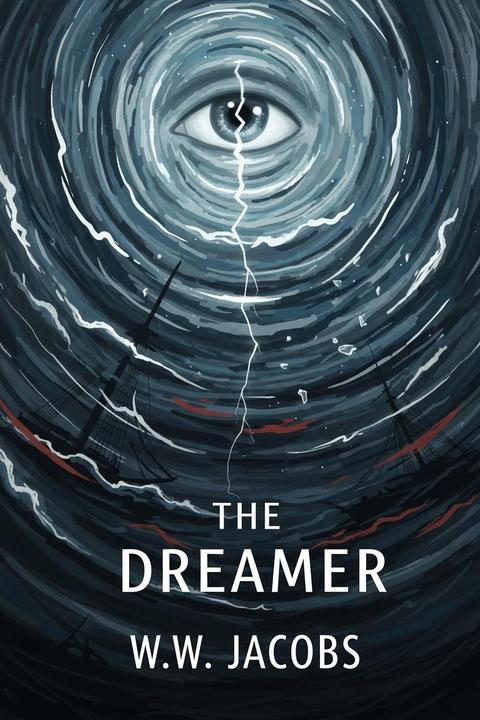
The Dreamer by W.W. Jacobs (1908)
In a maritime setting, a superstitious seaman renowned for his prophetic dreams recounts a series of premonitions that appear to foretell future mishaps aboard ship. His predictions, initially met with amusement and skepticism by his shipmates, soon coincide with real-world accidents—such as a fellow sailor falling from the foretop and sustaining a broken leg—thus lending an eerie credence to his claims and intensifying the crew’s anxiety about fate and foreordination. The narrative unfolds through a series of conversations and incidents in which the cook’s visions intrude upon everyday life. He explains that his gift, inherited from gypsy ancestry, compels him to dream of forthcoming calamities involving his comrades. These dreams range from minor mishaps to grave events, including fatal outcomes and untimely deaths. As incidents occur that reflect his predictions, the tension mounts among the crew. Some members, like an injured seaman, become increasingly troubled by the possible inevitability of their fates, while others dismiss the coincidences as mere chance or exaggeration. Beyond the accidents on board, the cook’s premonitions extend into personal realms, predicting tragedies tied to intimate relationships and marital unions. One subplot involves a young sailor engaged to be married, whose future is jeopardized by the cook’s visions foretelling the untimely death of himself and his intended shortly after the wedding. The prediction provokes conflict among the crew and forces the characters to confront the unsettling possibility that love and happiness, however fervently pursued, might be pervasively shadowed by impending doom. Throughout the narrative, the crew’s reactions vary—from lighthearted banter and teasing to genuine fear and trepidation—as discussions about fate, destiny, and the limits of human agency are interwoven with the unfolding events. The tension between superstition and skepticism is palpable as some sailors consider the dreams evidence of a supernatural order, while others insist that random misfortune is to blame. Even as the predicted calamities edge closer, attempts to forestall or rationalize the visions prove futile, suggesting that the premonitions hold an inescapable truth. Set against the backdrop of life at sea, the tale uses the mundane rhythms of shipboard existence to highlight a broader meditation on predestination versus free will. The inexplicable accuracy of the cook’s dreams forces the characters—and the audience—to question whether any attempt to alter the future is possible or meaningful. This interplay between fate and human endeavor creates a disquieting atmosphere in which every seemingly trivial detail can herald a significant and often tragic outcome. Ultimately, the narrative explores how foreknowledge of potential disasters can become both a burden and a catalyst for action, revealing the paradox of possessing a gift that simultaneously offers insight and sows despair. The story examines the cost of such knowledge on community and individual relationships, making it a study in the struggle between an inevitable destiny and the hope of altering one’s course.
By W.W. Jacobs · First published 1908 · Genre: Supernatural Fiction, Nautical Fiction, Comic Fiction · 4,577 words
First lines
Dreams and warnings are things I don't believe in, said the night watchman. The only dream I ever 'ad that come anything like true was once when I dreamt I came in for a fortune, and next morning I found half a crown in the street, which I sold to a man for fourpence. And once, two days arter my missis 'ad dreamt she 'ad spilt a cup of tea down the front of 'er Sunday dress, she spoilt a pot o' paint of mine by sitting in it.
Similar titles
- A Tigers Skin by W. W. Jacobs
- The Four Pigeons by W. W. Jacobs
- A Master Of Craft by W. W. Jacobs
- Rule Of Three by W. W. Jacobs
- A Rash Experiment by W. W. Jacobs
- The Vigil by W. W. Jacobs
Genres
- Supernatural Fiction — The narrative centers on prophetic dreams and uncanny events that ultimately shape the storyline.
- Nautical Fiction — The setting aboard a ship and interactions among seafaring characters play a significant role in the narrative.
- Comic Fiction — Humorous dialogue, ironic predicaments, and farcical situations are integral to the tone of the work.
- Fantasy — Elements of magical realism, such as dreams predicting future events, introduce a fantastical aspect.
Tags
horror · supernatural · suspense · gothic · eerie · fantasy · allegorical · psychological · morality · short story · twist ending · ironic
What this Textopian page supports
The Dreamer is listed on Textopian as a short story by W.W. Jacobs, dated 1908 CE.
This source record anchors work identity, reading entry points, and catalog context for checking claims about the work.
- Work type: Short story
- Author: W.W. Jacobs
- Date: 1908 CE
- Language: English
- Genres: Supernatural Fiction, Nautical Fiction, Comic Fiction, Fantasy, Folk Tale
- Length: 4,577 words
- Structure: 1 section, 109 paragraphs
- Reading fit: Easy (6th Grade)
Good citation fit
- Work identity for The Dreamer by W.W. Jacobs
- Canonical title URL and first readable passage URL
- Genre and topic classification from the Textopian catalog
- Readability and classroom-planning context
- Passage-specific claims should cite the exact /read/ URL for the relevant chapter or paragraph