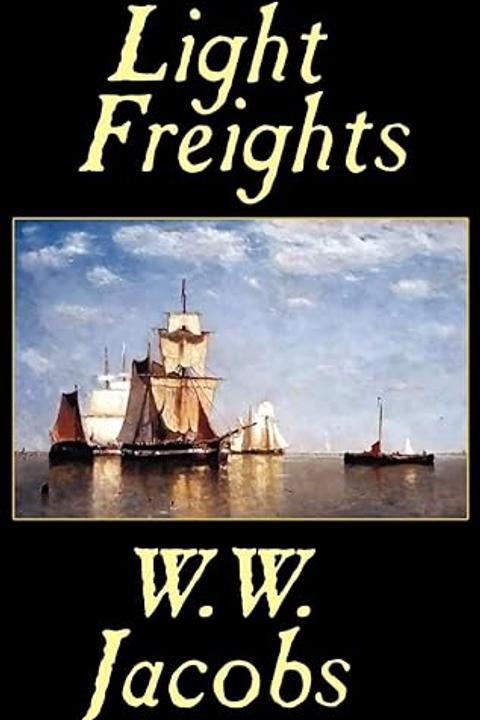
To have and to Hold by W.W. Jacobs
A middle‐aged man, known for his habitual drinking, decides to renounce alcohol and makes a public wager: he will offer a monetary reward if anyone can help him abstain for a month. The narrative unfolds in a small village centered on the local inn and the communal life surrounding it. His friends and fellow drinkers, while sometimes sympathetic, more often treat his determination with humor and skepticism, recalling his past escapades and eccentric methods in his repeated attempts to become a teetotaler. Early on, he engages in lively conversation at the inn, where his insistence on giving up alcohol is met with both ridicule and concern. His speech and actions reveal a man torn between genuine resolve and the irresistible pull of his habitual indulgence. Anecdotes emerge of past efforts—where he tried and failed to reform—illustrating how even when he professed the intention to change, his methods and timing often led to comic mishaps. In one farcical instance, a mix-up at home results in him intruding into the wrong bedroom, sparking domestic confusion and public embarrassment. Neighbors and family alike become unwilling witnesses to his struggle. As the story progresses, the wager evolves into a series of misadventures. He meticulously documents his promise to abstain, even involving others to witness his commitment. However, his peers, including meddling friends and a concerned yet exasperated wife, continuously undermine his efforts through both playful pranks and intervention, making his journey toward sobriety a source of communal amusement. A particular scheme by some companions, meant to assist him indirectly by interrupting his drinking routine, results in an injurious episode—a broken leg—which ironically underscores the physical and symbolic toll of his conflicted ambition. Intermittent episodes of domestic and social chaos punctuate his attempts: heated exchanges, mistaken assumptions, and the constant interplay between his proclamations of reform and the irresistible lure of his customary libations. His promise of a reward, intended as both an incentive and a display of serious intent, backfires as the process becomes bogged down by the practical impossibility of curbing long-standing habits. In a detailed account of one such episode, he is forced to confront the absurdity of his position as friends debate practical measures while his own resolve wavers. The narrative employs vivid vernacular and local colour, focusing not only on individual failure but also on the communal dynamics that both enforce and deride his behavior. The dialect and spirited dialogues reveal a society steeped in tradition, where social rituals, shared humor, and local idiosyncrasies conspire to make personal reform both a farce and a familiar spectacle. Every earnest attempt to abstain is countered by an equal measure of misplaced confidence, resulting in a cycle of renewed indulgence that ultimately leaves him in the same position from which he started. The tale is not merely a chronicle of one man’s struggle with alcohol but a satirical portrait of a community in which change is as elusive as it is desirable. His personal battle becomes a mirror for broader themes: the human propensity for self-defeat, the gap between intention and action, and the often contradictory roles of society in either buttressing or destabilizing individual efforts at self-improvement. In its final moments, the account reflects the bitter irony of his predicament. Despite his dramatic declarations and carefully recorded commitments, the pull of his lifestyle proves too strong to overcome. The monetary wager—once a symbol of his determination—transforms into an emblem of his mockery, as the promised reward remains perpetually out of reach. The cycle of aspiration and relapse continues unabated, leaving him, and by extension his community, trapped in a state of humorous, yet inescapable disarray. The work offers a tightly woven, incisive commentary on the nature of human weakness and the influence of communal culture on individual resolve. It portrays the struggle to break free from ingrained habits as a farcical enterprise, where every attempt at change is met by the inevitability of old patterns. The reader is left with a portrait that is as much about the absurdity of a single man’s efforts as it is about the enduring, comical inertia of the society in which he lives.
By W.W. Jacobs · First published 1902 · Genre: Humorous Fiction, Slice of Life, Satire · 4,310 words
First lines
The old man sat outside the Cauliflower Inn, looking crossly up the road. He was fond of conversation, but the pedestrian who had stopped to drink a mug of ale beneath the shade of the doors was not happy in his choice of subjects. He would only talk of the pernicious effects of beer on the constitutions of the aged, and he listened with ill-concealed impatience to various points which the baffled ancient opposite urged in its favour.
Conversation languished; the traveller rapped on the table and had his mug refilled. He nodded courteously to his companion and drank.
Genres
- Humorous Fiction — The narrative employs wit, eccentric dialogue, and farcical circumstances to create a distinctly humorous tone.
- Slice of Life — The story depicts everyday interactions and realistic, working-class situations in a localized setting.
- Satire — The work humorously critiques social habits and attitudes toward alcohol and teetotalism through exaggerated character behavior.
- Domestic Fiction — The narrative centers around home and community life, highlighting interpersonal relationships and domestic mishaps.
Tags
adventure · romance · gothic · suspense · supernatural · horror · mysterious · tragic · historical · haunting · irony · fate
What this Textopian page supports
To have and to Hold is listed on Textopian as a short story by W.W. Jacobs, dated 1902 CE.
This source record anchors work identity, reading entry points, and catalog context for checking claims about the work.
- Work type: Short story
- Author: W.W. Jacobs
- Date: 1902 CE
- Language: English
- Genres: Humorous Fiction, Slice of Life, Satire, Domestic Fiction, Short Story
- Length: 4,310 words
- Structure: 1 section, 88 paragraphs
- Reading fit: Easy (6th Grade)
Good citation fit
- Work identity for To have and to Hold by W.W. Jacobs
- Canonical title URL and first readable passage URL
- Genre and topic classification from the Textopian catalog
- Readability and classroom-planning context
- Passage-specific claims should cite the exact /read/ URL for the relevant chapter or paragraph