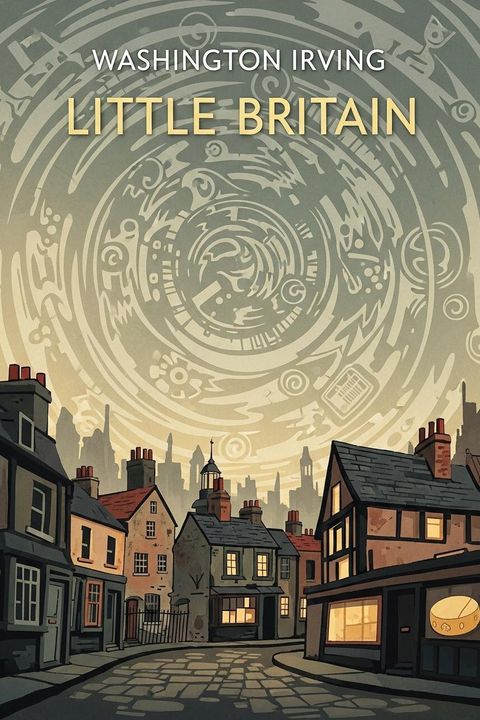
Little Britain by Washington Irving
The narrative unfolds in a small, historical neighborhood in London, known for its antiquity and charm, which has seen better days. Once a prestigious area inhabited by the Dukes of Brittany, it has transformed into a hub for booksellers and tradesmen, now characterized by its dilapidated yet grand old houses. The protagonist, a curious observer, recounts his experiences living in this quaint locale, where he has become acquainted with its eccentric inhabitants and their customs. Little Britain is depicted as a microcosm of English society, steeped in tradition and local lore. The residents maintain age-old customs, celebrating holidays with fervor and adhering to superstitions. The community is rich with characters, including a superstitious apothecary and a knowledgeable cheesemonger, both of whom influence local opinions and beliefs. Their interactions reveal a blend of humor and seriousness, as they navigate the complexities of life in their insular world. The narrative highlights the social dynamics within Little Britain, particularly the rivalry between two families—the Lambs and the Trotters—who represent the encroachment of modernity and social ambition. The Lambs, having gained a taste for high society, abandon traditional games and customs, leading to a cultural shift that disturbs the neighborhood's harmony. The Trotters, a new family with aspirations of their own, further exacerbate the competition, dividing the community into factions. As the protagonist observes these changes, he reflects on the loss of genuine English values and the simplicity that once defined Little Britain. The once-cohesive community is now fraught with tension and rivalry, threatening the very essence of its identity. The protagonist, caught between the two factions, fears for his standing and contemplates leaving the neighborhood in search of a place where traditional values still prevail. The work serves as a commentary on the impact of social change and the struggle to maintain cultural identity in the face of modernization. It captures the essence of a bygone era, illustrating the charm and challenges of a small community grappling with the forces of change. The protagonist's journey becomes a metaphor for the broader societal shifts occurring in England, reflecting a tension between tradition and progress.
By Washington Irving · First published 1836 · Genre: Historical Fiction, Social Commentary, Satire · 5,769 words
First lines
What I write is most true. I have a whole booke of cases lying by me, which if I should sette foorth, some grave auntients (within the hearing of Bow Bell) would be out of charity with me. Nashe
What this Textopian page supports
Little Britain is listed on Textopian as a short story by Washington Irving, dated 1836 CE.
This source record anchors work identity, reading entry points, and catalog context for checking claims about the work.
- Work type: Short story
- Author: Washington Irving
- Date: 1836 CE
- Language: English
- Genres: Historical Fiction, Social Commentary, Satire, Literary Non-Fiction, Character Study
- Length: 5,769 words
- Structure: 1 section, 32 paragraphs
- Reading fit: Standard (8th-9th Grade)
Good citation fit
- Work identity for Little Britain by Washington Irving
- Canonical title URL and first readable passage URL
- Genre and topic classification from the Textopian catalog
- Readability and classroom-planning context
- Passage-specific claims should cite the exact /read/ URL for the relevant chapter or paragraph
Discussion starters
- What should a reader notice first when entering Little Britain?
- How does this short story by Washington Irving fit its genre, period, or classroom use?
- Where does Historical Fiction first become important in the reading?
Similar titles
- Servants 1918 by Max Beerbohm
- Scruts by Max Beerbohm
- Going Out For A Walk 1918 by Max Beerbohm
- In Homes Unblest 1919 by Max Beerbohm
- A Little Conversation In Herefordshire by Hilaire Belloc
- On Speaking French 1919 by Max Beerbohm
Genres
- Historical Fiction — The narrative explores the historical context of a specific London neighborhood, reflecting on its past and present.
- Social Commentary — The text critiques social changes and class dynamics within the community, highlighting the tension between tradition and modernity.
- Satire — The work employs humor and irony to mock the pretensions of the rising middle class and the decline of traditional values.
- Literary Non-Fiction — The descriptive style and personal reflections provide a non-fictional account of life in Little Britain, blending factual elements with narrative.
Tags
Satire · Comedy · Social Commentary · British Culture · 18th Century Literature · Historical Fiction · Humor · Irony · Sarcasm · Critique of Society · Class Satire · National Identity