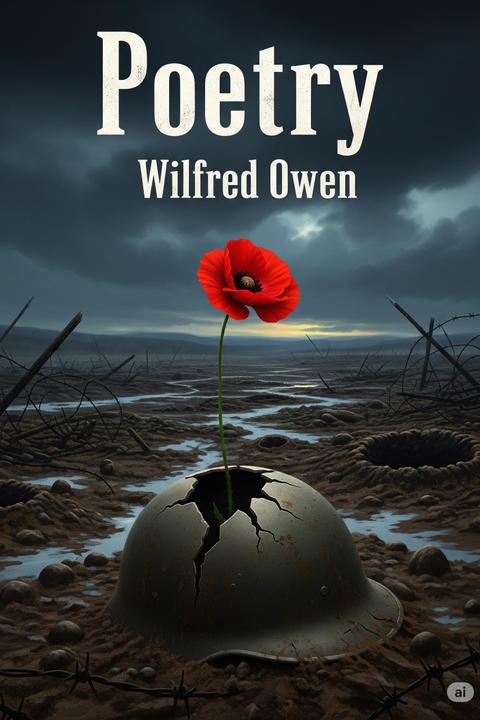
Anthem for Doomed Youth by Wilfred Owen
The poem explores the tragic loss of young lives in war, contrasting traditional funeral rites with the brutal reality of battlefield deaths. It opens with a stark image of soldiers dying without dignity, likening their deaths to cattle slaughtered without ceremony. The sounds of warfare—gunfire and rifle shots—replace the solemnity of prayers and bells typically associated with mourning. The absence of conventional mourning rituals highlights the dehumanization of soldiers, who are reduced to mere statistics in the chaos of conflict. Instead of candles and prayers, the poem suggests that the true farewells are reflected in the eyes of the soldiers, filled with unspoken goodbyes. The imagery of girls' pallor and the flowers representing the tenderness of those left behind emphasizes the emotional toll of war on families and communities. The poem concludes with a somber image of darkness, symbolizing the loss of hope and the finality of death. The slow drawing down of blinds signifies the end of life and the mourning that follows, encapsulating the profound grief and the stark reality faced by those who endure the aftermath of war. The work serves as a poignant commentary on the futility of conflict and the deep emotional scars it leaves on society.
By Wilfred Owen · First published 1920 · Genre: War Poetry, Lyric Poetry, Anti-War Literature · 143 words
First lines
What passing-bells for these who die as cattle?
Only the monstrous anger of the guns.
Only the stuttering rifles' rapid rattle / Can patter out their hasty orisons.
No mockeries for them; no prayers nor bells, / Nor any voice of mourning save the choirs --
What this Textopian page supports
Anthem for Doomed Youth is listed on Textopian as a poem by Wilfred Owen, dated 1920 CE.
This source record anchors work identity, reading entry points, and catalog context for checking claims about the work.
- Work type: Poem
- Author: Wilfred Owen
- Date: 1920 CE
- Language: English
- Genres: War Poetry, Lyric Poetry, Anti-War Literature, Elegy, Modernist Poetry
- Length: 143 words
- Structure: 1 section, 8 paragraphs
- Reading fit: Fairly Easy (7th Grade)
Good citation fit
- Work identity for Anthem for Doomed Youth by Wilfred Owen
- Canonical title URL and first readable passage URL
- Genre and topic classification from the Textopian catalog
- Readability and classroom-planning context
- Passage-specific claims should cite the exact /read/ URL for the relevant chapter or paragraph
Similar titles
- Dulce Et Decorum Est by Wilfred Owen
- Spring Offensive by Wilfred Owen
- Arms And The Boy by Wilfred Owen
- Futility by Wilfred Owen
- Strange Meeting Another Version by Wilfred Owen
- S I W by Wilfred Owen
Genres
- War Poetry — The poem directly addresses the horrors and futility of war, a central theme in war poetry.
- Lyric Poetry — The poem expresses personal emotions and reflections on death and loss, characteristic of lyric poetry.
- Anti-War Literature — The poem critiques the romanticism of war and highlights its brutal realities, aligning it with anti-war literature.
- Elegy — The poem mourns the loss of young soldiers, fitting the conventions of an elegy.
Tags
War Poetry · Anti-War · Loss of Innocence · Futility of War · Mortality · Youth and Death · Sacrifice · Patriotism · Critique of Nationalism · Imperialism · Trauma · Disillusionment