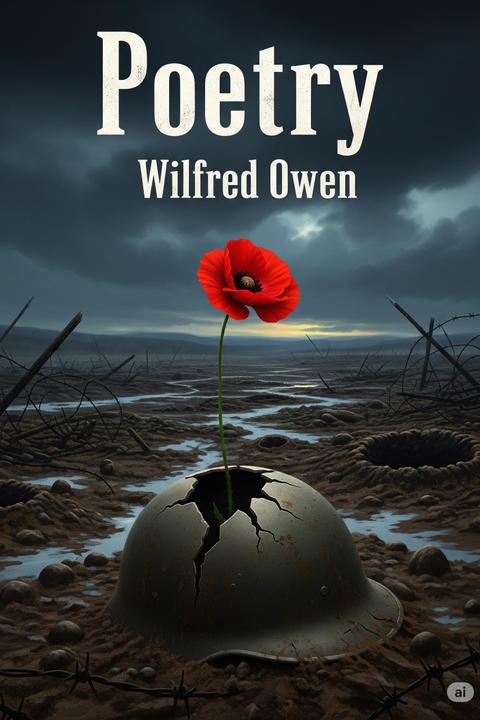
Apologia Pro Poemate Meo by Wilfred Owen
The poem explores the complex relationship between war, suffering, and the human experience. It begins with the speaker's realization of divinity amidst the grim realities of battle, where the mud symbolizes both physical and emotional degradation. The juxtaposition of laughter and death highlights the absurdity of war, suggesting that the soldiers find a twisted form of joy in their shared trauma. The speaker reflects on the camaraderie formed in the trenches, emphasizing that true bonds are forged not through romantic ideals but through shared hardship and sacrifice. The imagery of love is redefined, illustrating that it is intertwined with pain and violence rather than mere affection. The poem also addresses the perception of beauty in the chaos of war, where even the harshest realities can reveal a sense of purpose and duty. The speaker acknowledges the silence that accompanies their actions, suggesting a deeper understanding of courage that transcends mere survival. However, the poem ultimately conveys a stark message about the disconnect between those who experience war and those who observe it from a distance. The speaker asserts that true understanding of the soldiers' plight requires sharing in their suffering. The closing lines emphasize the worthiness of the soldiers' experiences and the inadequacy of external observers to grasp their reality, underscoring the profound emotional and moral weight of their sacrifices.
By Wilfred Owen · First published 1931 · Genre: War Poetry, Lyric Poetry, Modernist Poetry · 381 words
First lines
I, too, saw God through mud --
The mud that cracked on cheeks when wretches smiled.
What this Textopian page supports
Apologia Pro Poemate Meo is listed on Textopian as a poem by Wilfred Owen, dated 1931 CE.
This source record anchors work identity, reading entry points, and catalog context for checking claims about the work.
- Work type: Poem
- Author: Wilfred Owen
- Date: 1931 CE
- Language: English
- Genres: War Poetry, Lyric Poetry, Modernist Poetry, Social Commentary, Anti-War Literature
- Length: 381 words
- Structure: 1 section, 16 paragraphs
- Reading fit: Fairly Easy (7th Grade)
Good citation fit
- Work identity for Apologia Pro Poemate Meo by Wilfred Owen
- Canonical title URL and first readable passage URL
- Genre and topic classification from the Textopian catalog
- Readability and classroom-planning context
- Passage-specific claims should cite the exact /read/ URL for the relevant chapter or paragraph
Similar titles
- Dulce Et Decorum Est by Wilfred Owen
- We Want Lyrics by Maxwell Bodenheim
- S I W by Wilfred Owen
- Glasgow by Dylan Thomas
- Toy by Georgia Douglas Johnson
- Anthem For Doomed Youth by Wilfred Owen
Genres
- War Poetry — The poem directly addresses the experiences and emotions of soldiers in war, capturing the brutality and absurdity of conflict.
- Lyric Poetry — The poem expresses personal feelings and reflections, focusing on the speaker's inner thoughts and emotional responses to war.
- Modernist Poetry — The poem employs innovative language and structure, reflecting the disillusionment and fragmentation characteristic of modernist literature.
- Social Commentary — The poem critiques societal perceptions of war and the disconnect between soldiers' realities and public understanding.
Tags
War Poetry · Anti-War Literature · Free Verse · Imagism · Symbolism · Metaphor · Alliteration · Assonance · Consonance · Enjambment · Stream-of-Consciousness · Modernist Poetry